























Money is valuable. A bunch of e-books and audio files filled with advice are far less valuable. In most cases, they’re worth absolutely nothing. Understanding this, there are numerous tricks scammers use to separate you from your hard-earned money, essentially getting you to swap something worthwhile for something worthless.
Don’t make the trade. If someone wants to sell you learning materials, classes or anything else claiming to make you rich, more desirable to other sex and/or better at life, exit the website immediately.
Look, we don’t really care what you spend your money on. Go to the casino. Buy some random junk. Set it on fire. Anything is better than handing it over to these bozos who know they are screwing you over.
Need help figuring out if you’re about to become a mark? Here are some of the tricks scammers use to separate you from your hard-earned money.
Don’t be fooled: More scams you should know about
7 tricks scammers use to separate you from your hard-earned money
1) They tell you it doesn’t work
The fastest way to find out if you are being presented with a legitimate program or product is to scroll down to the very bottom of the website and look at the disclaimer. If whatever you’re looking at is rubbish, it’s declared here.
This is a common tactic for people promoting get rich quick programs. Robby Blanchard claims his Commission Hero affiliate marketing program are guaranteed to work. And then at the bottom of the website page it says the program is useless. Tai Lopez does nothing but tell you how easy it is to make money with his scheme. Until you reach the disclaimer, and he tells you his non-sense doesn’t actually work.
Related: Don’t give Tai Lopez your money because he’s running a scam
2) This may disappear soon

Something that really gets under my skin is when one of these scams places a banner at the top of the webpage saying the contents are sensitive and may be removed soon. This is something done by Marni Kinrys for her The Wing Girl Method and the F Formula dating scams…errr…programs.
Despite the fact this page has been up for years now, the operator still claims that it may be removed. By who? Come on, there has to be an authority capable of doing that in order for a threat to be credible. If you see a website claiming its contents may be removed soon, it most likely means no such thing is happening.
3) Fabricated reviews
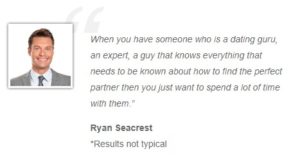
We’ve covered how online pick-up artists create bogus reviews to pimp their sham systems in the past. It bears repeating here as well. If you want to tell if something is a scam or not, simply look at the reviews. If they are too good to be true, tend to feature a lot of similar concepts/phrasing or are just plain unbelievable, chances are they’re fake. I mean a 70-year-old grandpa juggling two women half his age? Get out of here with that noise.
4) False authority
Creating a false authority is a fairly common ruse pulled by self-help gurus using social media. They basically make it seem as if they are somehow an expert when these tools are simply just trying to get their grubby little mitts on your cash.
The most ridiculous method these experts, and I use that term very loosely, utilize is the creation of quote images that make them appear like an authority. Because most people associate these posts with expertise, scammers think if they create one of themselves, it will fool you into thinking they too are an expert who says poignant things.
But here’s the rub; if you’re creating this for yourself and then posting it to your social media accounts, then you aren’t an authority at all. Authority only comes from recognition by others. All this does is make you look like an asshat.
A Big Phony: Who is Aaron Marino aka alpha m.?
5) They create a straw man to attack anyone who questions their offering
One of the most annoying tricks scammers use to separate you from your hard-earned money is creating a pantomime villain in the former of “haters”. Every nefarious product or program uses this logical fallacy to a certain extent. Here is how it almost always breaks down:
A: This program and/or product doesn’t contain anything useful.
B: Anyone who discredits the program and/or product doesn’t want you to succeed.
Their defense doesn’t address the original claim about the program and/or product. Since many of these already have a disclaimer about their lack of effectiveness, it’s impossible to defend against that argument. Instead, they try to convince others that everyone not using their system has an ulterior motive to bad mouth the crap being sold.
Succeed. Fail. Do Nothing. I don’t really care. All I want is for you to not help scumbags make money.
6) Inflated values allow for huge savings

At the start of the article, we explained that most of the programs and/or products being sold have no real value. No one is buying it from you meaning it is essentially worth zero dollars the minute your credit card is charged. Scammers know this and it is why they assign massively inflated values to their add-ons and bonuses. Here are the entirely egregious Commission Hero product values.
None of those values are true. No one is paying US$10,000 for that. But he can say whatever the fuck because it can’t be proved otherwise.
7) Fake people are involved
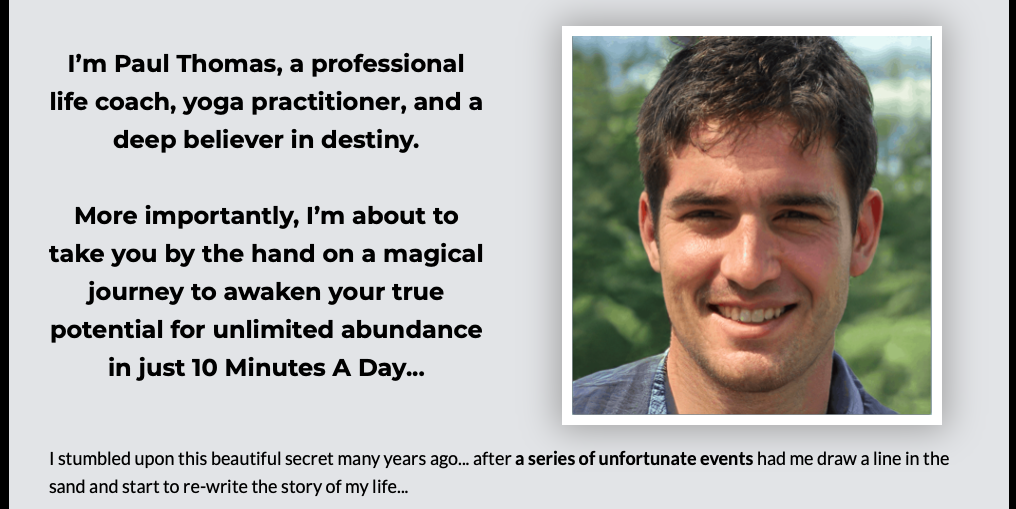
There is no person named Master Wang in China drawing a picture of your soulmate and shipping it overseas. The entire premise is lousy with fallacies. It’s a similar story for the 10 Minute Awakening program where there is literally no record of the program’s founder or the neuroscientist helping support him.
However, creating fake people and backstories is one of the many tricks scammers use to separate you from your hard-earned money. Their hope is you won’t open a new tab and search for them. Because if you did, the results would turn up nothing. And that’s what you’ll be left with if you fall for this nonsense.
Keep Reading: Larry Benedict is a scam – One Ticker Trader review