











NFL Teams have been playing in college football stadiums since the 1930s. In fact, 16 teams have played in one at some point in their history. It is not really surprising given how they both have similar capacities and no overlap in terms of dates needed.
These days, you are probably more familiar with NCAA sides using pro facilities. Pitt playing at Heinz Field, UMass showing up at Gillette Stadium and USF welcoming fans to Raymond James Stadium are just a few examples of this.
But that is not what we are focusing on here. This list exclusively features NFL Teams playing in college football stadiums. With that in mind, let’s see what pro teams have headed back to school at some point in their existence.
Related: The absolutely crazy football single season interception record
New Orleans Saints
- Tulane Stadium (1967–1974)
- Tiger Stadium (2005)
The New Orleans Saints started life at Tulane Stadium and played there for a total of eight seasons. There wasn’t much to write home about as the team never won more than five games and were routinely one of the worst franchises in football. This was actually a pretty dour time for Tulane as well with the Green Wave kicked out of the SEC in 1966.
We should note that Tulane Stadium wasn’t some B-rate facility. Far from it. It hosted the Sugar Bowl in addition to Super Bowl IV, VI and IX.
The Saints would return to the college ranks in 2005, playing four games at LSU’s Tiger Stadium. The move was required due to damage at the Superdome caused by Hurricane Katrina.
Houston Oilers/Tennessee Titans
- Rice Stadium (1965–1967)
- Liberty Bowl Memorial Stadium (1997)
- Vanderbilt Stadium (1998)
Firstly, the Houston Oilers spent four years at what was then known as Robertson Stadium. And while it is a college stadium today, it wasn’t owned by the University of Houston and the Cougars weren’t using it when the Oilers were playing games there. That means it doesn’t make the list.
They would move to Rice Stadium in 1965 and stayed there for a couple of seasons. During this time, they shared a home with both the Rice Owls and the aforementioned Houston Cougars who wouldn’t turn up at Robertson Stadium until 1966.
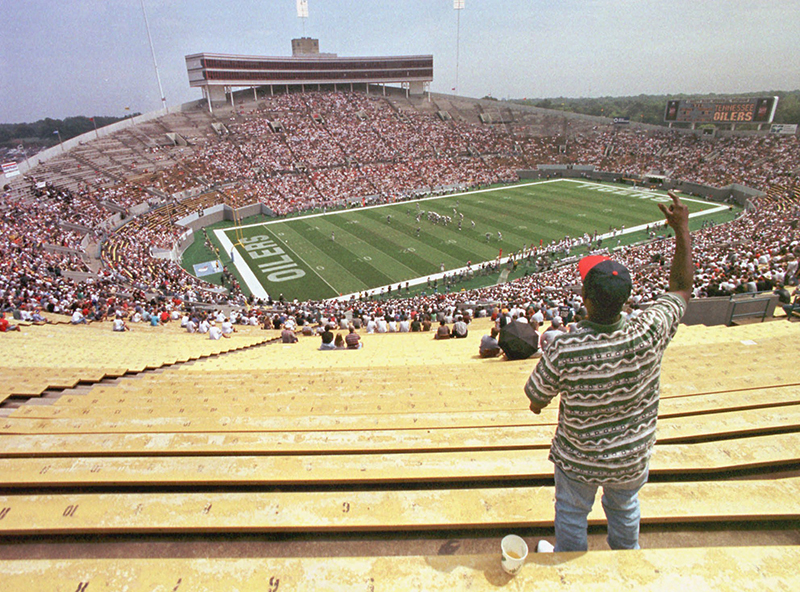
The Oilers would pack up for the Astrodome two years later but eventually grew weary of the multipurpose venue. In 1997, they moved to Tennessee. Those first two years were spent schlepping it in a pair of fairly unimpressive college football stadiums. They started life at the Liberty Bowl Memorial Stadium in Memphis while waiting for their new home in Nashville to be built.
People in Memphis could have cared less about the Titans and attendance was awful. This forced Tennessee to leave for the friendlier confines of Vanderbilt Stadium in Nashville after one season. At 41,000 seats, it was the smallest stadium in the NFL until the Los Angeles Chargers played at the Stub Hub Center for the 2018-19 season.
Cincinnati Bengals
- Nippert Stadium (1968–1969)
The Cincinnati Bengals first two years as a team were spent at Nippert Stadium, home of the Cincinnati Bearcats. The franchise would move to Riverfront Stadium in 1970.
Pittsburgh Steelers
- Pitt Stadium (1958–1969)
Today, the Pitt Panthers play their home games at the Steelers’ Heinz Field. However, the partnership worked the other way around between 1958 and 1969. From 1958 to 1963, the Steelers split home games between the Pirates’ Forbes Field and Pitt Stadium. In 1964, the Steelers began to play home games exclusively at Pitt Stadium and would do so until Three Rivers Stadium welcomed fans in 1969.
New England Patriots
- Nickerson Field (1960–1962)
- Alumni Stadium (1969)
- Harvard Stadium (1970)
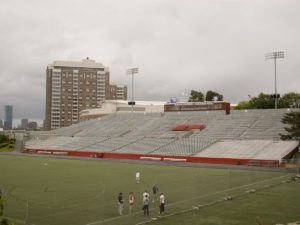
If there was a college football stadium in the greater Boston area between 1960 and 1970, chances are the New England Patriots played a few games in it. They spent time at Boston University’s Nickerson Field, Boston College’s Alumni Stadium and Harvard Stadium during those 10 years before eventually finding a home in Foxborough.
Related: Looking back at New England Patriots 100-yard rushers over the last decade
Miami Dolphins
- Miami Orange Bowl (1966–1986)
Before the U moved into the Dolphins home, the Fins used Miami’s famed Orange Bowl as their base. It is safe to say neither team should have left.
Los Angeles Chargers
- Sun Devil Stadium (2003)
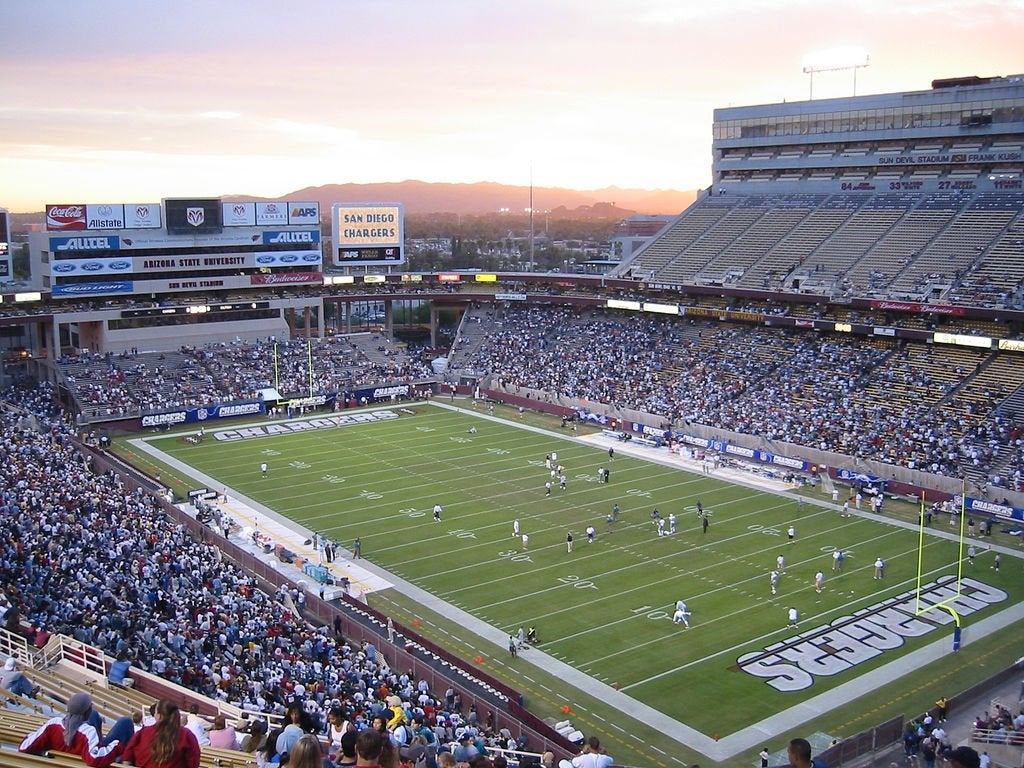
The Cedar Fire would force the then San Diego Chargers from Qualcomm Stadium which was being used as an evacuation site. Their Monday Night Football contest against the Dolphins was moved to Sun Devil Stadium less than 24-hours before kickoff. Attendance was free, although that wasn’t enough to get people to come. Impressively, the grounds crew managed to get Chargers painted in the endzones.
Chicago Bears
- Ryan Field (1970)
- Memorial Stadium (2002)
The Chicago Bears hosted their first home game of the 1970 season at Northwestern’s Dyche Stadium, known today as Ryan Field, as an experiment. The NFL had demanded that the Bears move out of Wrigley Field because its seating capacity was under 50,000. The Wildcats’ home was seen as a viable alternative. Evanston residents did not agree and petitioned city officials to stop the team from moving there permanently. Eventually, the Big Ten Conference would step in and block the move while the Bears headed over to Chicago’s Soldier Field the following year.
Things would be fine until renovations to Soldier Field during the 2002 season forced them to seek a temporary home. The Bears found refuge in Champaign, sharing Memorial Stadium with the University of Illinois. If you played Madden 2002, you will definitely remember this because, as EA Sports is fond of saying, it’s in the game.
Detroit Lions
- University of Detroit Stadium (1934–1940)
When the Portsmouth Spartans moved to Detroit and changed their name to the Lions, they also needed a place to play. Lucky for them, the University of Detroit Stadium was available. They spent a few years there before moving over to Tiger Stadium full time in 1941.
Don’t sleep on the University of Detroit football team either. The Titans were co-National Champions with Georgia Tech in 1928.
Green Bay Packers
- Marquette Stadium (1952)
The Green Bay Packers played in Milwaukee quite a bit over the years, although they did so in a few different venues. In 1952, the team held three games at Marquette Stadium. The school discontinued football after the 1960 season and the stadium’s grandstands were demolished in 1976.
Related: The 1997 Green Bay Packers are the biggest team of scumbags in sports history
Minnesota Vikings
- Huntington Bank Stadium (2014–2015)
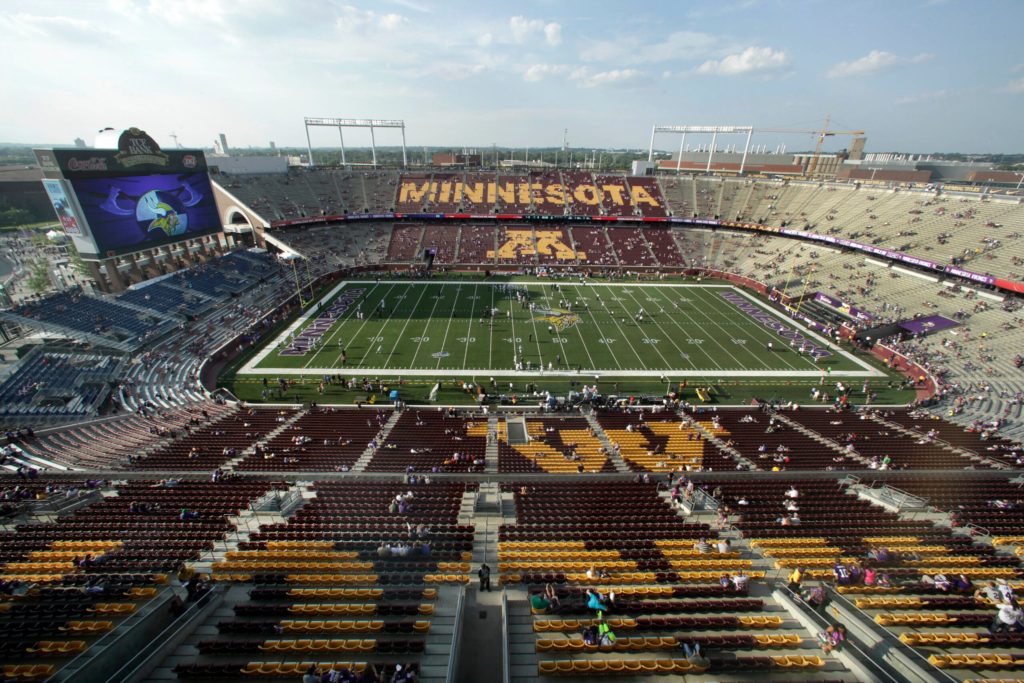
The Minnesota Vikings, and Twins I guess, let the Minnesota Golden Gophers use the Metrodome between 1982 and 2008. The Purple People Eaters called in that favor while U.S. Bank Stadium was being built during the 2014 and 2015 seasons by crashing at their collegiate friend’s place.
Having grown up watching the Vikings play indoors, it was really weird seeing them outside in the elements. Minnesota’s time in the stadium is probably best known for the epic Blair Walsh field goal shank against the Seahawks.
New York Giants
- Yale Bowl (1973–1974)
With Yankee Stadium being converted into a baseball-only facility and Giants Stadium yet to be built, the New York Giants found themselves in a bit of a pickle ahead of the 1973 season. A lack of viable options saw the team move out to the Yale Bowl in Connecticut.
It was not a pleasant stay as the G-Men lost 11 of the 12 games they hosted on Yale’s campus. They would opt to play at Shea Stadium in 1975 while their new home in the Meadowlands was ready to go a season later.
Philadelphia Eagles
- Franklin Field (1958–1970)
In search of increased capacity, the Philadelphia Eagles moved to Franklin Field, home of Penn, ahead of the 1958 season. Prior to the move, they had been at the baseball-focused Connie Mack Stadium.
Carolina Panthers
- Memorial Stadium (1995)
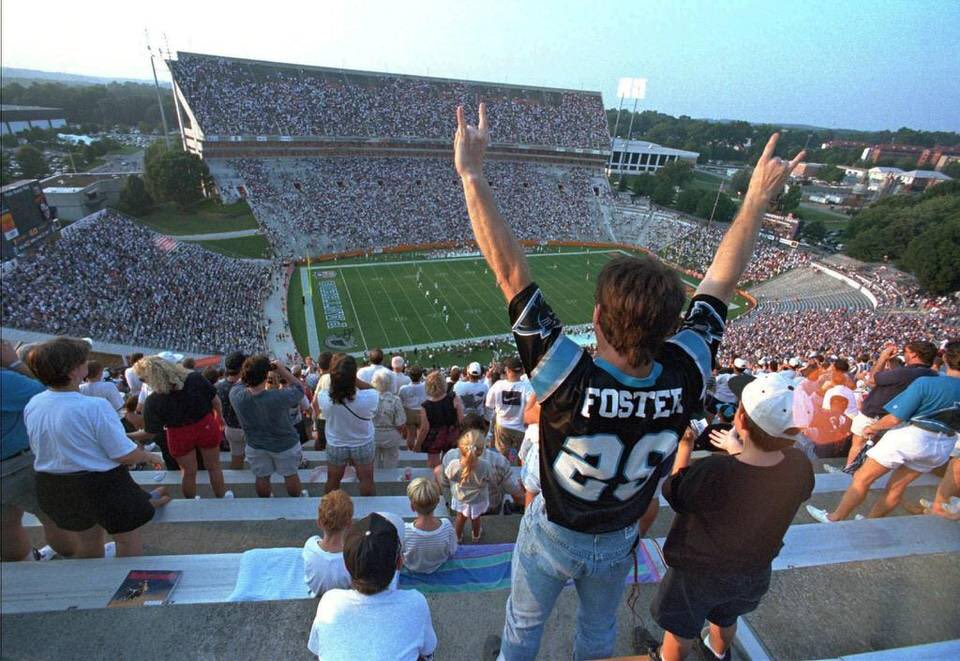
There is a reason they are called the Carolina Panthers and not North Carolina or Charlotte. The franchise has significant ties to South Carolina including hosting the team’s headquarters. Clemson even welcomed the Panthers during their inaugural NFL campaign while work was finishing up on Bank of America Stadium. The color clash of orange and teal was kind of gross and wouldn’t be seen again until the Miami Marlins gave it try in 2012.
Arizona Cardinals
- Sun Devil Stadium (1988–2005)
It took nearly 80 years for the football Cardinals to have a home of their own after moving away from Normal Park in Chicago. The 2006 opening of State Farm Stadium ended eight decades of a nomadic existence that saw them call Comiskey Park, Wrigley Field, Sportsman’s Park, Busch Stadium and Sun Devil Stadium home.
Despite sharing the latter with Arizona State for 17 seasons, it was most likely an upgrade over the other four which are best known for their baseball tenants. The Cardinals’ time on the campus of ASU isn’t remembered all that fondly. Attendance was routinely awful, and the franchise was so desperate to bring in fans that did dumb things, like signing a 34-year-old Emmitt Smith to a two-year contract.
Seattle Seahawks
- Husky Stadium (1994, 2000–2001)
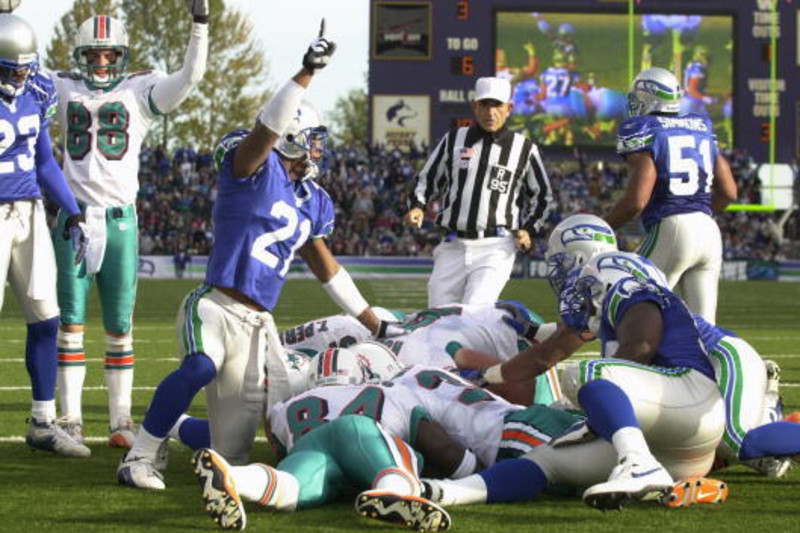
Hot take alert, Husky Stadium is better than Seahawks Stadium or whatever stupid name it is going by these days. Anyway, Seattle needed to play their first three regular season home games in 1994 at Husky Stadium due to the collapse of four ceiling tiles at the Kingdome. They again asked the University of Washington for some help in 2000 and 2001 while the former Qwest Field was under construction.