





















The history of haters starts at a simpler time…the mid-1990s. Notorious B.I.G. wasn’t the first person to have used the term playa hater, but he is credited with bringing the concept mainstream. For the rest of the decade, its meaning and usage was pretty straightforward.
A playa hater was someone who irrationally disliked a person who was clearly more successful than them. The justification for the hate always came back to another individual having more than they did.
As Silky Johnson proudly stated during The Playa Haters’ Ball sketch on Chappelle’s Show, “I’d like to thank God almighty for giving everyone so much and me so little.”
That sketch was interesting because it also introduced playa hater as a more general endeavor. When the haters are just riffing on celebrities, it perhaps opened a Pandora’s box that would eventually lead to the bastardization of the phrase. But let’s not get ahead of ourselves.
Anyway, sometime during the noughties the term playa hater was shortened to hater. There was also an uptick in usage during the decade, but it still wasn’t a major thing. Snitching was a far more prominent concern until roughly 2009.

No history of haters is complete without mentioning the song Hi Hater released by Maino in 2008. This is the tipping point for the phrase. It went from existing to a rallying cry for idiots, morons, scammers and folks looking to inflame tribalism. However, we have to understand the track in order to understand why that is.
Maino sucks and Hi Haters sucks. This was unequivocally one of the worst Jams of the Week on MTV Jams. It was an instant channel changer. But if you claimed that the song or MC was bad, you were being a hater.
Despite having a degree in philosophy, I’m not really a big philosophy guy. That being said, the logic here is beyond absurd. Seriously, let’s break down all the logical fallacies being committed.
Premise 1: Maino says people who don’t like him are haters.
Premise 2: I don’t like Maino.
Conclusion: I’m a hater.
Firstly, the argument is inherently circular. Secondly, it’s ad hominem. In this case, anyone who doesn’t like Maino is simply dismissed as being a hater which is a personal attack that bares no relevance to the point. There is also a bit of a straw man argument mixed in here as well.
You’ll never win an exchange with an individual using three logical fallacies simultaneously. It’s hopeless. The only experience I can reasonably compare it to is when my mom rented Ecco the Dolphin for me when I was 11 but someone had stolen the instruction booklet.
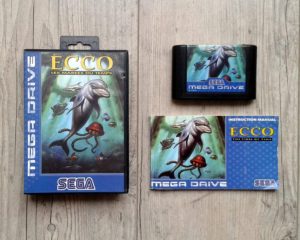
I turned it on and tried to figure it out. It was a futile experience. I made absolutely no progress during the entire weekend. Even today it’s kind of annoying to think about. That in a nutshell is what the hater argument has become. A kid trying to play Ecco the Dolphin without any help or instructions.
Over the past decade, the history of haters has taken a dark turn for the worse. The term hater is nothing more than a rallying cry for overly sensitive people or as a tool for scammers to manipulate others. Don’t take my word for all this. Let’s explore some examples of people leaning into the logical fallacies of haters to deflect from the truth.
A Big Phony: Who is Aaron Marino aka alpha m.?
A history of haters in examples
There is Tai Lopez who preys on people looking to get rich quick despite them clearly unsuitable for what he is selling. Dude calls out anyone who question his methodology as haters even though his own website it says his programs are basically junk:
The success of Tai Lopez, testimonials and other examples used are exceptional, non-typical results and are not intended to be and are not a guarantee that you or others will achieve the same results. Individual results will always vary and yours will depend entirely on your individual capacity, work ethic, business skills and experience, level of motivation, diligence in applying the Tai Lopez Programs, the economy, the normal and unforeseen risks of doing business, and other factors.
Related: Don’t give Tai Lopez your money because he isn’t legit
But it’s not just Lopez. Have you ever noticed how anyone selling a piece of crap product or pandering the lowest common denominator tries to get their following to buy into the idea of haters?
In the world of sports, Russell Westbrook loves to dismiss critics as haters. Sure, the guard averages a triple-double during the regular season. But he’s had no playoff success since Kevin Durant left Oklahoma City. As opposed to elevating his game by becoming a better shooter, the player lashes out at anyone who dare questions this shortcoming.
And a special shout out to conservatives who have mastered this technique. Of course, they don’t use the term haters. Instead, this group has swapped it out for socialists or fascists. But it’s the same tried and tested formula.
Also Interesting: Is the Motivational Doctor, Alan Mandell, a real doctor? The diagnosis isn’t good
Criticism ≠ hating
If someone is calling another person(s) out for hating, it usually means their position is so untenable, so indefensible that they are simply deflecting to maintain a false reality. They are in the wrong.
It is okay to offer up criticism. It’s also perfectly acceptable to not like something if you have a valid reason. Calling out Tai Lopez for scamming people or Russell Westbrook for shooting poorly is reasonable.
The idea of playa hating was steeped in unreasonable hatred. Folks hated on Biggie because he was fat and ugly but still got the girls and the money. That’s not cool. If you’re going to dislike something, at least have a reason why.
Unfortunately, this is a nuanced concept, and we live in a time that is decidedly unnuanced. Everyone wants to talk, but no one can be bothered to listen. It’s far easier to dismiss someone as a hater than to address criticism which may be hard to hear.
The only way to win an argument with a person who is calling you a hater is to call them a hater back. After all, they are hating on you for hating them. Sure, the logic here is pretty gross. However, we don’t exactly live in a day and age known for reason. As Michael Scott is fond to say…