
























There is a lot of talk about the Oakland A’s and the Bay Area market size. It’s also all propaganda being manipulated in a way to support faulty logic. People look at some numbers or a map and think they know everything.
The truth about the Oakland A’s and Bay Area market size is much more complicated than that. And really, it is not just the Bay. There are countless markets, especially in the West, that are amalgamations of places and spaces that are too complex for some to comprehend. Hell, I’ve come across countless Americans over the years that don’t know where, or in some cases what, Sacramento is.
So, what is the truth about the Oakland A’s and Bay Area market size? Let’s address that right now.
More Baseball: MLB inaction let the Houston Astros chase away all their fans
The truth about the Oakland A’s and Bay Area market size
Currently, the Bay Area consists of San Francisco, Oakland and San Jose among other cities and currently ranks as the tenth biggest market, according to Nielsen. This is what all those clown-show proponents of the Oakland A’s move to Las Vegas cite when saying the team should relocate.
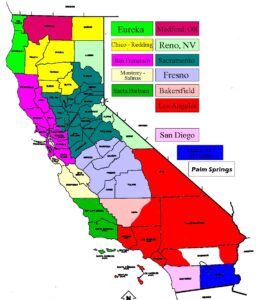
This is not reality, though. It’s textbook, theory and academic fluff that doesn’t actually take the real world into consideration. In the real world, Oakland is part of the Northern California market that spans from the Pacific Ocean to Lake Tahoe and the State of Jefferson (learn more about that here) to Modesto. Hello, Modesto.
What you have here is five of Nielsen’s 200 largest markets. That includes the tenth-ranked San Francisco, Oakland and San Jose and the 20th-ranked Sacramento, Stockton and Modest market. When you combined these markets, instead of counting them as separate, what you actually have is the third-largest Nielsen market in America.
Now, some of you will say, it doesn’t work like that. Those people are ones that haven’t been to Northern California let alone lived here for any period of time. Anyone born and raised there understands how this works, inherently so. NorCal is a way of life.
From a sports perspective, it makes perfect sense as well. You have folks in Redding that drive down to attend Sacramento Kings games. I knew I guy living in Colfax that had San Francisco 49ers season tickets. Every Northern California county has A’s fans that love the team.
The reason the team plays in Oakland is because that is where more people lived, or at least used in the 1980s and 1990s which was good for attendance. With Northern California’s population having dispersed through the Sacramento Valley and beyond over the past 20 years, a case can be made for having the franchise play anywhere from the South Bay to Sacramento. Not Stockton, though. Never Stockton.
As for those Fightin’ Athletics, leaving NorCal for Las Vegas is bad business. What, John Fisher is a bad businessman? How shocking.
Anyway, Vegas is the 40th-ranked Nielsen market with roughly 870,000 households. If you include Reno into that mix, it bumps up to 1.1/1.2 million. It is vital to note that Reno is much, much closer to Oakland and San Francisco than Las Vegas.
The combined Nevada media market is roughly the same size as Pittsburgh and slightly larger than Baltimore and Nashville. That’s fine but how does it compare to Northern California?
Well, let’s start with some reality. The San Francisco Giants are more popular than the A’s. There is no debating that fact. For argument’s sake, let’s say 50 percent of all Northern California households identify with the black and orange. I have also not included Fresno into this which is the 53rd largest Nielsen market. This has historically been Giants country with some Southern California leanings mixed in.
We also need to take into account that there will be households that don’t identify with either club or simply don’t care about baseball. In this case, we will put the number at 17 percent. That would leave 33 percent of the combined Northern California market as A’s fans. That is still more than 1.5 million households.
That would still be the 20th largest Nielsen market in America and roughly the same size as Cleveland. That is almost 30 percent larger than Las Vegas and unlike Sin City, the number of supportive households could actually be larger. That Nevada number assumes every single household supports that team which we all know isn’t going to be the case.
There are other factors to take into account when considering if a market can viably support a professional sports team. Age demographics and average income are also important. However, the larger the market size, the more potential you have to bring in fans, viewers and radio listeners. Teams aren’t chomping at the bit to move to Sioux Falls and the reasoning isn’t all weather-related.
Related: A’s Las Vegas stadium renders are booty and misleading
A’s alternatives to Northern California
If the Oakland A’s are to leave Northern California, there are only two markets that really make sense–North Carolina and Oregon. The reason for this is simple, both span multiple media markets over a large area that would support an MLB franchise.
Carolina is by far and away the biggest with Charlotte, Raleigh/Durham and Greensboro/High Point/Winston Salem consisting of more than three million households. The Atlanta Braves have long tried to claim these markets but this claim is as tenuous as when Sir Francis Drake planted a UK flag on California soil in 1579 and declared it to be Nova Albion.
The reality is that it’s simple words. North Carolina does have some Braves fans but it is also an odd hodgepodge of support. It’s safe to say the people here would happily adopt their newfound hometown team.
Oregon is the other A’s alternative to Northern California. The state boasts four of Nielsens top 200 markets and has more than 1.8 million households overall. Like North Carolina, the region doesn’t have a team to call its own although the Mariners do have some loose claims to it.
These two locations are the only viable alternatives to Northern California. And really, baseball would be better off giving both expansion franchises which wouldn’t come in with their own baggage or crappy out-of-town ownership.
Keep Reading: (Please don’t) Move the Miami Marlins