















NHL team relocations are wild. That is due to the fact the league attracts unqualified owners or ownership groups like moths to a flame. It seems that all you need to do to buy a professional hockey franchise is say you have money. That may be an exaggeration but only slightly.
Historically speaking, many markets that have lost teams ended up getting new ones. Unless your team happened to play in Quebec or Hartford. In that case, Gary Bettman has a deep, unexplained hatred for your markets and seems hellbent on making sure you never have an NHL franchise again.
Beyond that, most NHL team relocations involve unfit or underfunded owners making bad decisions. People in positions they should never have been in the first place were allowed to decide the fate of teams they sold anyway. It’s just wild.
Of course, it is important to note that a lot of this was due to the NHL’s rushed expansion efforts starting in 1967 as well as the WHA merger in 1979. Growth was preferred to stability. Sometimes the results were good for hockey—other times, not so much.
Finally, we are only looking at NHL team relocations after the Original Six era. However, it’s worth highlighting the Ottawa Senators who moved to St. Louis in 1934 before folding a year later. Both would eventually be granted expansion franchises decades later.
More Hockey: Dave Schultz and the most unbreakable single season record in sports
A brief history of NHL team relocations
Kansas City Scouts to Colorado Rockies
1976
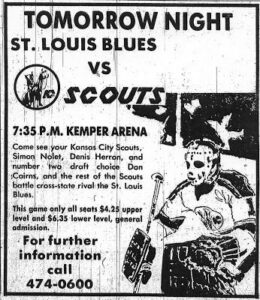
On the surface, Kansas City was a market that ticked many boxes in terms of expansion at the time. These included a new arena, positive local economics and a built-in rivalry with the St. Louis Blues. When the NHL awarded the city a franchise alongside the Washington Capitals in 1976, it made sense on the surface.
The reality, however, was much different. The WHA was in full swing by the time Kansas City hit the ice which drove up player salaries and meant filling out the roster was difficult. The team wasn’t particularly successful on the ice, although not nearly as bad as their expansion brethren, Washington.
The Scouts had two major issues. First, as the Kansas City Kings also found out, the market didn’t have a huge appetite for non-Kansas Jayhawks sports teams in the winter and spring months despite solid fundamentals.
Second, the ownership group was this hodge-podge collection of people who were able to pool their money together to buy a hockey team but didn’t have enough collectively to bankroll it. It didn’t help that the NHL insisted the franchise pay the St. Louis Blues a hefty sum in expansion and territorial fees.
That essentially prevented any local investors from saving the team in 1976 when debts overwhelmed existing owners. With the league unwilling to make hockey work in the city, Denver stepped in to welcome the Kansas City Scouts, although that arrangement did not last long either.
Oakland/Bay Arena/California Seals/Golden Seals to Cleveland Barons
1976
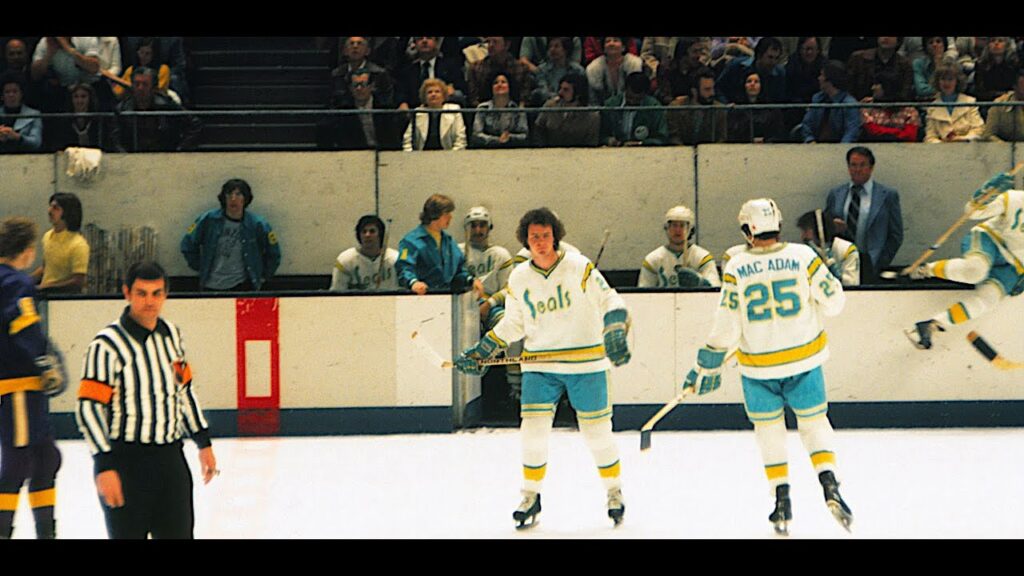
This franchise had more names than season ticket holders as the Seals’ story is a case of being in the right place at the wrong time. The team enjoyed success as the San Francisco Seals in the WHL. It won championships and did okay attendance-wise at the Cow Palace. Life in the major leagues was not so great.
There’s a great book on the history of the California Golden Seals by Steve Currier that I highly recommend reading. The Cliff’s Notes version of the team’s relocation goes something like this.
Owner Barry van Gerbig threatened to move the franchise almost the second it began to play in Oakland, where no one seemed interested in hockey. Attempts to sell the team to both Vancouver and Buffalo were blocked by the NHL who would instead grant both cities expansion sides.
Eventually, Oakland A’s owner Charlie O. Finley bought the club and managed it in his usual flamboyant manner. This did not translate to on-ice success, and he tried to offload the franchise to an ownership group planning to move it to Indianapolis. That was blocked by the league which bought the team in hopes of finding a suitable ownership group.
Melvin Swig stepped up to buy the Seals while also announcing plans to move the franchise to a new arena in San Francisco. That project never got off the ground. Minority owners George and Gordon Gund somehow convinced him to move the team to Cleveland in 1976. However, everything was done in such a slapdash manner that it set the club up for failure.
After two abject seasons, the Barons would merge with the Minnesota North Stars before a bunch of other shenanigans would unfold—more on those in a bit.
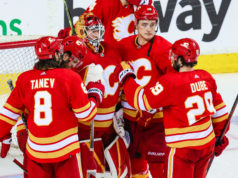
Atlanta Flames to Calgary Flames
1980
Unlike most other teams on this list, the Atlanta Flames were decent. They made the playoffs in six of their eight seasons in the Dirty South and attendance routinely averaged above 10,000 per game. Unfortunately, the team was a money loser due to several factors.
Flames owner Tom Cousins lost an estimated $12 million over the course of eight seasons, prompting him to put the franchise up for sale with a handful of potential relocation destinations mentioned. In 1980, it was acquired by Nelson Skalbania who moved it to Calgary.
The most curious thing about all of this has to be Calgary keeping the Flames’ name. Don’t get me wrong; it’s a cool name. But a Canadian hockey team named after the burning of an American city during the country’s Civil War is a real puzzler to this day.
Colorado Rockies to New Jersey Devils
1982
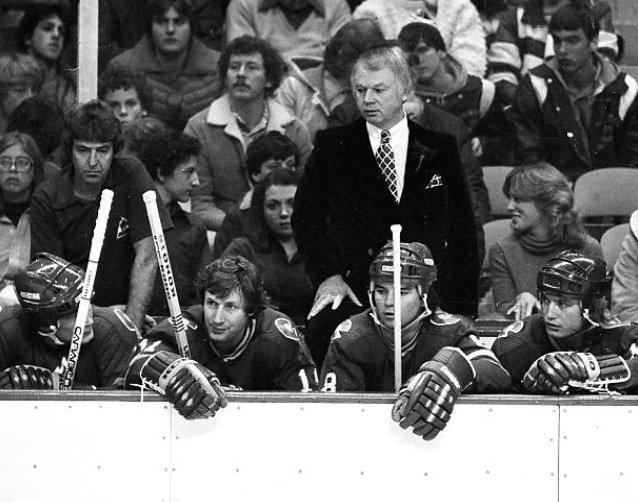
The Rockies’ time in Colorado lasted slightly longer than the Scouts’ time in Kansas City, although not by much. That being said, the market was far more receptive to hockey and even when the team wasn’t good, they were entertaining. Fans even got to enjoy a season of Don Cherry doing Don Cherry-type things.
Off the ice, the franchise suffered from an unfavorable lease at McNichols Arena as well as owner Jack Vickers’ own business struggles. It was so bad that Vickers did a TV interview during a Rockies playoff game against the Philadelphia Flyers in 1978 and said, “This is nice, but if you don’t buy more tickets, we’re moving.”
Fans didn’t even get a chance to respond as the Rockies were sold a few months later anyway. Arthur Imperatore was the buyer and intended to move them to New Jersey in two years, where a new arena was being built at the Meadowlands.
That would happen but not under Imperatore. The Rockies changed hands a few more times before John McMullen picked it up and dusted off those New Jersey relocation plans. The move left Denver without hockey for more than a decade, but it did free up the Rockies name for the state’s expansion baseball team that would start play in 1992.
Minnesota North Stars to Dallas Stars
1993
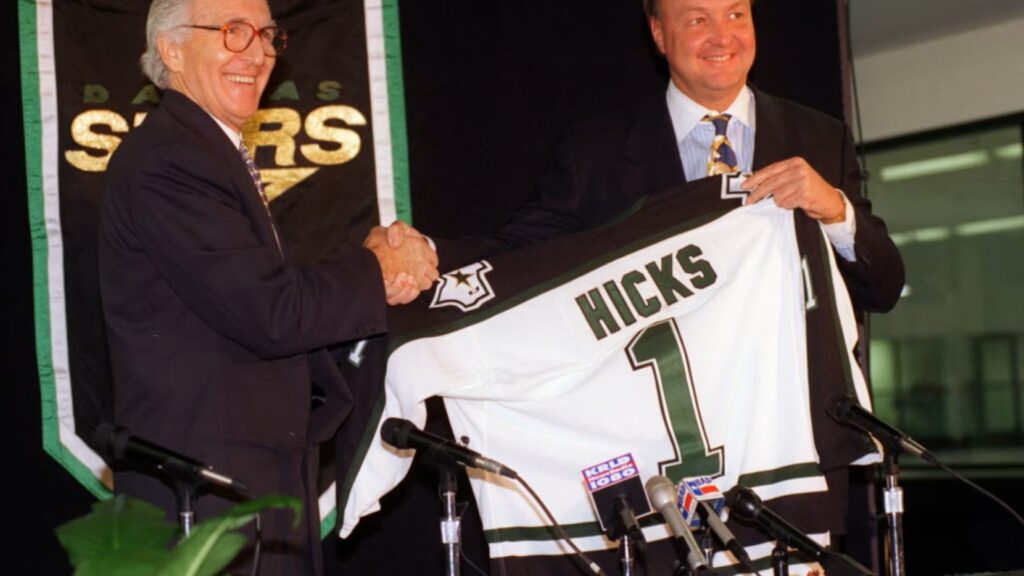
The last time we heard from the Gund Brothers, they were busy merging their hapless Cleveland Barons with the Minnesota North Stars in 1978. For some reason, they were granted majority ownership of the franchise which seems preposterous.
The Gund Brothers wanted the move the Minnesota franchise to the Bay Area in the late 1980s despite having already moved a team out of the region some 14 years earlier. As dumb as that sounds, this somehow gets even more ridiculous.
The NHL blocked that relocation attempt and instead let the Gunds buy an expansion team that would become the San Jose Sharks while simultaneously selling the North Stars to a new ownership group. To put an exclamation point on this stupid episode, the Sharks were permitted to draft a bunch of North Stars players with both sides then participating in the expansion draft.
It should be noted that while all this was unfolding, Minnesota was having one of the franchise’s most successful on-ice periods in team history. Unfortunately, none of that mattered because Norm Green would become the sole owner.
Minnesotans referred to Norm Green as Norm Greed which is probably because they are friendly folks. In reality, the new owner was a complete piece of shit. Let’s go over some of his greatest hits:
- Complained about low attendance which happened years before when he wasn’t even the owner of the North Stars
- Didn’t like the fact a sexual harassment lawsuit was filed against him despite him being a well-known sexual harasser. Wife threaten to move the team if lawsuits proceeded
- Wouldn’t move to the Target Center because of the cola wars and a number of other dumb reasons
- Refused any plan that would keep the team in Minnesota
The team would move to Dallas in 1993 in one of hockey’s most shameful moments. Karma would catch up to Green as a string of business failures meant he would sell the club a few years later. As for Minnesota, the Wild would begin play in 2000 at a brand-new arena in Saint Paul.
Quebec Nordiques to Colorado Avalanche
1995
First things first. Both Quebec and Denver should be NHL cities. If we are being honest, the only reason the Nordiques moved in 1995 was the exchange rate between the U.S. and Canadian dollar at the time. Despite the franchise having never lost money, then-owner Marcel Aubut demanded a preemptive bailout from the Quebec provincial government to cover potential losses. Utterly ridiculous.
With no bailout in sight, Aubut sold the team to an ownership group based in Denver who returned an NHL side to McNichols Arena, this time on much more favorable terms. As for Quebec, they have a new arena and a passionate fan base. Surely playing there would be more advantageous than say, I don’t know, holding games in some rinky-dink college stadium.
More Colorado: Denver (And Colorado) is a most underrated sports fanbase
Winnipeg Jets to Phoenix/Arizona Coyotes
1996
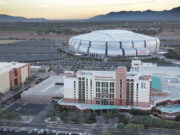
Speaking of teams playing in rinky-dink college stadiums, we come to the Arizona Coyotes who somehow find themselves in a worse situation than during the franchise’s last days in Winnipeg. Initially, it appeared the Jets would move slightly south to Minnesota, but that deal couldn’t get over the line. This caused all hell to break loose.
Locals tried to raise the funds needed to keep the Jets in Winnipeg, but they weren’t able to generate enough money. At least that is what NHL Commissioner Gary Bettman claimed. He was also on a crusade to rid the league of all those small-market WHA franchises.
To that end, Bettman carried on about how he wanted the Jets to stay while simultaneously putting hurdles in place to prevent that from happening. With Arizona unable to find a home for the Coyotes and hockey having since returned to Winnipeg, the joke has been on him.
Hartford Whalers to Carolina Hurricanes
1997
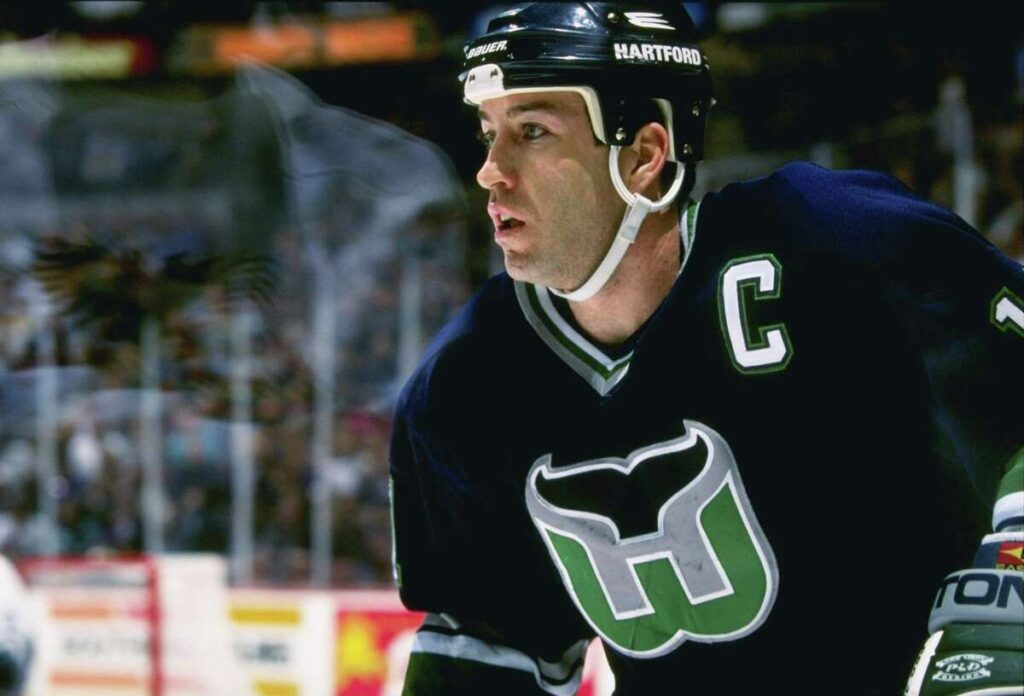
Peter Karmanos purchased the Hartford Whalers in 1994 under an agreement with the state of Connecticut not to move the team for four years. After two seasons, ownership began complaining about losses and demanded to relocate. A compromise was reached: if the team could sell a certain number of season tickets for the following season, the government would rework lease terms unlocking a path to additional revenue for the club.
This sounded great until Whalers ownership immediately undermined this effort by raising ticket prices, raising deposit minimums and eliminating flexible season ticket packages. Oh, they also set a deadline of one month to hit their ticket sales target.
Meanwhile, the government spent this time unsure whether or not they wanted the team to stay and at first refused to extend the ticket sales deadline. Both completely bungled this. There was some talk in early 1997 about building the team a new arena but that went nowhere. The Whalers played a final lame-duck season in Hartford before eventually leaving.
More Hockey: Paul Coffey was the Hall of Fame player no team wanted or needed
Atlanta Thrasher to Winnipeg Jets
2011
Things come full circle more or less with two markets already featured on this list. The NHL’s second go-round in Atlanta was somehow even more shambolic than its first attempt in the 1970s. Ted Turner purchased the expansion franchise but it became another victim of the AOL/Time Warner merger in 2003.
The hockey team was picked up by the Atlanta Spirit ownership group which also owned the Hawks. They had wanted to flip the franchise immediately. That wouldn’t happen, however. In-fighting among partners led to a protracted legal battle preventing any sale.
As that was going on, the Trashers lost an estimated $150 million between 2005 and 2010. The lawsuit’s conclusion finally meant the team could be sold with a relocation seeming inevitable. A who’s who of former NHL cities were involved with ownership groups in Kansas City and Quebec among those submitting bids.
However, a bid from a Winnipeg-based investment group would win out. A hockey team left Atlanta for the second time with the Jets 2.0 starting play in 2011. Considering Bettman said a professional sports owner would never choose to play in Winnipeg some 15 years earlier, this move must have really stuck in his craw.
More Hockey: The worst of the late 90s: The 1998 USA Men’s Olympic Ice Hockey Team