




A total of 19 existing MLB teams have opened a new stadium since 1992. Of the franchises to have moved in, 12 were sold, one is set to be sold and another is in a situation where it’s too early to tell what will happen.
So, what happens when MLB owners get a new stadium built? Odds are the owner is going to sell it sometime in the next decade or so.
When Oakland A’s owner John Fisher said he would be in Las Vegas for the long haul, it was a lie. History and numbers tell us otherwise. At present, 60 percent of all MLB owners to have gotten a new stadium built since 1992 went on to sell their team.
That figure will likely increase to 65 percent when Liberty Media offloads the Atlanta Braves as expected. The average time of sale is 6.8 years which, in the case of the Braves, means they are entering the average transaction time frame. This is also why the MLB imposed ‘Flip Tax’ on Fisher is meaningless.
There is more to the story than that, however. Of the five franchises to have not been sold, four are family-owned ballclubs with ties to their city. The fifth is the San Francisco Giants.
In Detroit, Mike Ilitch and his family have owned the Tigers since 1992 and were instrumental in getting Comerica Park completed in 2000. Meanwhile, the St. Louis Cardinals and New York Yankees have strong owners attached to their respective cities.
Meanwhile, the Minnesota Twins got a new stadium built despite attempts by Carl Pohlad to eliminate the franchise from baseball history a few years earlier. His family still owns and operates the club to this day.
A new ownership group took over the San Francisco Giants in 1992 with the sole purpose of getting a stadium built by the bay and keeping the team in town, two goals they have accomplished.
Three other teams with new stadiums have been excluded. We’re not including Coors Field or Chase Field as those were attached to expansion franchises. Their situations are much different than existing teams.
As for the Washington Nationals, they don’t fit into any box. Ted Lerner didn’t acquire the team until a new stadium had broken ground, so it doesn’t meet the criteria of an MLB owner getting a new stadium. For that reason, we’re excluding it.
Eight teams have not built new stadiums during the past 30 years. These are the two Chicago franchises, both Los Angeles ballclubs, Boston, Kansas City, Toronto and Tampa Bay.
More Baseball: Another week, another MLB relocation threat
Here’s what happens when MLB owners get a new stadium built
Camden Yards
New Stadium: 1992
Sold: 1993
On April 6, 1992, a new era in baseball stadiums was ushered in with the first regular season game played at Oriole Park at Camden Yards. Rick Sutcliffe hurled a complete game shutout in what was a 2–0 victory for the home team before a sellout crowd.
Nearly 18 months later, the Baltimore Orioles would have new owners. A group of local investors led by Peter Angelos acquired the franchise from a bankruptcy court. The team’s previous owner who oversaw stadium construction, Eli Jacobs, was basically forced to sell the team due to mounting debts.
While the backstory of this transaction is unique, it undeniably is the start of a major trend across baseball. What happens when MLB owners get a new stadium built? The team gets sold.
Progressive Field
New Stadium: 1994
Sold: 1999
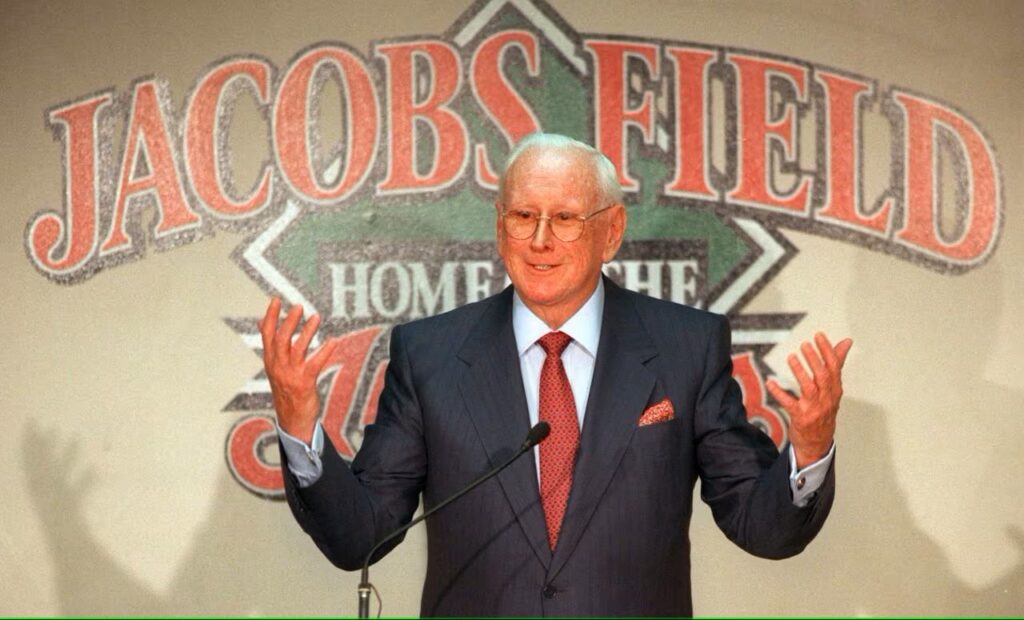
Jacobs Field opened in Cleveland ahead of the 1994 season. It was even named after brothers David and Dick Jacobs, who owned the franchise. Surely, if anyone were going to be in it for the long haul, it would be them? Yeah, not so much.
After the 1999 season, the brothers decided it was time to sell up and found a buyer in Larry Dolan. In the Jacobs’ defense, they spent a lot of money when in charge of Cleveland. The brothers also made a hefty profit for their troubles. As for Dolan, well, the Dolan family and sports ownership don’t mix.
The Ballpark at Arlington
New Stadium: 1994
Sold: 1998
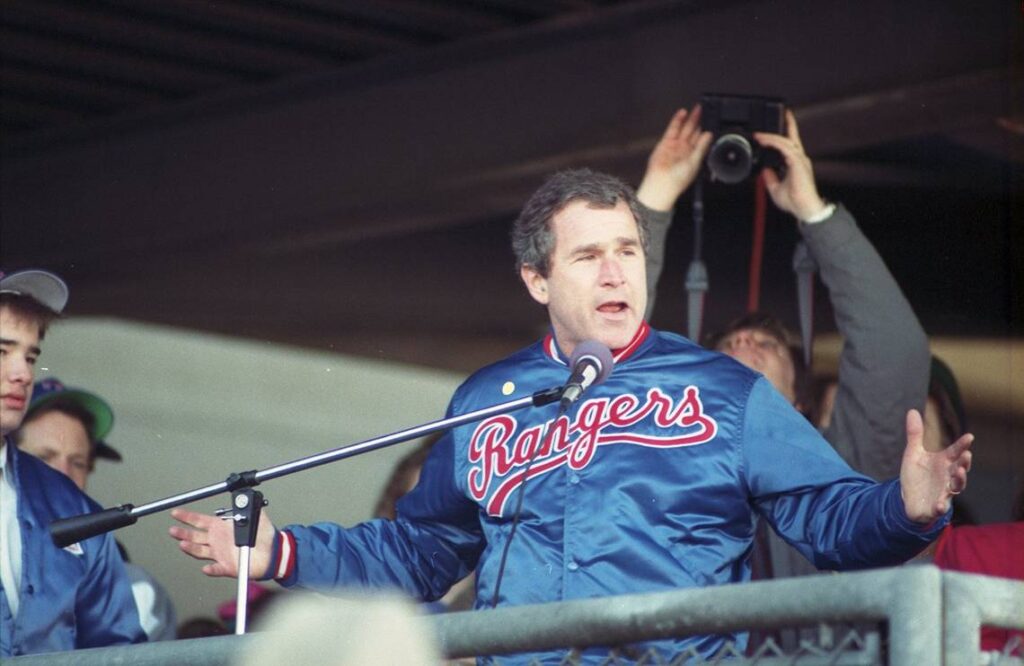
George W. Bush and a bunch of cowboy cronies pulled the ultimate real estate boondoggle on the city of Arlington. The Center for Public Integrity has an excellent look at this story but let’s get to what is important as far as our topic of what happens when MLB owners get a new stadium built.
Bush didn’t have to look far for a buyer as his one-time neighbor Tom Hicks purchased the Texas Rangers four years after The Ballpark at Arlington was finished. This was part of Hicks’ ill-fated attempts to build a sports empire.
T-Mobile Park
New Stadium: 1999
Sold: 2016
Originally known as Safeco Field, this remains one of baseball’s most outstanding venues. As for the team that calls the stadium home, the Seattle Mariners were purchased by Nintendo of America in 1992. The group has deep roots in the Pacific Northwest, even if they haven’t always been a great steward for the franchise.
Anyway, this is one of a few cases of ownership not flogging a team in the aftermath of a stadium being built. Nintendo of America wouldn’t sell the Mariners until 2016. That is likely due to the fact the team has managed to turn a profit every year since Safeco Field opened and Japanese firms are extremely conservative when it comes to unloading profitable assets.
Minute Maid Park
New Stadium: 1999
Sold: 2008*
In 2008, Jim Crane backed out of a deal to buy the Houston Astros from Drayton McLane at the last minute. After spending the next two years bidding on every MLB side to hit the market, Crane would double back to buy the franchise in 2011.
All things considered, McLane was ready to cash out in 2008, less than a decade after getting a new stadium. The Astros began their tank-a-palooza at this time and spent the next six years in the baseball wilderness.
PNC Park
New Stadium: 2001
Sold: 2005
PNC Park opened in 2001 giving the Pittsburgh Pirates a beautiful new home. A few years later, minority owner Bob Nutting, well his family, would purchase controlling interest in the franchise. There were a few other issues at play here, but this probably doesn’t happen without a new ballpark having already been completed.
American Family Field
New Stadium: 2001
Sold: 2004
Who started all this? Probably Bud Selig. Seriously, who else could it be? Despite having served as acting commissioner since 1992, the Selig family was never forced to give up its stake in the Milwaukee Brewers. Selig maintained he handed over the reins to his daughter, but that seems far-fetched given what happened.
The team began working on a new stadium in the late 1990s which would open in 2001. And what do you know, a few years later in 2004, Selig’s family sold the Brewers. They could have sold it in 1998 when he was named commissioner on a permanent basis. The family could have sold it anytime before Miller Park was finished. But they waited.
Also Interesting: The Milwaukee Brewers relocation threat is a baseball shakedown
Great American Ball Park
New Stadium: 2003
Sold: 2006
A similar episode played out with the Cincinnati Reds who opened Great American Ball Park in 2003. At the start of 2006, Carl Lindner offloaded the team to a new ownership group.
Petco Park
New Stadium: 2004
Sold: 2012
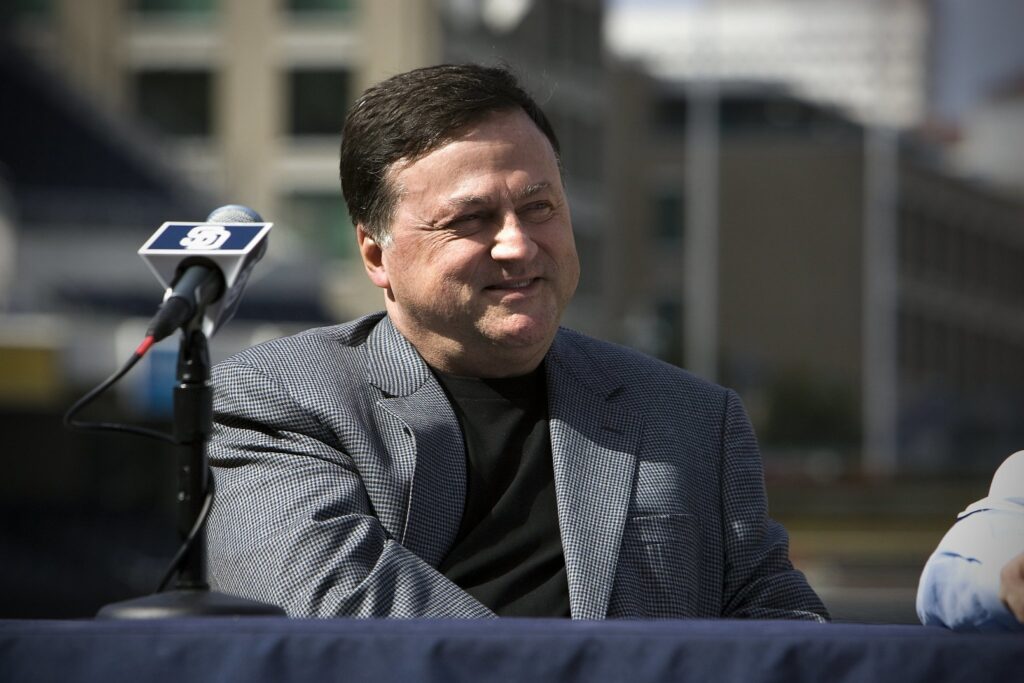
There is arguably no more perfect marriage between stadium and location than Petco Park. It’s awesome. Unfortunately, then owner John Moores couldn’t enjoy it for long. A messy divorce in 2008 forced him to put the team up for sale. After a few deals fell through, he would offload the San Diego Padres to a group led by Peter Seidler in 2012.
It would be wrong to attribute the sale of the Padres to anything other than Moores’ divorce. However, it is still another MLB team changing hands after a new stadium was finished.
Citizens Bank Park
New Stadium: 2004
Sold: 2016
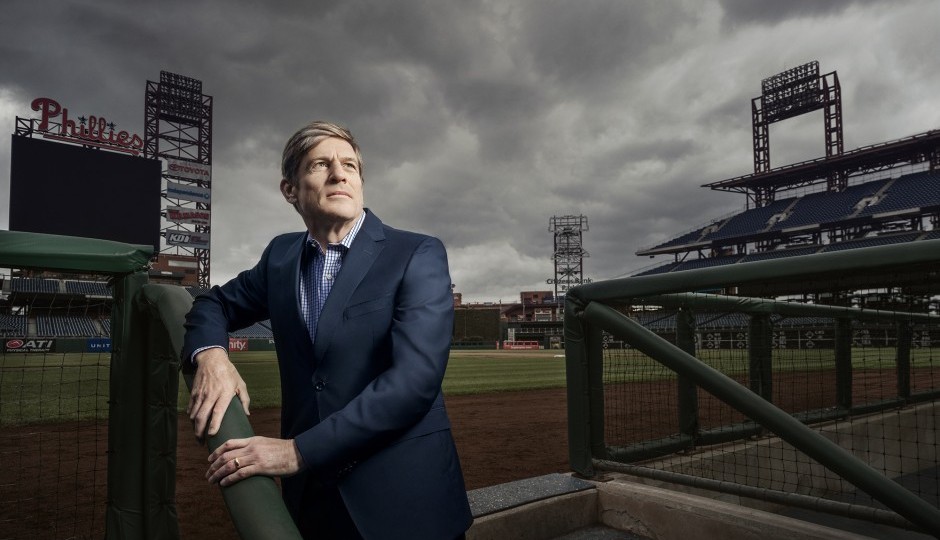
Also opened in 2004 was Citizens Bank Park, a fairly underwhelming facility that is overrated by most. Anyway, John S. Middleton purchased a 15 percent stake in the Philadelphia Phillies during the 1990s and had been lurking in the shadows of the franchise until 2016.
This situation has a fair share of conspiracy theories and palace intrigue but what we do know is that Middleton slowly built up his ownership stake to 48 percent by 2014. The same year, then Phillies president David Montgomery was diagnosed with jawbone cancer.
Middleton used this illness as a platform to essentially take control of the ballclub. By 2016, other MLB owners had approved his bid to become the team’s principal owner in what appeared to be a bloodless coup.
Citi Field
New Stadium: 2009
Sold: 2020
Steve Cohen bought the New York Mets from noted Ponzi scheme patrons Fred Wilpon and Saul Katz in 2020. He had initially acquired an eight percent stake in the team as the Wilpon family and Katz looked to stave off various lawsuits. The goal for them was simple. Hold out long enough so they wouldn’t have to take a cut-price deal on the franchise when they did sell it.
And some 11 years after Citi Field opened, they were able to do just that when Cohen purchased the entire Mets franchise for US$2.4 billion.
Meet The Mets Dead Payroll: New York Mets dead money isn’t the 14th highest payroll in MLB but it’s a lot
LoanDepot Park
New Stadium: 2012
Sold: 2017
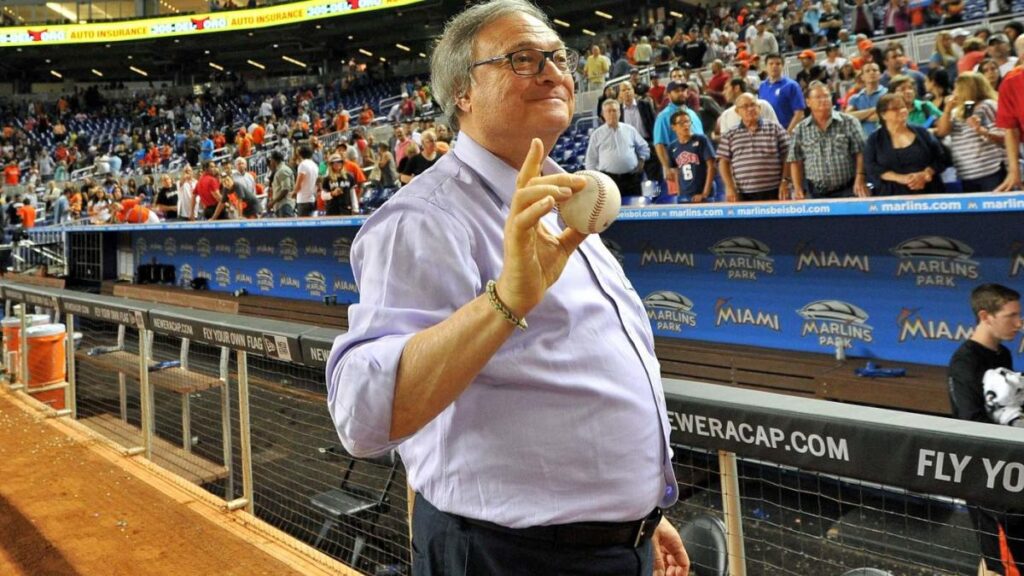
Let’s start with the Miami Marlins and a topic covered here previously. In 2012, scumbag Jeffery Loria finally got a new baseball stadium completed in the city. Surely, the art dealer was in it for the long haul just as Fisher claims he is. Yeah, about that.
Loria sold the Marlins five years later, raking in a considerable profit for his troubles. It was pretty obvious his goal the entire time was precisely that. He purchased an MLB franchise, built a new stadium, waited a few years and then flipped it.
Related: (Please don’t) Move the Miami Marlins
Truist Field
New Stadium: 2017
Sold: TBD
The Atlanta Braves moved into Truist Park in 2017 which was part of a larger real estate development built by Liberty Media, the ballclub’s owners. All of those assets were placed into a separate publicly traded company this year with two clear goals in mind.
The first was for the ownership entity to gain tax breaks. I suppose those hundreds of millions of dollars in public financing weren’t enough to help. Anyway, the second goal of the spin-off was to make it easier for Liberty Media to sell the Braves. In fact, most folks believe it is a matter of when, not if, the team is sold.
Globe Life Field
New Stadium: 2020
Sold: TBD
As of publication, there have been no public mentions of Texas Rangers owners Ray Davis and Bob R. Simpson wanting to sell the team despite Globe Life Field opening in 2020. What we do know is that Janice Simpson put her 10 percent stake in the ballclub up for sale in 2023 with the valuation of the Rangers coming in at US$3 billion. Given what we know about MLB ownership trends, it will be interesting to see what happens with the Rangers in the next few years.