













Every college football team wants to be in a bowl these days. Good teams. Bad teams. Eligible teams. Ineligible teams. It’s extra money, additional practices and free exposure. In modern times, it allows teams to prepare for the next season in the aftermath of transfer portal activities.
That isn’t to say teams haven’t declined bowl bids in the past. Obviously, there were a bunch during the pandemic season. In 2012, it was widely reported that Louisiana Tech declined an invitation to the Independence Bowl because they didn’t want to play Louisiana-Monroe. Instead, the 9-3 Bulldogs spent the holiday season on the couch.
However, most would assume an unbeaten college football program that had been playing for more than 100 seasons would welcome its first-ever bowl bid. Maybe even celebrate it. As Lee Corso has been known to say, “Not so fast my friend.” This is the story of Rutgers football going undefeated before rejecting the chance to play in the school’s first bowl game.
Rutgers loves to brag about how it hosted the first college football game way back in 1869. Nice. What those Scarlet Knights, or Queensmen as they were once called, don’t like to talk about is what happened in all those years since.
That’s because the answer is not much. They were ranked in 1958. However, that season was spoiled by a loss to non-major Quantico Marines. Rutgers would go unbeaten in 1961 but their schedule was so weak that the program was never ranked, nor did it receive a bowl invitation. They were one of only three sides to have not lost that year.
One thing to note here. NCAA football had yet to divide itself into Division I and Division I-AA, meaning Ivy League schools and a bunch of random conferences we don’t associate with top-flight football were in the mix. There were also no regulations on who you could or couldn’t play. That will become important as we progress.
More Bowls: What happened to the Outback Bowl? An ode to respectable sponsorship
Leading up to 1976
Rutgers hired longtime assistant and former quarterback Frank R. Burns as head coach ahead of the 1973 season. He had a grand vision for the program which involved becoming something bigger than the regional outfit it had been known as for decades.
These efforts seemed to work with Burns going 6-5, 7-3-1 and 9-2 in his first three seasons in charge. Rutgers also began playing teams outside of its geographical footprint as it looked to expand its profile nationally.
However, it was always difficult to tell just how good the Scarlet Knights were because they scheduled an absurd number of games against Division II teams. Sure, the gap between the two divisions wasn’t as great as it would be in the future, but it still wasn’t a good look. We are talking about four or five games each season against lower-level sides.
Rutgers football and its undefeated season
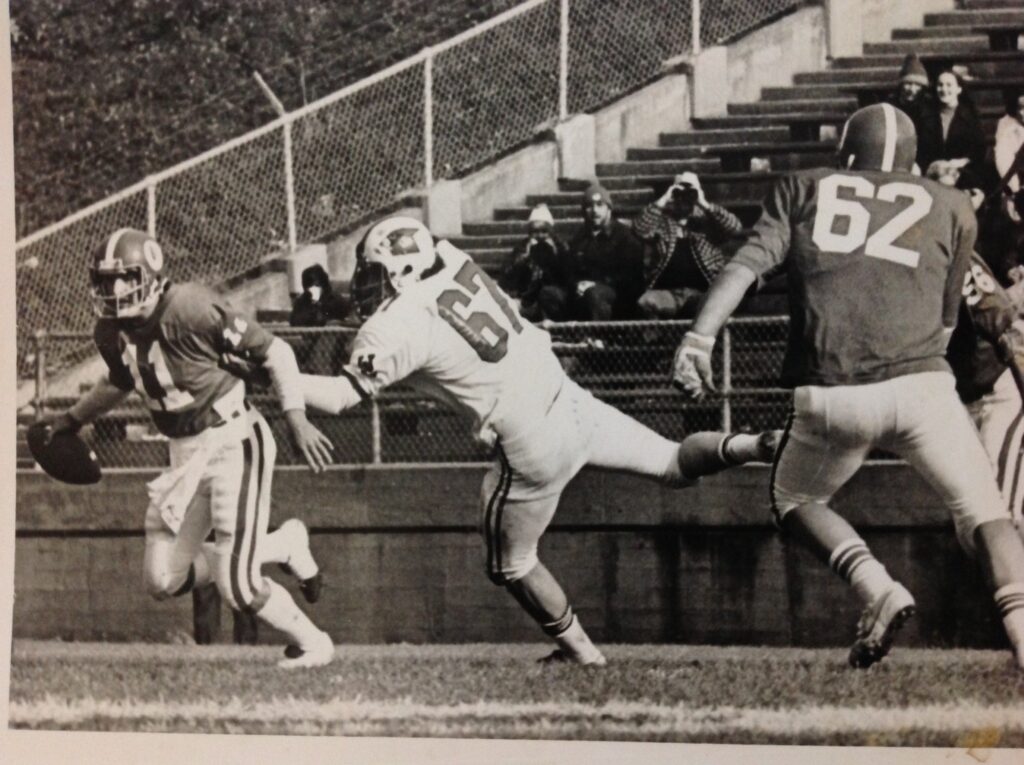
No one thought much of Rutgers heading into the 1976 season. They opened with three straight road wins against Navy, Bucknell and Princeton. The Scarlet Knights’ defense was the star here, allowing a combined 10 points over that span.
Rutgers rolled through October to push their record to 8-0. That came with a massive asterisk. Four victories came against DII schools and three were against Ivy League opponents. However, they closed the year with a trio of DI independents meaning the Scarlet Knights would have a chance to prove their credentials.
A 34-0 shutout of Louisville put Rutgers on the map. The result surpassed what No. 2 Pitt and No. 18 Alabama did against the Cardinals that year. This drew the attention of bowl selection committees who were curious about one of the final three unbeaten sides in America. The others were eventual National Champions Pitt and Maryland.
The following week, Rutgers traveled down to New Orleans for a showdown in the Superdome against Tulane. According to a New York Times report, representatives from both the Peach Bowl and Tangerine Bowl were in attendance scouting Rutgers.
The Scarlet Knights collected a 29-20 victory over the Green Wave and hoped these efforts were enough to convince Bowl selectors to pick them. Rutgers also received a boost when it climbed into the AP Top 25 for only the second time in school history and the school’s first appearance in the polls since 1958.
Bowl season politics
Rutgers had a bye after the Tulane game before playing its final contest of the season against Colgate. At this time in college football, bowl invites were usually handed out before the final weekend of the season.
The team thought it had a legitimate shot at landing in the Tangerine or Peach Bowls. They were ranked and unbeaten. From the perspective of the Bowls, the Scarlet Knights hadn’t played anyone of note and were a huge risk. After all, if they lost that final game of the season, there would be no interest in the team.
Despite politicking behind the scenes, only one bowl bid was forthcoming. The inaugural Independence Bowl wanted Rutgers to head down to Shreveport, Louisiana for a matchup against McNeese State. Given that this would have been the first bowl game in program history, you may think the school would have snapped it up.
On the contrary, no one at Rutgers wanted anything to do with the Independence Bowl. School officials did not like the fact the game had no money guarantee and no television coverage. Meanwhile, the coaching staff didn’t think the new bowl game had the pomp and circumstance required to make a trip worthwhile.
Ultimately, the decision was left up to the players who voted on whether to play or not. According to starting quarterback Bert Kosup, the vote was 60-40 in favor of skipping the bowl game. For most on the team, there was little appetite to practice during the winter.
Burns would voice his support for the players’ decision, “The coaches and I are in total agreement with the decision, and now we can concentrate all of our efforts on the Colgate game. The Thanksgiving night game with Colgate is the most important thing we have and the most important game in Rutgers football history. I am relieved that this is over and we can get back to what is so important to us.”
Instead of going bowling, the team turned its regular season finale against Colgate into a bowl game of sorts. It was rescheduled from Saturday to Thanksgiving Day and moved to the recently opened Giants Stadium. The matchup was also broadcast live throughout the region on ABC’s New York affiliate.
Rutgers football closed out its undefeated season with win the game with some help from a phantom clipping call to close out their unbeaten season. New Jersey Gov. Brendan Byrne even declared Nov. 26, “Hooray for Rutgers Day”.
Aftermath
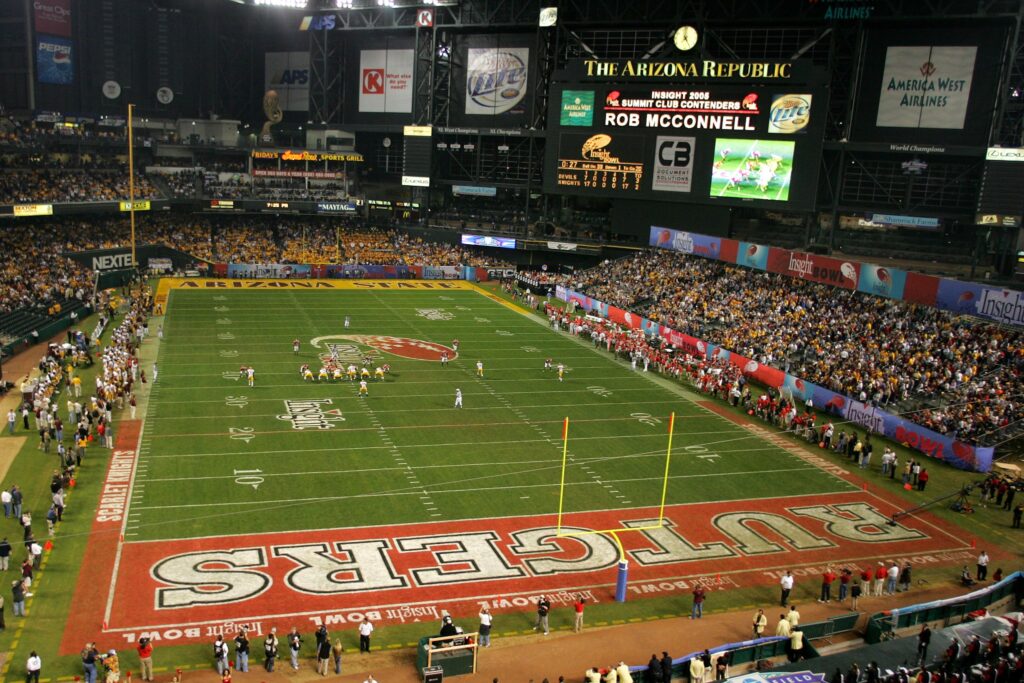
Rutgers finished 1976 ranked 17th in the nation and was the highest-ranked program not to play in a bowl game that year. Meanwhile, Tulsa was invited to the Independence Bowl in place of Rutgers and that game is still played to this day.
As for the bowls that snubbed Rutgers, the Peach Bowl opted for Kentucky and 19th-ranked North Carolina, with the Wildcats winning 21-0. The Tangerine Bowl selected BYU and their high-flying offense, although the Cougars were boat raced by Oklahoma State.
Rutgers would finally make it to their first bowl game two seasons later, playing in the inaugural Garden State Bowl in the Meadowlands. It would be another 27 years before they went bowling a second time.
All things considered, it is easy to see why Rutgers didn’t want to play in the Independence Bowl. And you can’t really blame the players, coaches or school administrators for feeling as if they got the short end of the stick. On the other hand, this was a side that had four wins against DII schools and no track record against high-level opposition. Besides, there was no way of guaranteeing that Rutgers football would be undefeated heading into the game.
There isn’t anyone to blame. No one got screwed. This is just the curious case of the unbeaten college football team that rejected its first-ever bowl bid.
Keep Reading: A brief treatise on what makes college football great and what will destroy it