












The first championship game in NFL history was a mess in more ways than one. It was a mess because the surface was a mix of bark, dirt, and leftover elephant dung. It was a mess because it was the first indoor game ever organized in NFL history. It was a mess because the game shouldn’t have actually been played in the first place.
The NFL didn’t make a hell of a lot of sense in 1932. Staten Island had a team. The forward pass was still a novelty more than a successful football strategy. And ten games ended in ties that season, although these didn’t count in the standings. I mean the games were played, stats were recorded but the result didn’t matter.
This conveniently brings us to why the NFL needed to play a championship in the first place. Up to this point, the side with the best regular season record was awarded the title. Heading into the final game of the regular season, the Green Bay Packers were the best team in football, boasting a 10-2-1 record. This was the most wins in football in 1932 by some margin, but they still found themselves in a must-win game against the Chicago Bears. That’s because those Bears, despite having only won five games, would have a higher winning percentage than their rivals due to six ties.
Since winning percentage was calculated without the ties, 6-1 was better than 10-3 which would make Chicago champions.
The Bears broke a 0-0 deadlock in the fourth quarter and duly won 9-0. Green Bay and its ten wins would not be champions. However, there was a catch for the Bears. Namely, they had the same exact winning percentage as the Portsmouth Spartans, who had six wins, one loss, and four ties. Oh yeah, the Bears played two more games than the Spartans, but it didn’t even matter.
When determining the NFL champion at this time, a tie in winning percentage meant the tiebreaker would be head-to-head record. That turned out to be useless since the two teams played twice and tied each time.
With America facing the Great Depression and professional football teams desperate to make money any way they could, Bears owner George Halas and others in the NFL saw a chance to boost their coffers…a one-off championship game. This, by the way, would be the first postseason contest in league history and required a quick rewrite of league rules.
That was the easy part. Now, they had to organize the championship game in less than a week. The Spartans quickly agreed to play the game in Chicago because attendance would be higher meaning more cash. The weather was not as agreeable.
Snow and freezing temperatures in the Windy City meant having the game at the Bears’ home of Wrigley Field would limit the number of people willing to attend. With more snow on the way, Halas suggested moving the game indoors to Chicago Stadium. The same Chicago Stadium that would be home to the Chicago Bulls first three-peat some 60 years later.
Anyway, the Bears had played here before, although it was a charity game, and no one really knew the rules or what was happening. Indoor football games had also been played elsewhere in America dating back to 1902. There was still a lot of risk involved in doing two firsts at the last minute.
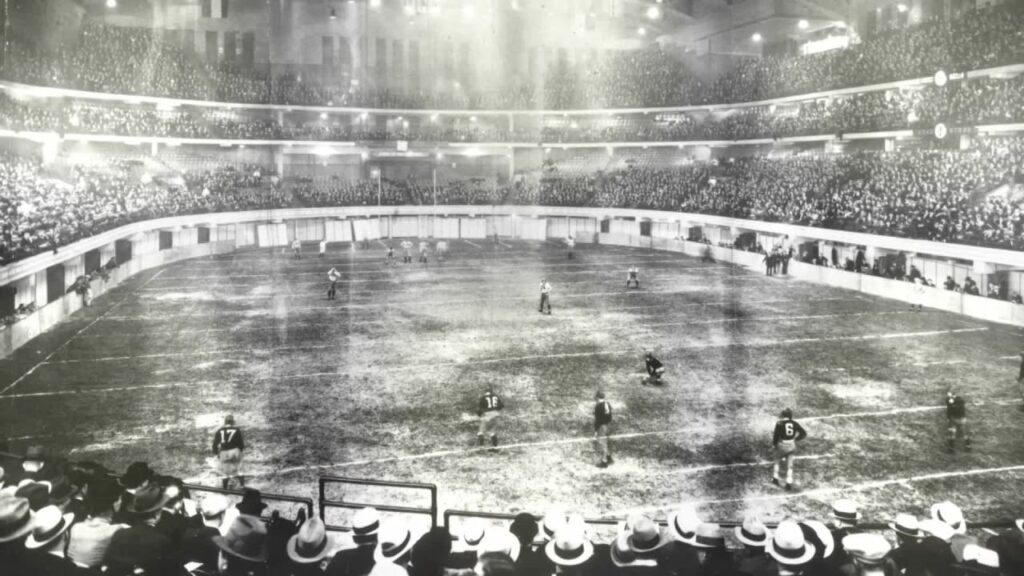
The plan to play at Chicago Stadium came exceptionally late in the week, with the local newspaper not announcing the venue change until two days before kickoff. While one mess may have been cleaned up, another needed tending to. What would the rules and field layout be?
This led to a slapdash of random things, most of which had never been seen before. For starters, Chicago Stadium could only accommodate a 60-yard field and 10-yard end zones with the field width also being smaller. To accommodate the smaller field, all plays started with the ball on or between the hash marks in a first for the NFL.
Elsewhere, dropkicks and field goals were banned. Additionally, there was a stipulation requiring the ball to be moved back 20 yards when a team crossed their opponent’s 10-yard line. In other words, this was not going to be your traditional game of gridiron football. But it was good enough for the participants.
The final challenge that needed to be solved before kickoff was what were the players going to play on. It wasn’t like vast tracts of grass were readily available during the Chicago winter. Astroturf wouldn’t be invented for another 25 years. The only solution was a proper mess.
The Chicago Stadium floor was concrete, which wasn’t going to work. However, the venue did have a ton of dirt left from the circus that had just been in town. Calling this dirt would be generous. There was some dirt in there, but there was also quite a bit of elephant feces, random debris, and garbage mixed in.
No cleanup or screening took place. The stadium staff just placed everything down, tossed some bark on top and painted field lines. That was it. And if it sounds awful, well, being there was worse than you could ever imagine.
Virginia Halas McCaskey, who would eventually become Bears owner, was at the game and had this to say in a 2019 interview with the Chicago Tribune when asked about what she remembered about it:
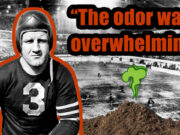
“Just the odor. It was almost overwhelming because the circus had just left town.”
The rules were janky, the field smelled like crap and no one knew it was going to be played indoors until two days before the actual game. The first indoor game and championship game in NFL history was ready to go. For Portsmouth, it would be proceeding without a key player.
Starting quarterback and kicker, Dutch Clark, had a prior engagement. He was also the head basketball coach at Colorado College, and the school was unwilling to give him any time off. Since he couldn’t foresee a game that was never supposed to happen actually happening, the future Pro Football Hall of Famer would be forced to miss out. For what it’s worth, he went 14-6 as a basketball coach that season.
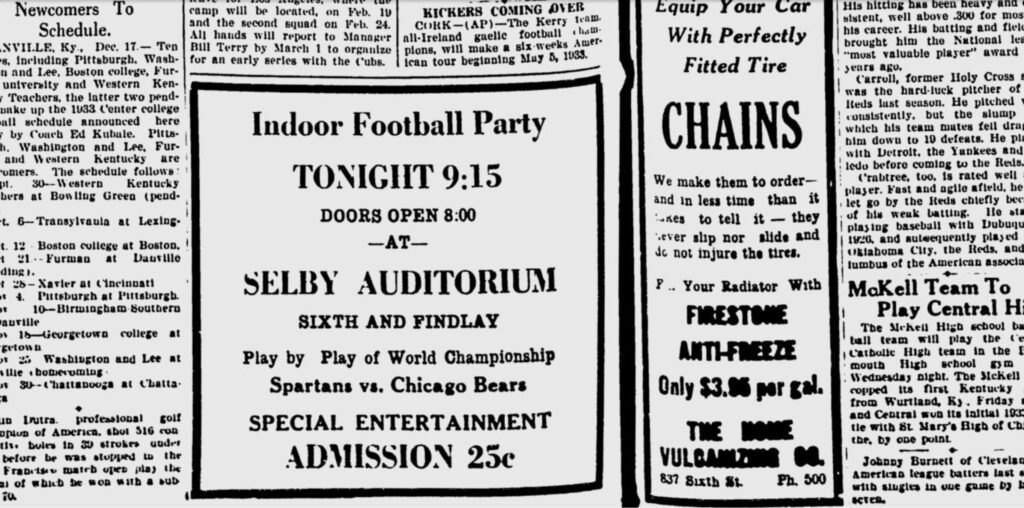
Even before things kicked off, the first championship game in NFL history was far more successful than it had any right to be. Chicago Stadium sold out, with 11,108 people in attendance. This was more than double the Bears last home game against Green Bay one week earlier.
Back in Portsmouth, Ohio, fans paid 25 cents apiece to attend what could best be described as a listening party in a local auditorium. At a time when professional football was struggling to build an audience, this was perhaps the most anticipated moment in league history to date.
Also Interesting: A startup football league thwarted one of the NFL’s greatest teams
The first championship game in NFL history kicks off
Unfortunately, the game itself was nothing but a grand mess and we’re not just talking about the grown men rolling around in elephant turds. The teams didn’t know how to cope with the narrower field, and playing on dirt with some bark sprinkled on top didn’t provide the best footing. Punts and kickoffs clanged into the stands behind the endzone.
The first three quarters were scoreless which wasn’t all that surprising considering the Bears first three games of the 1932 season ended 0-0. Business did pick up in the fourth quarter, though.
Facing a fourth-and-goal at the two-yard line, quarterback Bronko Nagurski threw a pop pass to Red Grange for the game’s first score. The play was illegal back then since Nagurski wasn’t five yards behind the line of scrimmage as a passer was required to be before throwing the ball forward. That being said, Nagurski was constantly doing this and never getting flagged. What are you going to do?
For the Spartans, the answer was not much. They fumbled the ball out of their own end zone for a safety a few minutes later and the Bears would seal the first professional football championship in over a decade.
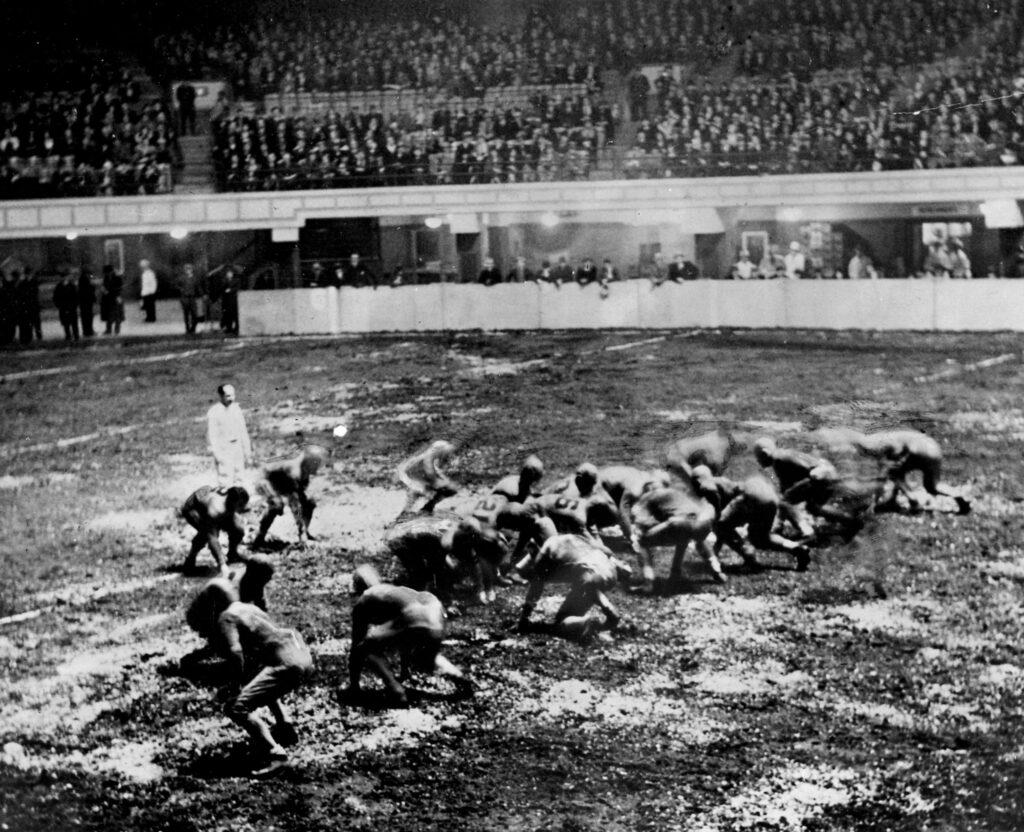
The game itself was little more than a messy spectacle. At the same time, it was exactly what the NFL needed. To shake things up, get a little dirty and throw some crap on the wall to see if it stuck. In this case, that turned out to be elephant crap.
Firstly, the championship game became a focal point of the NFL schedule, with the league separating into two divisions starting in 1933. On the downside, the stupid winning percentage formula that removes ties was used to determine the division winner. And with overtime still decades away, ties were still very much a part of the standings.
Starting each play with the ball on or between the hash marks also became a permanent NFL feature thanks to the first indoor game in league history. Elsewhere, the forward pass became legal anywhere behind the line of scrimmage as opposed to five yards behind because Bronko Nagurski was going to do it regardless.
The Portsmouth Spartans would play one more season in Ohio before moving to Detroit in 1934 and becoming the Lions. They would go on to win the NFL Championship in 1935
And as for Dutch Clark, the Portsmouth starting quarterback who didn’t get to play in the first indoor game. He skipped the 1933 season to focus on a new job–head football coach for the Colorado School of Mines. He did return to the Spartans franchise, then playing in Detroit, in 1934, won the title in 1935 and eventually assumed the role of player-coach during the 1937 and 1938 seasons.
Perhaps the only notable thing to not emerge from the first indoor game in NFL history was more indoor games. That’s because, as they say, the technology simply wasn’t there yet. Without venues capable of supporting full-sized fields covered by a proper playing surface, the idea wasn’t feasible and wouldn’t be until decades later.
The first championship game in NFL history was a mess…literally. But in this case, the mess was good because it allowed the professional game to get out from under the yoke of college football. It would still be some time before the NFL truly captured America’s attention. However, this game featuring a way too short field and players running around on elephant turds was the start of that process.
Keep Reading: The many rises and falls of Arena Football