







All sports dynasties come to an end. However, the cause does vary. For some, time catches up to them and on other occasions roster management ruins things. Neither of those thwarted the 1970s Miami Dolphins. In their case, a startup football league derailed one of the NFL’s greatest teams.
Despite being perhaps the worst team in the AFL leading up to the league’s merger with the NFL, things turned around quickly in 1970 when the franchise hired Don Shula to be head coach and general manager. After having never won more than five games in a season, Miami racked up 10 victories and its very first playoff berth.
Things were even better the following season when Shula led the Dolphins to the Super Bowl. And while they lost that matchup to the Dallas Cowboys, the future was looking incredibly bright for a team who boasted a core of offensive talent just entering their primes.
Quarterback Bob Griese was never the most prolific passer. Miami didn’t need him to be. They boasted the NFL’s best rushing attack with Larry Csonka, Jim Kiick and Mercury Morris grinding teams into submission.
When the Dolphins did need to pass, they could throw it to Paul Warfield, the league’s premier vertical threat. This, combined with an outstanding defense, set the team up for even greater success as the 1970s progressed.
Everything came together in 1972 when Miami completed the perfect season and brought the Super Bowl trophy to South Beach. The Dolphins lost two games in 1973 but the end result was still the same, another championship was celebrated on South Beach.
More Stories: George Blanda and football’s single-season interception record
Owner power
When the Miami Heat failed in their quest to three peat, Pat Riley was left at the mercy of LeBron James. Free agency had given players all the power and they were able to go where they wanted. The 1970s NFL was the complete opposite.
Free agency didn’t exist back then. Well, that’s not entirely true. It was possible but the rules governing it were such bullshit that a court ruled they violated Section 1 of the Sherman Act as an unreasonable restraint on trade. Owners held all the power.
Miami was positioned to dominate the decade. Warfield was 30 and probably didn’t have a lot of time left. However, most of the team’s core was under 30. It was a great time to be a Dolphins fan.
Too good to be true
The Miami Dolphins had all the makings of a super team heading into 1974. Until March 31, 1974, that is. But before we understand the significance of that date, it is important to revisit another day a few months earlier.
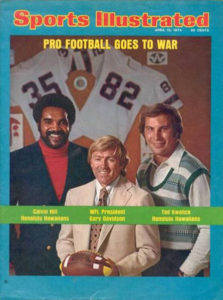
On October 2, 1973, plans for a startup football league were announced that would end one of the NFL’s greatest teams. Of course, the world didn’t know it at the time. The public wasn’t sure what to expect when a group of investors got together and formed the World Football League (WFL).
The idea of two rival football leagues going head-to-head was hardly a novelty. After all, it happened throughout the 1960s. However, the NFL had a much bigger footprint by 1973 as well as better access to talent at this time than when the AFL took the field in the 1960.
In fact, the only real way for the fledging league to secure any NFL players was to get them to sign futures contracts. Which brings us back to March 31, 1974.
The Toronto Northmen were one of the WFL’s confirmed franchises. Owner Johnny Bassett, an avid sports fan who would also go on to own a USFL team, wanted to make a splash and felt like the two-time Super Bowl champions were a good place to start.
He invited Csonka, Kiick and Warfield to Toronto intending to sign all three no matter the cost. And boy was it exorbitant. The trio, all represented by agent Ed Keating, asked for a combines guaranteed salary of $3.86 million over three years, signing bonuses, guaranteed product endorsements, luxury apartments, automobiles and travel expenses among other things.
This was unheard of for any professional athlete at the time. Hell, Csonka pulled in a paltry $55,000 in 1973. What’s more, Bassett’s offer was in the form of a guaranteed, personal services contract and not through the league. No matter what happened to the WFL, they would still be paid.
Sports Stories: That one time an NBA arena was named after a massive scam
Not one. Not two. But no more than three.
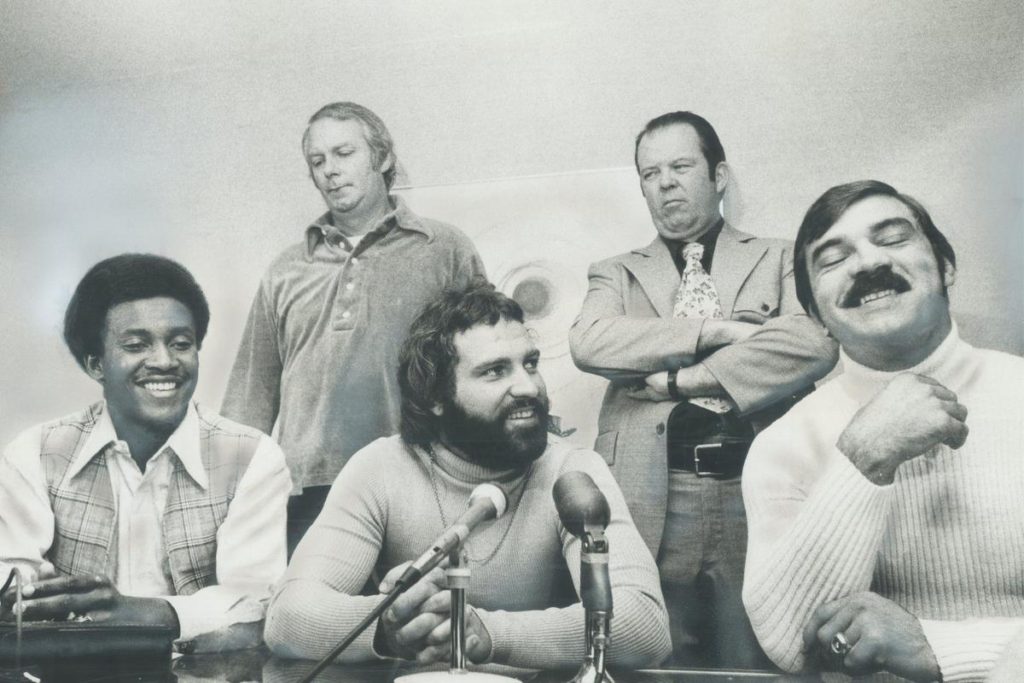
Despite being offered more money than they could have imagined, not to mention plenty of perks, the players weren’t convinced. Csonka put in a call to Shula telling him what was going on and requested to speak with Dolphins’ owner Joe Robbie.
The trio found themselves in a bit of a bind at this point. None of them had expected to get everything they asked for. They also didn’t really want to play in a startup league. However, Bassett made it clear they needed to sign a contract while in Toronto. If the players left, the deal was off the table.
Csonka hoped Robbie would offer the trio improved deals that would allow them to keep playing in the NFL. The owner never returned his call. Contracts were signed, the players appeared on the Howard Cosell show which was broadcast by ABC.
“I guess we made history back then,” Csonka recalled years later. “It was shocking. We were shocked. Everyone was shocked.”
There was a catch. The contracts were for 1975. The WFL was starting play in 1974 and that meant Csonka, Kiick and Warfield would play in the NFL, chasing a third straight Super Bowl, during the new league’s first season.
The last dance
No other franchise in the NFL appeared to be on Miami’s level heading into the trio’s final season. Some pundits did believe the Oakland Raiders were closing the gap and John Madden’s team finished the year 12-2, the best record in football.
Don Shula guided the Dolphins to an 11-3 campaign which was the second-best record in 1974. Unfortunately, the NFL hadn’t implemented seeding in the playoffs which meant matchups were determined on a rotating basis instead of by record. You can probably see where this is going.
The winners of the AFC East and AFC West were slated to face off years in advance regardless of what happened during the 1974 season. Despite being the two best teams in the sport, the Raiders and Dolphins were matched up in the Divisional Round.
This contest was billed as Super Bowl Eight-and-a-Half (Super Bowl VIII was in 1973 and Super Bowl IX was set for that year) because most people expected the winner to take home the championship. Of course, it didn’t happen, but that’s a whole different story.
Anyway, this was an all-time great game with the Raiders winning on a miraculous play dubbed “The Sea of Hands”. It was a cruel way for Miami’s three-peat bid to end. But that was only a start. Soon, people began to realize a startup football league may have just ended one of the NFL’s greatest teams.
Also Interesting: The 1997 Green Bay Packers were the biggest team of scumbags in sports history
World Football Laughingstock
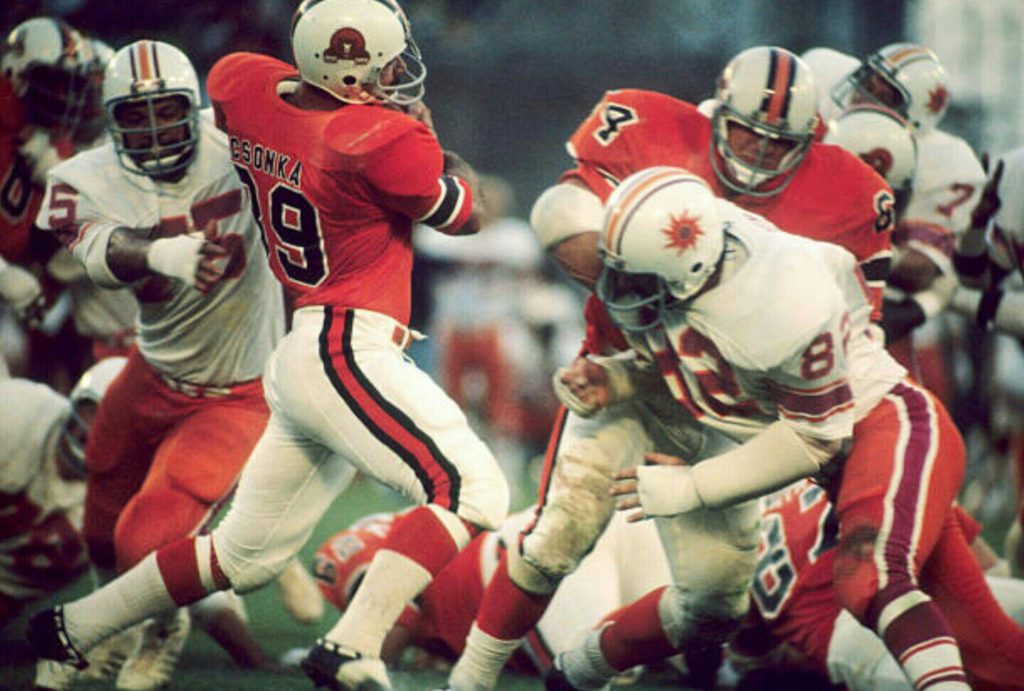
The WFL’s first season was nothing short of a disaster. Teams were moving in season and two folded. The playoff format wasn’t decided until well after play began and the championship game was nearly canceled by the IRS after one of the teams failed to pay their taxes. Another owner had been funding his team by selling coke.
Against all odds, the league was able to play a second season which meant Csonka, Kiick and Warfield needed to report to their new team. The Canadian government had forced that franchise to leave Toronto and ended up in Memphis. And since the Northmen name was no longer applicable, Bassett changed it to Southmen.
It wasn’t exactly what the star players had signed up for. But it got even worse. The WFL didn’t have any television deal for 1975 after what had transpired the previous season. A lack of visibility, along with numerous other issues, saw attendance plummet. The Chicago franchise folded after week five.
By week 13, the WFL was done for good. The players have later admitted that while they were excited about playing in Toronto, the move to Memphis was a bummer and their hearts weren’t really into it. Bassett hoped to get the Southmen into the NFL. He actually had a strong case, but the league was having none of it. Csonka, Kiick and Warfield were released from their contracts, although a deadline for player movement meant they wouldn’t be able to take the field until 1976.
Flipper starts sinking
The 1975 Miami Dolphins were still a very good football team even without their three stars. They just weren’t good enough to make the playoffs despite finishing 10-4. Interestingly, all four losses came against AFC sides who all finished with ten or more wins.
Apparently, owner Joe Robbie had a chance to undo his mistake and bring the players back for the 1976 season with Csonka actually desperate for a return. As Dolphins owners are wont to do, he acted like a child, having the rusher’s contract demands published in a local newspaper and calling them absurd.
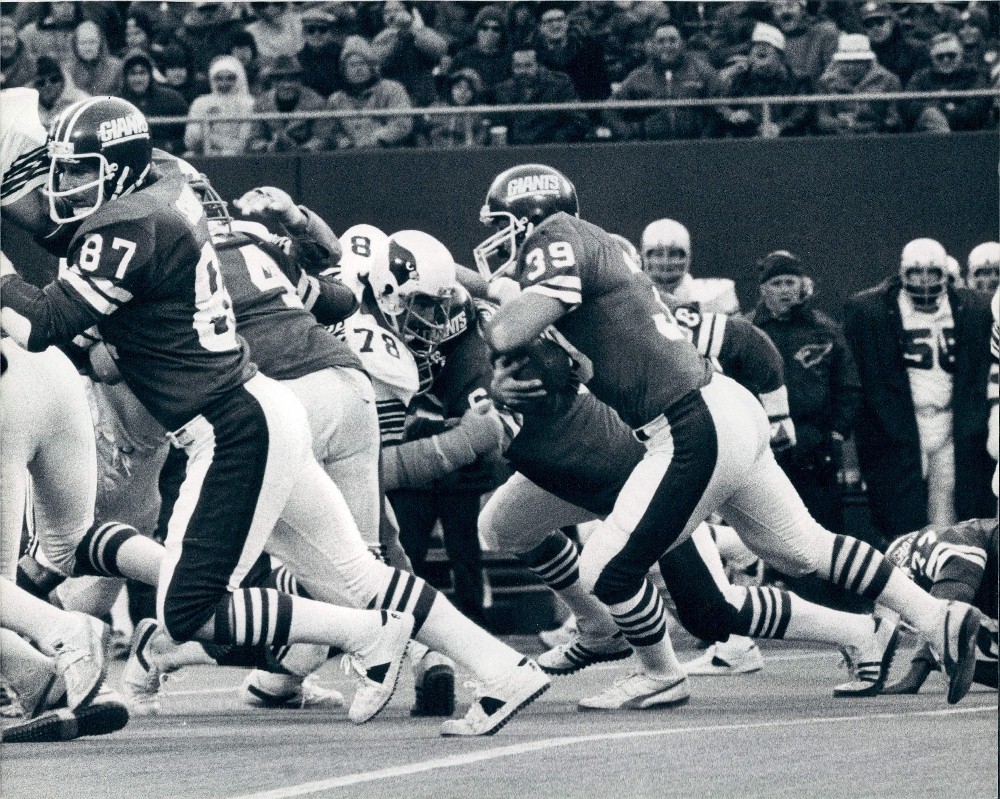
Csonka would sign for the New York Giants while Kiick caught on with the Denver Broncos and Warfield agreed to terms with the Cleveland Browns. The latter actually had a solid season in 1976, but the two running backs didn’t return to previous form.
Things were going equally as bad for Miami as the team would finish 1976 with a losing record. The offense struggled for the first time under Shula and while the situation did get better the next season, it still wasn’t enough to make the playoffs.
By this time, the curse had set in. A startup football league that was now gone had thwarted one of the NFL’s greatest teams.
More Football: The ol’ college try – NFL teams playing in college stadiums
Trying to undo the curse
The Dolphins made the playoffs in 1978, but this was a far cry from the team that dominated the league at the start of the decade. Perhaps trying to undo what happened years earlier, Shula reached out to Csonka about a reunion.
Both Kiick and Warfield had retired by this point. Meanwhile, Csonka had done nothing of note in three seasons with the Giants. However, Miami needed some depth at running back behind Delvin Williams and the former Super Bowl MVP knew the system.
There was one thing standing in the way of a return. Owner Joe Robbie still hated the running back’s agent and refused to do business with him. Shula basically went behind his back to sign Csonka ahead of 1979.
The move paid off on the field. The 33-year-old Csonka had his best season since his first spell with the Dolphins, running for 837 yards and 12 touchdowns. He even won the Comeback Player of the Year award.
Miami qualified for the playoffs in 1979 but were soundly defeated by the eventual champion Pittsburgh Steelers. Csonka’s feel-good return wasn’t enough to break the curse and he retired after the season.
At the bottom of the sea
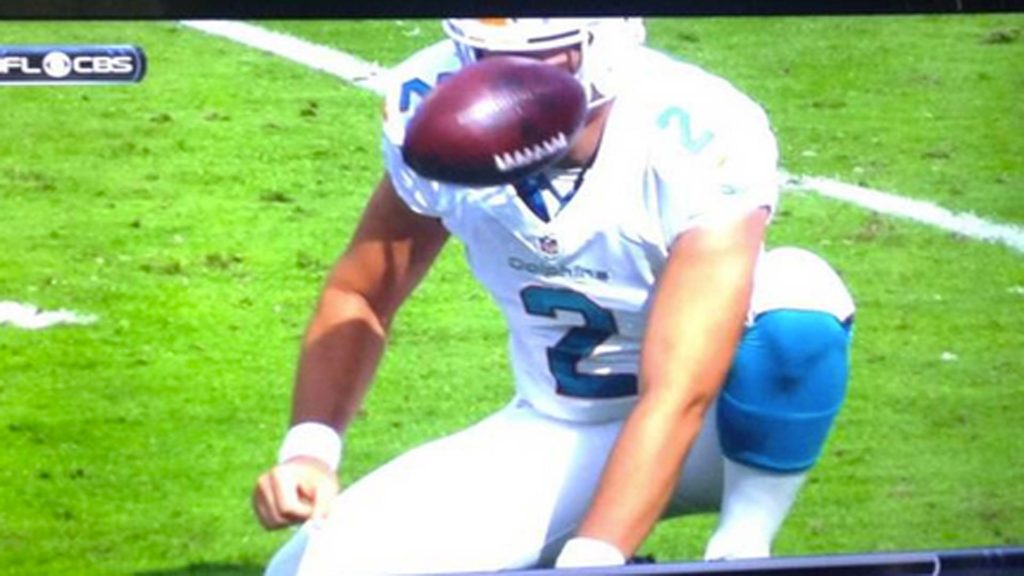
It has been nearly 50 years since the Dolphins won a Super Bowl. Their last trip to the AFC Championship game was 1992. They haven’t been to the Super Bowl since 1984. By no means have they been the worst team in the NFL. Far from it, in fact.
If possible, Miami’s fate has been worse. It is a franchise that has simply hovered around average with an occasional spike mixed in every few years. They have finished with between six and ten wins in 28 of the franchise’s past 35 seasons. Not quite bad enough to get a good draft pick. Not quite good enough to compete for a title.
It would be easy to dismiss this all as hearsay. We don’t really know how things would have turned out had Csonka, Kiick and Warfield stayed with the Dolphins. That’s true. Maybe they never win another championship.
But you can’t help but look at Csonka’s last season with the team and think the trio would have gotten them to the playoffs between 1975 and 1977. This is a side that went from being a fluke touchdown pass away from a possible three peat to the outside looking in.
From an organizational standpoint, the move by Joe Robbie to not call the players before they signed with the WFL was the first in a long string of dubious decisions made by Dolphins’ owners over the past five decades. Wayne Huizenga and Stephen Ross have carried on the legacy of being terrible stewards of the franchise.
The WFL, a startup football league that failed miserably, managed to not only end one of the NFL’s greatest teams, but is a curse that remains over the Miami Dolphins to this day.