










There is nothing quite like rap music videos. They are part music, part entertainment and watching them is addictive as all hell. Of course, in a world before YouTube, you couldn’t just turn on your smartphone and find the one you wanted to watch. Instead, you were reliant on MTV, MTV2 and BET.
Hell, DSL internet was still a novelty in 2002. Even if you could locate a video file online, let’s say the Pamela Anderson sex tape in this example, it was highly pixilated and loaded in like four-second bursts. And while faster internet became more prevalent in the late 2000s, TV was the only way to watch music videos until 2009-ish because no one was putting them online.
Around 2001, MTV had basically moved away from playing music videos while MTV2 was kind of a hodgepodge of different music styles. The only daily guarantee you had to see rap videos in a regular timeslot was Direct Effect which was rebranded to Sucker Free in 2006 and became impossible to find. Instead, MTV2 focused almost exclusively on airing Rob & Big reruns.
More Hip-Hop: Roy Jones Jr. raps with the YoungBloodz and loses in the ring
Sidebar Direct Effect was hosted by DJ Clue and Lala Anthony. These two had no chemistry together whatsoever. At least once a week, the pair would be visibly annoyed with one another during a segment. It was always epic to watch. |
Over on BET, Rap City: Tha Basement was the gold standard of rap music video shows. It was two-hours of goodness hosted by Big Tigger weekday afternoons. However, he left in 2005 and the show was never really the same after that. BET had mostly phased out music videos by this time except for 106&Park which was only showing like 90-second clips.
Our savior was MTV Jams. It started off as wall-to-wall rap music videos 24/7. As the years passed, interruptions to this became more and more frequent which eventually led to the network’s demise.
The legend starts (2002-2004)
MTV Jams began operating on May 1, 2002. Honestly, I didn’t find out it existed until sometime in early 2003. MTV didn’t really promote it on any of its networks, and the channel happened to be buried way deep in the lineup. On the west coast, MTV Jams was always seemingly on channel 476 surrounded by a bunch of stations that were either blacked out or weird as hell.
Anyway, the initial 18 months or so was nothing but videos and MTV Jams bumpers. The first instance of the station doing something different involved interview snippets with Kanye West. I don’t remember the specifics of when these aired, but they always played before the video for All Falls Down, so it had to have been early 2004.
There was also something similar around this time with D12 and Eminem to promote My Band. MTV Jams would start leaning into more non-video content in the months to come.
The artist involvement era (2005-2007)
By the end of 2004, MTV Jams was running a bunch of artist-related stuff alongside music videos. The most notable of these was Artist Takeover, a feature that saw a rapper on to promote their own videos, introduce other videos they picked to air and do a bunch of exclusive content within a specific block.
Looking back, this stuff wasn’t particularly good. No one was interviewing the artists which meant they would just riff through these segments with no effort. 50 Cent and G-Unit seemed to be on MTV Jams regularly to promote the like two million videos they released during this time.
Lil Jon was also featured quite a bit, usually promoting an artist on his label or one he produced a single for. Lil Scrappy, Trillville and Brooke Valentine were all on MTV Jams in 2005 alongside Lil Jon.
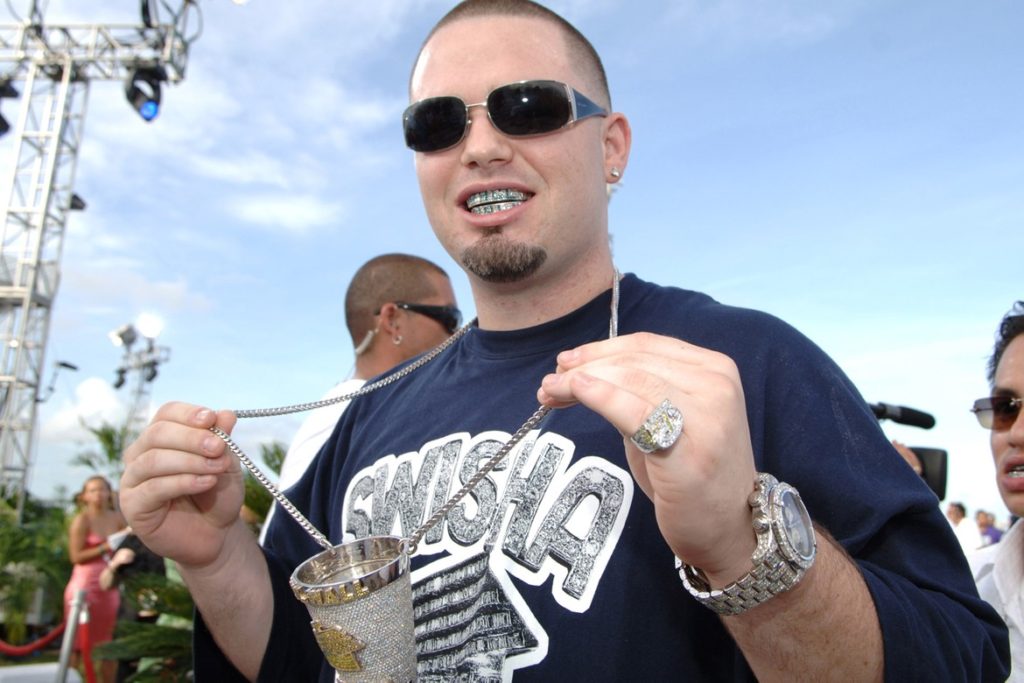
The summer of 2005 was brutal for MTV Jams. They launched this series called The Fab 5 of Summer ’05 where they featured five up-and-coming artists. Or at least they claimed to. In reality, it was only Paul Wall and the Icy music video with Young Jeezy and Gucci Mane that were part of this.
There was a Paul Wall interview that must have aired 300 times in the Summer of 2005. I kid you not. It would have been okay every once in a while, but there was no escaping it. As far as Icy goes, it’s a great video, but it was awkward to be playing with their beef and Gucci’s murder charge floating around at this time.
Music Video Review: We never got a chance to love Da BackWudz
The MTV era (2008-2011)
This is undoubtedly the most difficult era of MTV Jams history to judge. It was amazing to still have a channel dedicated to music videos. And really, this is the last great period of hip-hop music videos by and large. However, MTV did everything in its power to bastardize MTV Jams and annoy the channel’s core fan base.
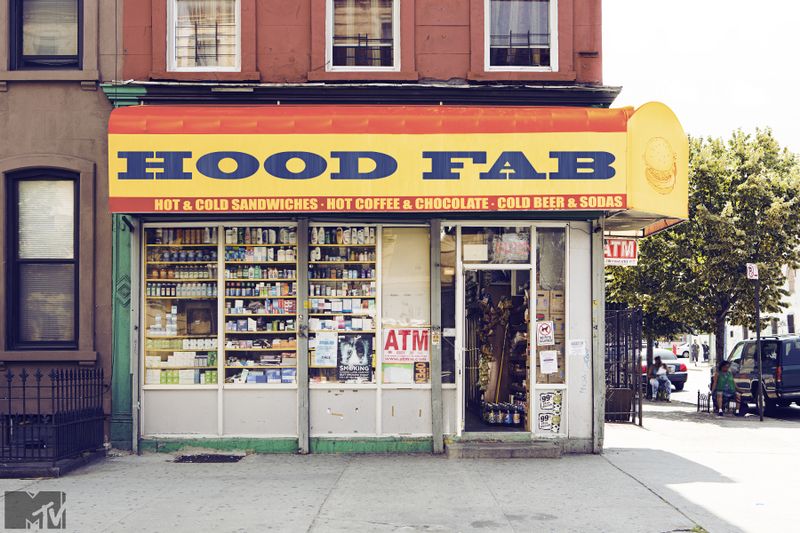
It all started in 2008 with launch of Hood Fab. This was a hip-hop trivia show hosted by Buttahman that usually lasted five minutes and almost always sucked. Most loyal MTV Jams’ watchers had beef with Hood Fab because they would pick the most inept contestants to do this, many of whom had probably never watched the channel in their life.
These people would always get the easiest questions wrong. It was so damn annoying. And no, having a rapper on to also play hip-hop trivia did not make these segments any better. What’s worse is that Hood Fab aired for like three or four years.
In 2009, MTV Jams started airing long-form previews for upcoming shows on MTV or MTV2 that they believed the audience might like. A notable example of this had to be promos for Born Ready, the documentary about Lance Stephenson when he was in high school. These ran anywhere from 90 seconds to three minutes and felt out of place amongst all the music videos.
There are two things to note about these spots. Firstly, no one at MTV Jams bothered to remove these from the rotation after the documentary aired in March. The Born Ready previews were playing well into May despite the fact you couldn’t actually watch it. Secondly, these clips turned out to be a test run for something sinister which we will get into in a moment.

Things got worse in 2010 when MTV decided to integrate Jams into its promotion of network initiatives. The most notable of these of course being Spring Break. It was three weeks of updates from Spring Break, 15-minute chunks from concerts and a ton of other promotional content that aired instead of music videos.
This exposed MTV Jams’ biggest flaw. The channel ran three, eight-hour blocks of content every day. On the west coast, a new block would air at 3am and then replay at 11am and 7pm. MTV Jams was running roughly five to 20 minutes of spring break related content daily every hour for three weeks.
However, the channel would repeat the same content within the same eight-hour block. For instance, the same Spring Break update would play twice. It became extremely repetitive in short order and made it impossible to actually watch music videos. Whenever you switched over to MTV Jams, it felt like you saw the same thing for the millionth time.
As annoying as this was, it would only go downhill from here. We mentioned how the MTV show previews were a harbinger for something much, much worse. That would be realized in 2011 when MTV Jams introduced commercial breaks into music blocks.
It started off as one commercial break every hour, but the commercials progressively became more prevalent in the years to come. Ultimately, MTV Jams had jumped the shark.
Also Interesting: Fred Brathwaite and Fernando Vina show up in a music video with the St. Lunatics
The sad decline (2012-2015)
By 2012, there were at least two, five-minute commercial breaks playing every hour in addition to random other crap. Maybe the advertisements would have been more palatable had they not been for such dodgy stuff.
I’d estimate that 95 percent of the commercials were for men’s hair loss products, online auction bidding sites, for-profit vocational colleges and some company selling ringtones that was five years too late. Oh, I definitely remember seeing a Publishers Clearing House spot or two as well.
Maybe you would put up with this non-sense in 2005, but by 2013, YouTube was awash with music videos. There was no reason to flip over to MTV Jams anymore. Especially considering the fact there was only a 60 percent chance a video would actually be playing.

MTV Jams carried on for a few more years, but it never really found itself. Those who grew up with the channel were turned off by what it had become while high school- and college-age kids had been raised on YouTube and didn’t need it.
Which brings us to October 5, 2015. On that day and with very little fanfare, MTV Jams became BET Jams. Essentially, the move allowed BET to have some music presence after it cancelled 106&Park at the end of 2014 while MTV had nothing to do with music which made the channel redundant.
The legacy of MTV Jams
MTV Jams was awesome. Regardless of if you were flipping over during a commercial break of another show or simply wanted something in the background, it was always there. More importantly, it was a gateway into the world of hip-hop, at least for those of us on the west coast.
Sure, we had local hip-hop radio stations, but seeing rappers from Atlanta, Houston and everywhere else made it more real. There is no way Still Tippin’ connects without being able to see Mike Jones and wondering why the hell his T-shirt was blurred out. Spoiler alert, it only had his phone number on it. And, of course, that phone number was simply an automated voice message.
The channel was a vital bridge between the television and YouTube eras. It’s hard to fathom how suburban college kids like myself would have found new rap music between 2005 and 2011 without it. That’s the legacy of MTV Jams. It provided people who weren’t connected to the hip-hop scene with an opportunity to learn more. And for that, I’ll forever be grateful for MTV Jams.
Don’t call me a player, baby. Because I’m in love with you. For right now, ugh!