


















The Touchback is taking an in-depth look at the role of the commissioner and how it related to fantasy football philosophy. Click here to read the retort of this article.
I don’t often write about my own fantasy football leagues, but an interesting dispute got me thinking about fantasy football philosophy and the role of the commissioner.
Is this article really going to be an unnecessarily detailed exploration into fantasy football philosophy and league governance?
Yes, yes it is.
The Dispute
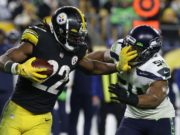
Moments after the week 2 kickoff, as the Seattle offense was jogging onto the field to take their first snap, a league member realized that he had left Chris Carson and Jason Myers on his bench. Two of his starting positions were empty.
He immediately highlighted this in the league chat and the commissioner adjusted his roster, slotting these two players into the lineup. 24.8 points were added to his season total. He would have lost the matchup with or without the last minute sub. (Editor’s Note: The game had already kicked off and Carson had two carries before it was mentioned in the league chat.)
The contention is that in a 14-team PPR and IDP league, there is a real possibility that 24.8 fantasy points could impact playoff standings and tie breaker scenarios.
This is a money league.
Did the commissioner make the right decision? Would you have bent the rules in the same way?
Let’s explore this by breaking down the two opposing fantasy football philosophies of league governance.
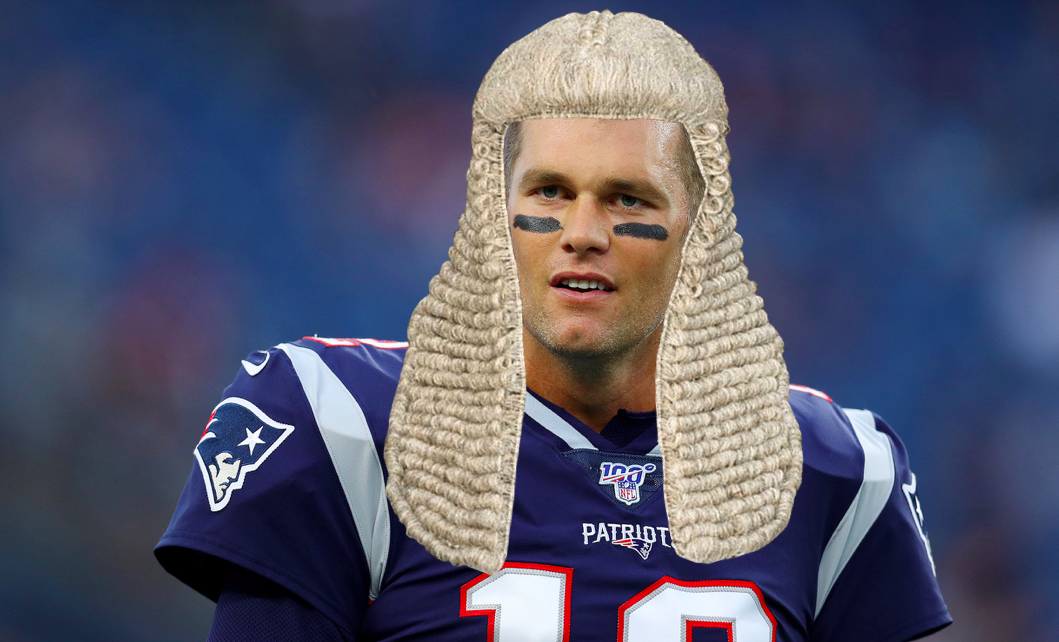
1. Constitutional Fantasy Originalism
This philosophy asserts that the fantasy commissioner’s role is to uphold the rules of the game exactly as they are written. He should not interpret them. If an owner forgot to start players, well, sorry.
The strength of this argument is that all fantasy owners have initially agreed to a specific gameplay format. With money involved, it is entirely reasonable to argue against any and all manifestations of rule-set pliability.
Gambling environments with loose rules create problems; originalism solves all of them before they begin.
2. Loose Fantasy Constructionism
The counterargument is that a commissioner’s role is to assess and manage each situation independently. He should govern the league by the stated rules, but can also adapt them to the league environment. Moments arise where the game can be improved by a more dynamic rule set, so long as decisions don’t jeopardize fair gameplay.
In this situation, the mistake was spotted immediately and changed before the first offensive snap. (Editor’s Note: No, it was not. Carson had two carries on the scoresheet.) The owners’ clear intention was to start those players, should we really penalize him for a minor oversight?
Let’s take this a step further.
Imagine you have a four-year old kid. Scary, right? What if he picked up your phone and button-mashed Dalvin Cook out of your lineup and into free agency, something that nearly happened to me?
The player who unintentionally dropped Dalvin is toast. Furthermore, the player with the first waiver will pick him up, start him alongside Kamara and cruise to a championship. In a very real sense, the arbitrary actions of a four-year-old would define the entire fantasy season.
The rules are the rules, but in this case, an originalist’s interpretation of the rules would essentially ruin an entire season of fantasy football for everyone.
An originalist commissioner, however, would argue that this is no different than Orlando Brown getting hit in the eye with a BB filled penalty flag and missing 3 seasons. Weird shit happens. Lock your phone.
Both fantasy football philosophies have merit, there is no clear answer.

How was this resolved?
Wisely, the commissioner put this to a league vote that resulted in the Chris Carson and Jason Myers remaining in the starting lineup. (Editor’s Note: This was never put to a proper league vote. It was allowed to fester for weeks. The commissioner then created a vote but then simultaneously offered a “ball never lies” game between him and one of the other managers to determine the outcome.)
At first I voted adamantly against it, but halfway into writing this article I had an epiphany and changed my vote, allowing the late lineup substitutions.
Let me explain.
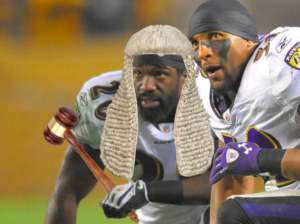
3. Absolute Fantasy Opportunism
I am neither an originalist or loose constructionist. I’m an absolute fantasy opportunist.
At first glance, this seems crudely self-serving, but I contend that it makes the game better. Part of what makes fantasy football such an incredible game is that it encompasses far more than just choosing the best players.
Trade salesmanship, tactical information sharing, concealing a snowy weather condition, downplaying an injury, providing helpful sit/start or waiver-wire advice to a struggling owner who is matched up against a rival, debating a unique rule situation, etc. are all part of the game.
Without ever compromising fair gameplay, and while remaining appropriately respectful, the opportunist uses every tool at his disposal to get ahead.
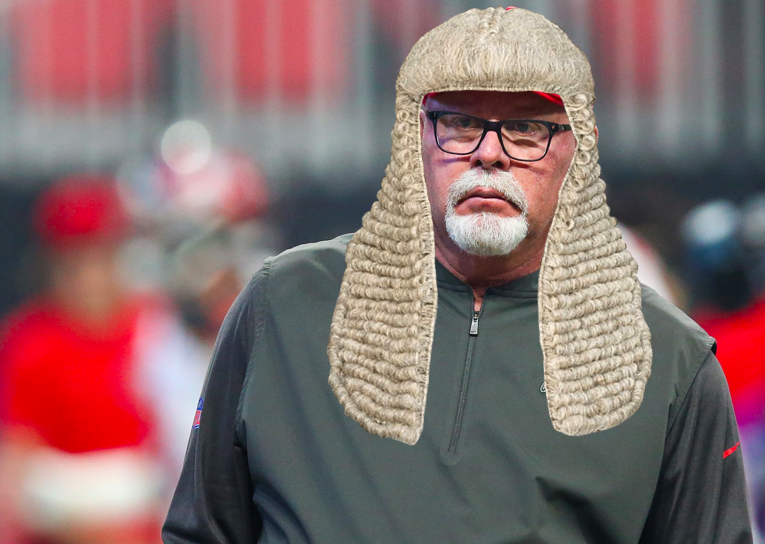
This makes sense… but then why change your vote to allow him to keep the 24.8 points?
This season, my best strategy would be to vote against allowing late entry of Chris Carson and Jason Myers into his lineup.
However, by voting for him to keep his players in the lineup, we now create a legal precedence that allows for a degree of flexibility in the league rules.
I am taking a calculated gamble that for the remainder of the season, and in all future seasons, a situation may arise where I could potentially leverage this legal precedence into something more valuable than 24.8 fantasy points.
My overriding fantasy football philosophy is based entirely on trying to win the game, and league politics are inevitably an aspect of that game.
A great part of the game.