











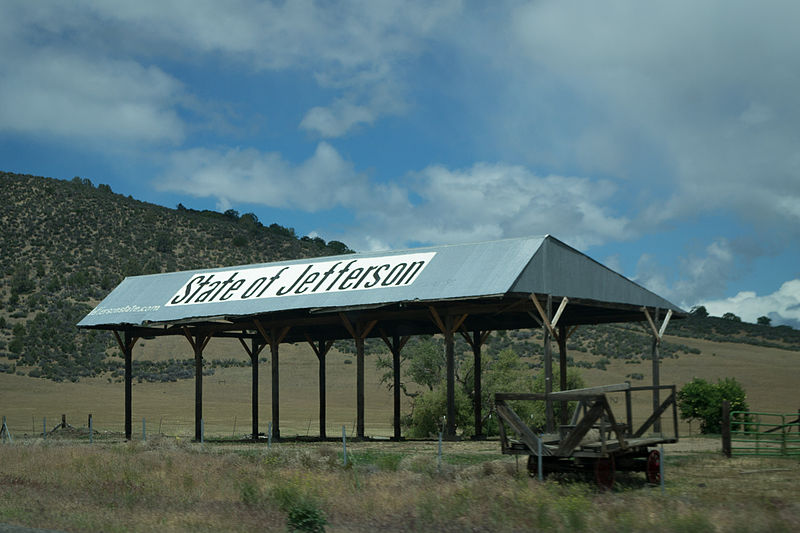
Anyone driving the lonely roads of Northern California or Southern Oregon have probably seen a few signs and flags promoting the State of Jefferson. Some call it the ghost state while others hopes it will eventually end up as America’s 51st state after a close call nearly 70 years ago.
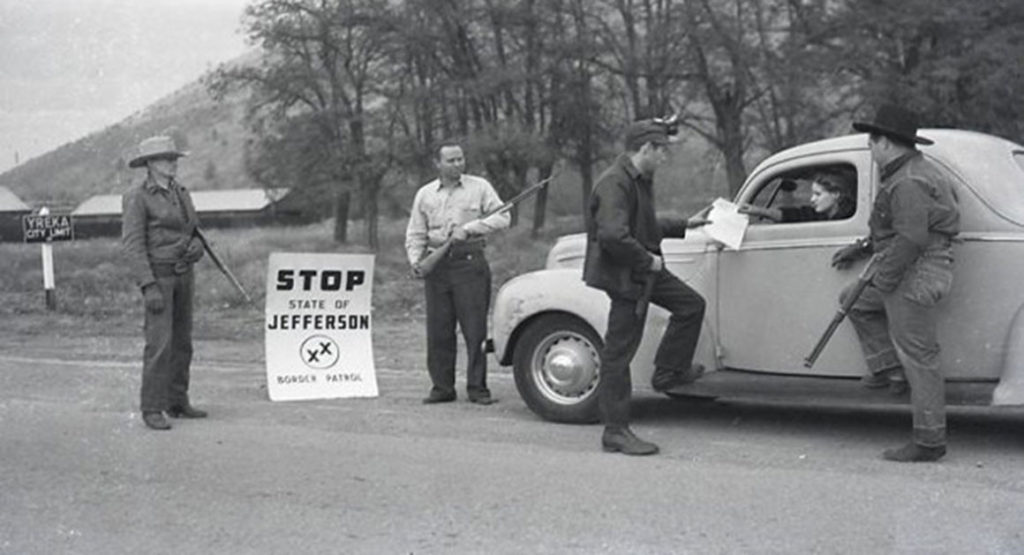
It actually nearly received statehood in 1941. Armed residents handed out the State of Jefferson Proclamation of Independence to anyone driving through the territory’s main highway. Additionally, a governor was appointed on December 4, 1941. There is a reason that date seems somewhat familiar. Three days later, December 7, 1941, Pearl Harbor was bombed.
This attack ended the movement until 2013 when calls for statehood really gained traction again. However, the modern movement isn’t a joint effort between counties in Oregon and California. State of Jefferson 2.0 also has far less to do about the original issues and is more a product of politics than anything else.
Related Article: The state capital named after Prussia’s finest leader
Where is the State of Jefferson?
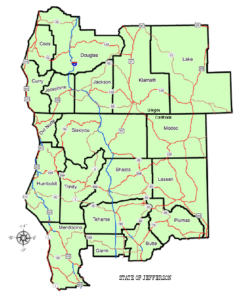
There are different maps and different versions of the State of Jefferson. No one true outline exists. If you’re looking to find State of Jefferson flags, signs and other imagery today, you will most likely find them driving along I-5 between Redding, California and Medford, Oregon.
In the west, there are a few coastal towns with Jefferson stuff up, although the presence here isn’t as strong as it was during the original movement. There are many small towns between the coast and Alturas, California with signs up. And, of course, there is the State of Jefferson Scenic Byway.
The proposed State of Jefferson in 1941 extended all the way from Coos Bay, Oregon in the north to Dunsmuir, California in the south and from the coast in the west to the California border in the east. Yreka, California, a small mining town in in the Shasta Valley, would have been the state’s capital.
Why did people want to form a new state?
California is a big-ass state. Most people don’t know much about the northern part where the State of Jefferson would have been located. While Oregon isn’t nearly as large, the southern part of the state was often forgotten about as well. And while Oregon and California are distinct, these two regions of each state had more issues in common with each other than the other cities within their borders.
That is because they are predominately rural areas and had trouble getting their respective state governments to pay attention to them. A lack of representation made it difficult to receive funding for various projects. While local mines and timber operations were contributing to the coffers of California and Oregon, that money very rarely made it back to the counties that wanted to form the State of Jefferson.
A lack of paved roads was a particular sore spot for State of Jefferson residents during the time. Other basic infrastructure was also needed but the region was never allotted any budget to make improvements.
How close was it to happening?
It’s believed in some corners that had Pearl Harbor not happened, the State of Jefferson would exist today. They already declared their independence and declared a governor. Neither Sacramento nor Salem seemed to care all that much about this area so why would they bother fighting over it?
However, other experts believe the entire State of Jefferson was a publicity stunt drawn up by local politicians. In an interview with 1859 Oregon Magazine, Stanton Delaplane, the journalist who won a Pulitzer Prize for his coverage of the movement, admitted to helping locals create the story.
The politicians had no real interest in statehood. It was the attention they were after. They thought the ploy received would be enough to convince their respective state governments to fund the infrastructure improvements they sought. The locals involved simply liked being in the newspaper.
Unfortunately, neither side’s bluff was called due to the outbreak of World War II. The State of Jefferson pledged its loyalty to American’s common enemies and that was that. There some Jefferson rumblings in the 1970s and 1990s, but nothing more.
Is that really their flag?
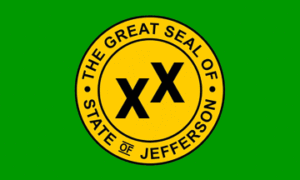
Yeah, that uninspired thing is actually the flag used by the State of Jefferson to this day. It somewhat obviously features the state seal on a green background. In case it wasn’t clear, the Jefferson state seal is actually a gold mining pan with a pair of X’s on it, but it doesn’t translate so well onto the flag. Perhaps that is why they also wrote it was the state seal on the flag too.
Those X’s are supposed symbolize that abandonment the Oregon and California communities feel. They are not a sign for slightly less hardcore porn or weak moonshine in case you were wondering.
What’s up with the State of Jefferson 2.0?
The idea came back into the forefront in 2013 when several California counties voted to withdrawal from California. This is about as meaningful as Michael Scott declaring bankruptcy to those within earshot of him.
The original complaints raised by those wanting to form a new state in 1941 are still valid today. The region is overlooked by California and requires either more investment or a chance to govern itself. If you listen to those who grew up here during the time the movement first gained traction, they’ll still make a compelling case for this.
In the past few years, however, the movement has been cuckholded by Republicans and Donald Trump minions. The focus shifted away from the problems that were relevant to the original State of Jefferson. You’ll still find the pretense around their argument for statehood. But the core of their argument is vastly different.
The State of Jefferson 2.0 crowd turned the movement into a MAGA/Trump thing that focuses on illegal immigration and other stuff totally irrelevant to the cause. Think about it this way, the people who founded the original State of Jefferson would have much rather that money be spent on their local infrastructure than a wall between the US and Mexico.
Will it ever be a state?
Probably not. Realistically speaking, those who support the State of Jefferson do so because it gives them an outlet to bitch about their own state governments without needing to take on the burden of running things themselves. They are basically like the co-worker you have that always says he could do a better job of running the company than your boss. He or she likes the idea of being boss but doesn’t really want the responsibility that comes with it.
Read more about the State of Jefferson:
1859 Oregon Magazine writer Peter Laufer takes an in-depth look at the movement
The official website of the current Jefferson state movement
A look at why the current movement makes no sense