
















Paul Coffey is unquestionably one of the greatest NHL defensemen to have ever played. You would be hard pressed to find five other blue liners better than him in the history of hockey. Anyone who played as the Detroit Red Wings in NHL 95 knows just how good he is.
Despite being a Hall of Fame talent and one of the most accomplished players of all-time, he was also traded seven times during his 20-year career. Even more astonishing is the fact Coffey was traded for another All-Star only once. In most cases, the defenseman was given away for spare parts and flotsam.
It is important to note, Coffey wasn’t shipped off a bunch towards the end of his career like Shaquille O’Neal. Several times during his prime he switched sides. And in many cases, the team trading him away did better. Four teams that sent Coffey packing ended up in the Stanley Cup Finals.
That’s insane when you consider Coffey’s list of accomplishments. How could no team want this guy, and how were teams almost always better after trading them despite getting nothing in return?
More Sports Stories: The story of the worst team in college basketball
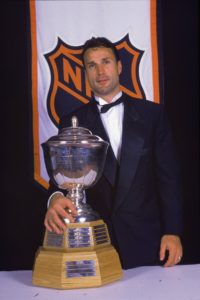
Paul Coffey and his Hall of Fame resume
- 3x Norris Trophy Winner (Best NHL Defensemen)
- 14x NHL All-Star
- 4x Stanley Cup Champion
- NHL Hall of Fame
- #28 in The Hockey News’ list of the 100 Greatest Hockey Players
- 1,531 points – 13th Most in NHL History
Coffey also crushed it in the playoffs holding a ton of individual records. There is almost nothing he didn’t accomplish during his career.
Between the 1981-82 and 1985-86 seasons, Coffey had 183 goals, 387 assists and 570 points in 499 games. He scored 40 goals in a season twice during his time in Edmonton. Bobby Orr is the only other defenseman to have done this. Of the top-10 seasons from a defenseman in NHL history, Coffey has five of them and Orr has the other five.
He just turned 26, was on pace to be one of the best players ever and also happened to want more money. Coffey decided to hold out at the start of the 1987-88 season in hopes of landing a new contract. He was shown the door instead.
Trade 1 – Edmonton Oilers to Pittsburgh Penguins
Coffey, Dave Hunter, Wayne Van Dorp for Craig Simpson, Dave Hannan, Moe Mantha and Chris Joseph
Hunter and Van Dorp didn’t do much, so there is no added value going to Pittsburgh. Simpson, the second overall pick in 1985, was an above average professional but didn’t make a single All-Star team in his career. Hannan finished that season with the Oilers before being cut and claimed by Pittsburgh on waivers ahead of the following season. Mantha was also gone at the end of the season while Joseph would spend the next few years bouncing between the minors and NHL.
Paul Coffey in Pittsburgh
Four and a half seasons
331 games / 108 goals / 332 assists
440 total points
Combined Oilers production
Simpson – 419 games / 185 goals / 180 assists (6 seasons)
Hannan – 51 games / 9 goals / 11 assists (1 season)
Mantha – 25 games / 0 goals / 6 assists (1 season)
Jospeh – 154 games / 12 goals / 39 assists (7 seasons)
442 total points (15 combined seasons)
From a pure production standpoint, what the Penguins got Coffey in four and a half seasons matched what the Oilers received in 15 seasons of Simpson, Mantha, Hannan and Joseph. The fact they could only muster two more points than the Hall of Famer is crazy.
The Oilers actually won the Stanley Cup that season and again in 1989-90. Pittsburgh would win the championship the season after that meaning both teams can say they were happy with how things worked out.
Trade 2 – Pittsburgh Penguins to Los Angeles Kings

Coffey for Brian Benning, Jeff Chychrun and a draft pick that would become Jason Bowen
This trade is a little harder to judge because Coffey spent less than a season with the Los Angeles Kings in total. On the other side, Benning and the draft pick were immediately sent to the Philadelphia Flyers as part of a different trade which makes it impossible to grade. Meanwhile, Chychrun would actually be traded back to the Kings less than a season later.
Of course, you’re probably wondering why Pittsburgh would trade Coffey a few months after winning a championship. Basically, the team decided they weren’t going to resign him and needed to shake things. It worked as the Penguins won the Stanley Cup after trading Coffey.
Paul Coffey in Los Angeles
60 games / 9 goals / 53 assists
Trade 3 – Los Angeles Kings to Detroit Red Wings
Coffey, Sylvain Couturier and Jim Hiller for Jimmy Carson, Marc Potvin and Gary Shuchuk
Couturier never played an NHL game and Hiller managed less than 30 for the Red Wings, so there is no added value there. Carson, who was originally drafted by the Kings second overall in 1986, was in LA for less than a year before being traded again. Potvin lasted half a season before being shipped off while Shuchuk managed three and a half anonymous campaigns before retiring. Oh, the Kings advanced to the Stanley Cup Finals immediately after trading Coffey.
Paul Coffey in Detroit
Three and a half seasons
231 games / 46 goals / 193 assists
239 points
Combined Kings production
Carson – 59 games / 16 goals / 17 assists (<1 season)
Potvin – 3 games / 0 goals / 0 assists (<1 season)
Shuchuk – 136 games / 12 goals / 24 assists (3.5 season)
99 points
Trade 4 – Detroit Red Wings to Hartford Whalers
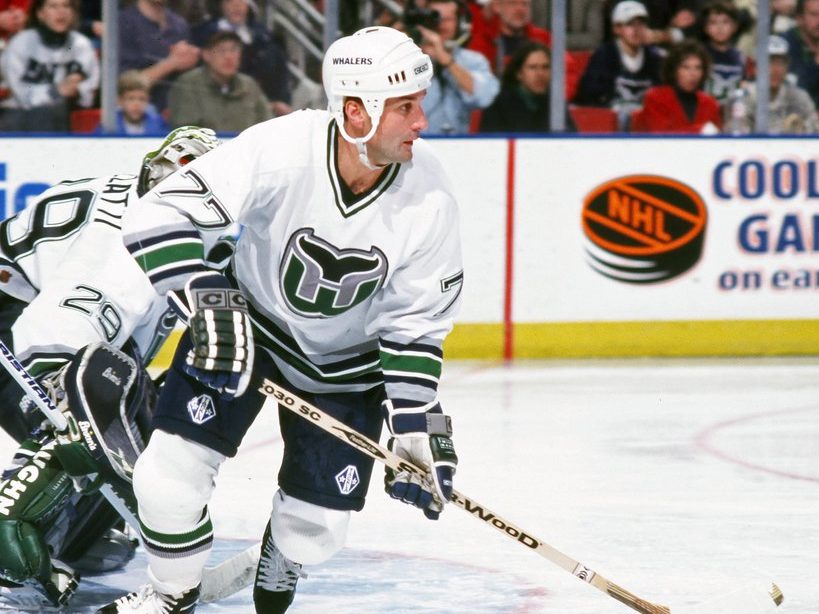
Coffey, Keith Primeau and a 1st round draft pick that would be Nikos Tselios for Brendan Shanahan and Brian Glynn.
Stop the presses. Coffey is actually traded for another All-Star. This is probably the only time the team trading Coffey got fair value for him. It’s actually kind of shocking because everyone knew that Detroit wanted to get rid of the defenseman. He was in the middle of a very public feud with head coach Scotty Bowman which basically meant someone had to go.
Despite that, this trade involved equal talents changing sides. Shanahan was a key cog for the Red Wings during the next nine years. Glynn retired after the trade. As for Coffey, he played 20 games for the Whalers before being traded again. Primeau would be a solid contributor for the team though Tselios did nothing in the NHL. The Red Wings would win the Stanley Cup after trading Coffey.
There is no real point in comparing stats since Coffey wasn’t even in Hartford long enough for a cup of coffee.
More Hockey: The worst of the late 90s: The 1998 USA Men’s Olympic Ice Hockey Team
Trade 5 – Hartford Whalers to Philadelphia Flyers
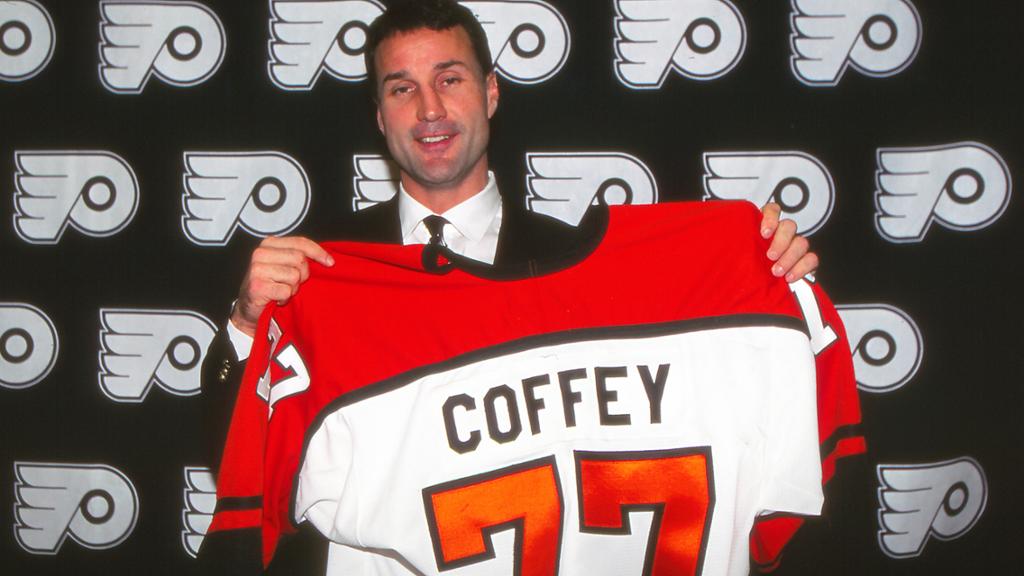
Coffey and a 3rd round draft pick that would be Kris Mallette for Kevin Haller, a 1st round draft pick that would be traded and a 7th round draft pick that would be Andrew Merrick
Despite nearing the end of his career, Coffey was still an All-Star in 1997 and helped the Flyers reach the Stanley Cup Finals. Haller did nothing, but the Whalers, who had moved to Carolina by this point, traded the first-round draft pick to the San Jose Sharks for two second rounders. One of those selections would be Erik Cole who amassed a solid career including nine seasons in Carolina. However, Coffey had retired by the time he was finally called up.
Paul Coffey in Philadelphia
94 games / 8 goals / 47 assists
Combined Whalers production
Haller – 100 games / 5 goals / 11 assists (2 seasons)
Trade 6 – Philadelphia Flyers to Chicago Blackhawks
Coffey for a 5th round draft pick that would be Francis Belanger
Coffey’s stint in Chicago lasted 10 games as the team wasn’t very good in 1998-99. Ironically, Francis Belanger would only play 10 total games in the NHL, although these didn’t come until years later and weren’t with the Flyers. Coffey finished his time with the Blackhawks recording four points which was more than the zero points Belanger managed in his career.
Trade 7 – Chicago Blackhawks to Carolina Hurricanes
Coffey for Nelson Emerson
Coffey was 37-years old at this point, but this trade still sees the Hall of Famer totally undervalued. He had a revival of sorts in Carolina with 1999-00 being his most productive campaign in years. Emerson lasted 27 games in Chicago before being traded for Chris Murray who played four games with the Blackhawks.
Paul Coffey in Carolina
113 games / 13 goals / 37 assists
Nelson Emerson in Chicago
27 games / 4 goals / 10 assists
The unwanted and unneeded Hall of Fame player
In some cases, Coffey forced his way out of town. In other cases, he simply made too much money. However, the teams that traded him almost never missed the 14-time all-star. Usually, they were better for it.
Paul Coffey was the Hall of Fame player no team wanted or needed. He is one of the best defensemen to ever lace up a pair of skates in the NHL. He was also somehow totally superfluous. There has never been an athlete quite like him and we may never see another journey quite like his ever again.