
























Can Coronavirus mutate?
What would it mean if Coronavirus began to mutate?
This article isn’t intended to scare anyone. It shouldn’t. Modern medicine is light-years ahead of where it was in 1918.
Relax.
But the fact remains that viruses mutate often and very quickly. In fact, the closest historical analogy for coronavirus (Covid-19) is the Spanish Flu of 1918.
At first, the Spanish Flu was pretty mild too
The Spanish Flu started out as a mild pandemic. It was a lot like today’s coronavirus, killing relatively few and only seriously affecting those with compromised immune systems. It was on par with a typical seasonal flu virus.
After the mutation, it quickly killed more people than almost any other event in human history.
You can relax less now.
The Spanish Flu lasted from January 1918 until the end of 1920, infecting approximately 25 percent of the world’s population. Records are unclear, but in a span of two years it killed between 17 and 50 million people globally. Some maintain that it killed over 100 million people.
The deadliest month in American history
The majority of the Spanish Flu deaths occurred between September and November of 1918, after the virus adapted. Nearly 200,000 Americans died in October 1918 alone; this still remains the deadliest month in American history.
When the virus first appeared, it was a three-day inconvenience. It was originally identified at a US army post in Kansas where it infected 54,000 people, killing only 38. Like coronavirus, healthy people recovered quickly from it.
WWI was in full swing at this time. US troops who were deployed to Europe took the virus with them and quickly infected more than 60 percent of the Allied forces. It wasn’t ideal, but the soldiers quickly recovered and got on with the war.
And then it mutated
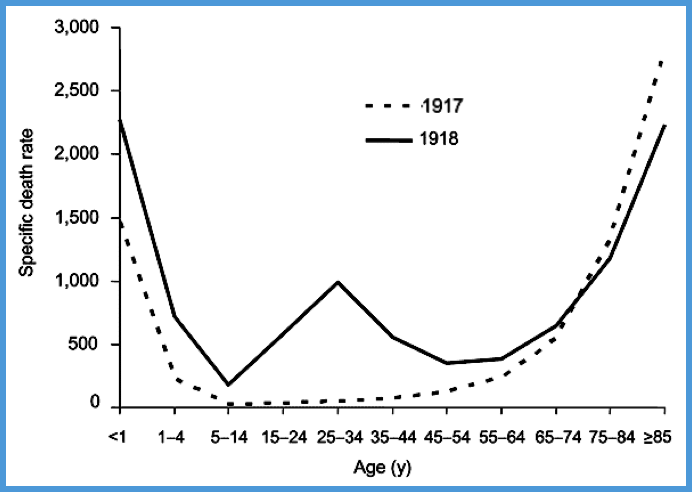
The second wave of the Spanish Flu was something else entirely. While it still killed the youngest and oldest members of a population, it now had a new unique feature allowing it to kill those with the strongest immune systems as well.
Can the coronavirus mutate in this way?
There are two good reasons you don’t need to worry.
Firstly, we have vaccines and antiviral medicines now. These were unavailable during the 1918 outbreak and are incredibly effective. There is no vaccine for coronavirus at the moment, but it is only a matter of time until we have one.
Secondly, even when a virus mutates, its morphology is still similar enough that vaccines maintain their original effectiveness. Additionally, those that survive the weaker version of the virus develop antibodies that make them immune to any other versions.
You can relax again.
You just can’t leave the house.