















It would be easy to pile on Chicago State for being terrible at college basketball. But if anything, what they have accomplished over the past 30+ years is impressive. In this day and age of instant gratification, there is something remarkable about being so consistently bad.
Many people probably aren’t aware of the futility of the Chicago State Cougars because they haven’t had that one shining moment of tragedy. NJIT lost 51 games in a row between 2007 and 2008, but at least the Highlanders’ futility received coverage on ESPN.
The Cougars have embraced a much more low-key level of sadness. There have been plenty of lowlights along the way, but no proverbial badge of losing honor. In many ways, the program has been the Bizzarro Duke. A losing juggernaut that no one has been able to derail. There has been a rare down, or in Chicago State’s case up, year once in a blue moon. But it’s mostly just losing at an almost mechanical level.
The Chicago State men’s basketball team is in many ways a microcosm of the entire university which has been dying a slow death for more than a decade. The Cougars are stuck in purgatory not knowing if they are coming or going. Of course, the team was bad even in better times.
Chicago State is so good at being terrible that we should really celebrate them. Because, as ugly as what you’re about to read is, they never gave up. It’s endearingly admirable in a way.
The Best vs. The Worst |
|
Chicago State: 788 loses all-time (1984-present) – In only 37 seasons at the DI level, Chicago State has lost 788 games. How does this compare to the best college basketball team of all time?
Kentucky: 729 loses all-time (1903-present) – Teddy Roosevelt was president and Arizona wasn’t a state when the Wildcats started a basketball team. They went 1-2 in their first season, losing to Georgetown College, a small liberal arts college north of Lexington and a local YMCA team. Kentucky still has fewer losses than Chicago State. |
More from The Touchback: Walt “Three Blind” Weiss, a player who gave everyone hope
The start of something special
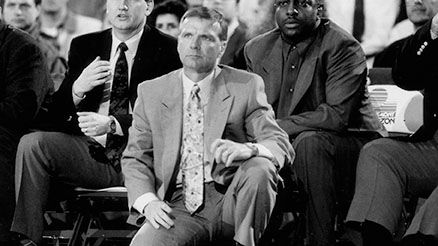
After a strong run at the NAIA level, Chicago State made the move to Division 1 basketball in 1984. The year before the switch, the Cougars made it to the NAIA Tournament Final Four and had enjoyed a sustained period of success under Head Coach Bob Hallberg. Somewhat surprisingly, the team transitioned seamlessly to the next level, finishing 16-11 and 22-6 in its first two seasons.
The third season under Hallberg saw Chicago State go 11-17, its first losing season as a DI program. He would leave for the nearby University of Illinois Chicago (UIC) shortly after the team’s last game that year and things would never be the same.
Hallberg went 49-34 at Chicago State as the team enjoyed success in its first three seasons at the highest level of college basketball. In nine seasons at UIC, Hallberg won 133 games across nine seasons, finishing his tenure there with a winning percentage slightly above .500.
It would take the Cougars 20 full seasons to reach 134 wins. And in the 34 seasons since Hallberg left, the Cougars have won only 224 games in total. Fuck.
Rock bottom
Hallberg’s predecessor, Tommy Suitts, went 26-58 in three seasons before shown the door. Rick Pryor continued the downward spiral, winning a paltry 19 games in four seasons at the helm. Desperate times at Chicago State called for desperate measures.
Craig Hodges was hired as head coach fresh off of being blackballed from the NBA. On the surface, this was a creative move. Hodges was well known in Chicago having won two titles with the Bulls and participating in the 1993 3-Point Contest wearing that generic NBA jersey as a free agent.
He was also somewhat familiar with Chicago State. His nephew Jason had played there the two seasons before he took the job, so it wasn’t like he was walking in with no knowledge. Jason’s claim to basketball fame was being part of the Ford corporate team that won a 3-on-3 basketball tournament in front of the United Center a few years later. But that’s not part of this story.
Hodges tenure with the Cougars could best be described as abysmal. He went 6-20 in year one which included a 105-38 loss to the Utah Utes.
“It’s over and done, what can you do? I never thought they’d be that bad,” Utah Coach Rick Majerus said about Chicago State after breaking an 80-year record for largest margin of victory.
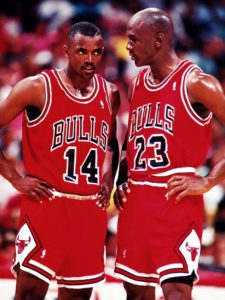
Of those 20 losses that season, 16 were by ten or more points. Things would only get worse. No, seriously.
Hodges went 2-25 the next year which gave Chicago State the fewest wins and most losses in all of DI men’s basketball that year. During his time as coach, the former Bull was openly looking for opportunities to resume his playing career, suiting up for a team in the CBA during the offseason. Even his players knew he didn’t really want to be a coach.
“His intentions were very good. But you could tell the man still loved to play the game. I think it was pretty hard for him,” Chicago State forward Roy Shannon told the Chicago Tribune.
After six blowout losses to start the 1996-97 season, Hodges was fired and replaced by Assistant Coach Philip Gary. Gary won four games the rest of the season. He was also retained the following year despite a source close to the program telling local media that he wasn’t experienced and shouldn’t be given the job.
Things got worse the following year as the Cougars went 2-25 for the second time in three seasons, losing by an average of 19.5 points in the process. Around this time, calls for the program to drop back to the NAIA ranks became prevalent. Between the time Hallberg left and the end of the 1997-98 season, the team compiled a record of 59-239.
Also Interesting: The craziest seasons from running backs in the 2010s
Right man. Right place. Wrong result.
Chicago State didn’t drop down to NAIA. Instead, the school made a sensible hire in Bo Ellis. A local kid who was born and raised in Chicago, Ellis came to the school with a great pedigree. He was a former NBA first round draft pick and had spent the past ten seasons as an assistant coach at Marquette.
The hire garnered a lot of attention for the Cougars and the first home game under Ellis was a sellout. He knew the area, had the experience and, most importantly, understood the challenges of the job. After 11 seasons in the wilderness, things were looking up for the hopeless fighting Cougars of Chicago State.
3…10…5…2…3
People liked Ellis and he ran a good program by all accounts. But he couldn’t get results on the court and was fired during his fifth season in charge. His 23-106 record looks bad. However, the .178 winning percentage was somehow better than any of the previous three Chicago State head coaches.
Slightly better and somehow worse
Kevin Jones was named interim head coach after Ellis was let go and somehow got the job full-time after the season despite an 0-12 record. On the court, the Cougars put together their best multiyear stretch since Hallberg was on the sidelines. In four seasons under Jones, the team went 12-20, 9-19, 11-19 and 9-20.
By Chicago State standards, that was amazing. Off the court though, Jones and his son, who was also on the team, got into a fight with a teammate. It was a very messy situation and Jones Sr. was suspended for a few games in the aftermath. He did return to the team but was fired at the end of the season. Lawsuits ensued and Chicago State’s small modicum of success was overshadowed by scandal.
Finally .500
Benjy Taylor took over from Jones ahead of the 2007-08 season. He won 11 games in his first season leading the Cougars, a minor miracle. That was simply an appetizer for 2008-09. After 23 years of losing, Taylor led Chicago State to a 19-13 record, the school’s first winning season in 23 years.
It does need to be said that the university was playing as an independent and its schedule featured a ton of bottom-feeding college basketball teams. There were two contests against the aforementioned NJIT; two victories over a dismal Houston Baptist team making the transition to DI; a couple of dubs versus a 27-loss North Carolina Central side; and a pair of wins versus non-DI schools.
So how did Chicago State build on this success? The team went 9-23 as part of the newly formed Great West Conference the following tear and fired Taylor. Chicago State was winning at a historic rate, but Taylor was constantly butting heads with the administration behind the scenes over a lack of support.
He took a job as an assistant coach at Hawaii after leaving the Cougars. As luck would have it, his former employers were on the schedule that season. Before that game, Taylor took some shots at the Chicago State administration and his unhappiness with the job.
“I was ready to go long before that,” he told the Honolulu Star Advertiser in 2010. “It didn’t matter before. It didn’t matter because people didn’t care. That gets a little disheartening after a while. (After being fired) was probably the first night I had a good night’s sleep in about 18 months.”
And with that, the most successful chapter of Chicago State basketball this century ended in acrimony.
The saddest conference championship
Replacing Taylor turned out to be a problem for the Cougars. The search was so drawn out ESPN complained that it was preventing them from completing its yearly coaching carousel graphic. It took nearly three months before the school selected UIC assistant Tracy Dildy to guide the program forward. Not forward in terms of wins or performance mind you.
Dildy promptly lost 26 games in each of his first two seasons in charge of Chicago State who were terrible once again. Then came the 2012-2013 season. The Cougars went 11-22 that year, which is good for them. However, the athletic department holds this season as the best in school’s history at the DI level.
That’s because they won the Great West Conference Tournament Championship. If you’re not familiar with the GWC, it was a loose collection of schools on the fringe of DI that was founded in 2008 and ceased to exist after 2013. There were only five teams in the “conference” during the 2012-2013 season with no team winning more than 16 games.
And unlike other DI conferences where the winner gets an automatic bid to the NCAA Tournament, Chicago State’s “championship” saw them earn an invitation to the CollegeInsider.com Tournament.
You may assume being invited to play in a postseason event is a nice consolation, but it’s not. The CIT is a pay-to-play event that means absolutely nothing in the grand scheme of things. As for the Cougars, they got bounced by UIC in the first round.
As sad as this is, it gets worse. Dildy had a “championship” ring made highlighting the team’s trip to the CIT. In an interview, he revealed that he wore it all the time.
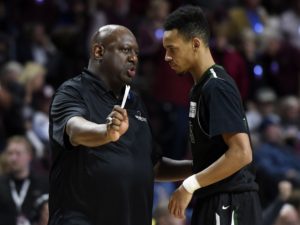
“I wear (the ring) every day to remind them and let them know that we have been champions,” Dildy explained to Medill reports in 2018. “We’re just trying to get back to that level.”
A little more than a month after the interview, Dildy was fired. He is the winningest coach in Chicago State history with 55 wins, although there were 200 losses to go along with it. Unlike his predecessors, Dildy managed to hold onto to the head coach gig for eight years despite only winning 21 games during his last four seasons in charge.
With the university in a financial bind, he was named athletic director in addition to his coaching job essentially meaning Dildy was his own boss. After the 2017-18 season concluded, the Board of Trustees at Chicago State University relived him of his duties as both head coach and athletic director.
It has to be noted that Dildy presided in what was one of the worst first half performances of all-time during his last season at Chicago State. A decidedly average Northwestern team went into halftime with a 55-8 lead against the Cougars in what was perhaps the most lopsided 20 minutes in modern college basketball history. The game ended 96-31 in favor of the Wildcats.
More losses
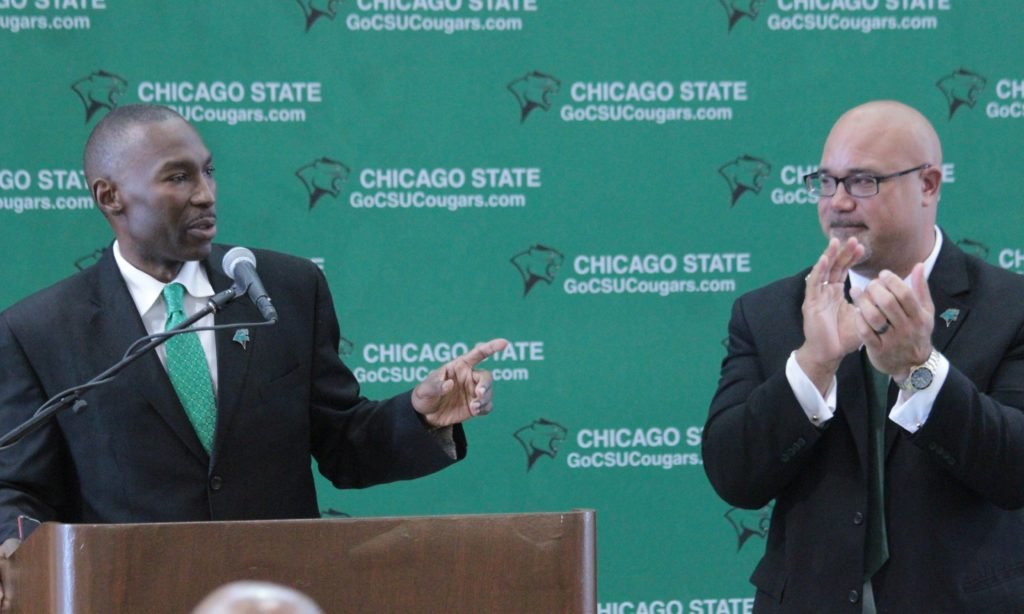
Lance Irvin was hired to replace Dildy and remains in charge today. Like previous Cougar head coaches, he has roots in the city. Before joining Chicago State, he was a high school coach in the area. And like all those who came before him, he lost games at an amazing rate.
His 7-63 record actually gives him the lowest winning percentage in school history. In his defense, the team’s nine losses in 2020 came with Irvin not on the bench due to COVID-19 concerns. The pandemic ultimately caused Chicago State to suspend men’s basketball this season.
Chicago State is terrible and that’s okay
It’s hard to quantify just how bad Chicago State men’s basketball is. In 37 seasons, they have managed to go 273-788. There have been three winning seasons over the span and only 11 with ten wins or more. And if you take away the success Bob Hallberg, it gets a lot more depressing. We’re talking one winning season in 34 years and only eight with ten wins or more.
Despite all of this, there is something we should celebrate about Chicago State men’s basketball. Sure, the easy thing would be to laugh at them and say how much they suck. And they do suck. But that misses the bigger point.
Even after decades of Chicago State being terrible, coaches still want to coach there, and players still want to play there. People often look at sports as a zero-sum game. You either win or you lose. But it’s far more complex than that.
The Cougars have provided players with a chance to play NCAA DI basketball and go to school. They have ensured other teams can fill out their schedule with games. Those are wins even if they don’t show up in the record book.
Chicago State is so good at being terrible. But that’s worth celebrating in its own weird way.