







The Arena Football League is coming back. It is another shocking rise for a sport that has suffered more peaks and valleys than the Rocky Mountains. That is, of course, if the peaks are a PS2 game and coverage on ABC and the valleys are going bankrupt and letting KISS have carte blanche over branding a franchise.
Anyway, slated to begin play in April 2024, this is the umpteenth time someone has tried to make indoor football a thing in America. Unsurprisingly, the group behind the new AFL is dreaming big. Here is what new AFL President Anthony Rossi had to say on the matter in a press release:
“We are elated to come out of hibernation and make this announcement official. Our objective when we acquired the AFL was to bring back a storied brand that deserved to be revived and showcased again, globally. We envisioned executing on the old saying ‘Bigger and Better,’ but this time, we want to incorporate the components of a modern-day business – streaming, betting, technology, virtual reality, and immerse fan engagement mixed with good old-fashioned iron-man football. The re-launch of the AFL first started with assembling a respected executive and advisory team. Each partner, member and business executive of today’s AFL was meticulously hand-selected piece by piece.”
Anyone who has followed the history of arena football will be familiar with that fluffy marketing speak and over-the-top bravado. It’s two parts fantasy, one part hyperbole with a little disillusion sprinkled on top. The reality is that any fleeting success will be followed by a decline that has derailed all previous attempts to make the sport ‘bigger and better’ as Rossi claims.
This is the story of the many rises and falls of arena football. It’s a wild tale in sports history.
Related: A startup football league thwarted one of the NFL’s greatest teams
The rises and falls of arena football
Chapter 1: It started in the 1890s…no, really
Arena football actually kicked off in the 1890s, although providing some context to that statement is important. With no domed stadiums to speak of, these contests between college teams were simply regular football games played under a roof.
Perhaps the most famous of these indoor matchups featured Michigan facing off against the University of Chicago on Thanksgiving Day in 1896. Billed as the first collegiate game of football played under a roof, it took place at the second Chicago Coliseum, a venue that had no issues fitting a full-sized football field.
The first real attempt at arena football can be traced back to 1902 and something called the World Series of Football at Madison Square Garden. It was basically a total mess.
For starters, this “World Series” was really nothing more than a collection of random local teams. Second, they just dumped a bunch of dirt inside Madison Square Garden to create a playing surface that was sticky and slowed everyone down. However, this event did introduce the concept of a short field.
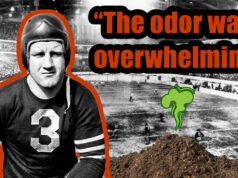
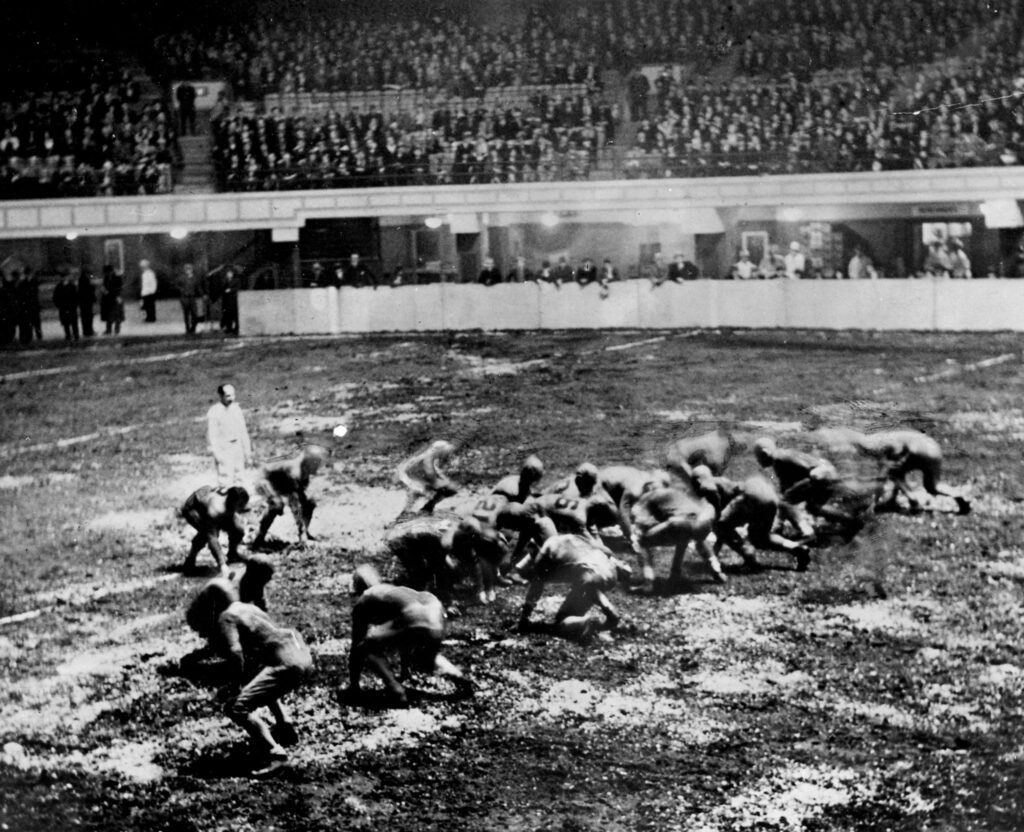
Some 30 years later, the NFL gave arena football a try in what has to be one of the oddest games in football history. For starters, the matchup between the Chicago Bears and Portsmouth Spartans was the league’s first-ever championship game. And a massive snowstorm saw it moved indoors to Chicago Stadium which could only accommodate a 60-yard field and 10-yard end zones along with a much smaller width.
The field itself was comprised of bark, you know the stuff that fills most elementary school playgrounds, which was placed on top of dirt used by the circus just a few days early. Playing conditions weren’t great and things were made worse by a number of rule changes.
These included banning dropkicks and field goals and a stipulation requiring the ball to be moved back 20 yards when a team crossed their opponent’s 10-yard line. It could best be described as a sideshow, although a few positives, such as hash marks, did emerge from the game that would end 9-0 in favor of the Bears.
As for arena football, this would be the peak of its early incarnation as the sport would go into hibernation until the 1980s.
Chapter 2: Drawings on a manila envelope
In 1902, a version of what could be considered arena football was played in Madison Square Garden. It’s only fitting that the same venue would give birth to the modern version of the sport nearly 80 years later.
An employee in the NFL office, Jim Foster, just happened to catch an indoor soccer match at MSG and thought, “Why not football?” Right then and there, he pulled out a manila envelope and started formulating a rough idea of what the sport could be.
“I went into my briefcase and grabbed a 9×12 envelope and started jotting down my ideas. I drew up what looked like a hockey rink and some notes and most of what we see today came off that envelope,” Foster told the Jacksonville Times-Union in a 2001 interview.
Unfortunately, life got in the way of the idea becoming a reality. Foster took a job with the fledgling USFL and while he was working on the concept behind the scenes, his day job took precedence. Of course, he would be out of a job a few short years later and that freed him up to go all Ben Wyatt on arena football.
By 1986, he was ready for a proof-of-concept game. It went so well that Foster organized what was dubbed a “showcase game” a year later. He pulled out all the stops to make this successful. The contest was played at the Rosemont Horizon in Chicago and ESPN was on hand.
“We invited ESPN and they sent a crew and put it on SportsCenter,” Foster explained. “We had sponsors, we managed to get players and coaches from the local colleges with the understanding that if this thing took off, they would receive a tryout with the league. And some of the players did try out later and actually ended up playing in arena football.”
Everyone left thinking arena football could work and efforts began to form a league.
Chapter 3: The Arena Football League rises
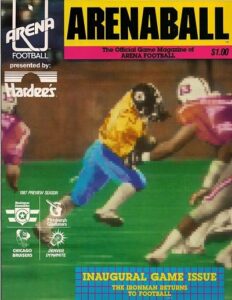
Less than four months after the “showcase game”, the Arena Football League kicked off with four teams. The Pittsburgh Gladiators, Denver Dynamite, Washington Commandos and Chicago Bruisers played six games with the top two meeting in the Arena Bowl.
The league’s inaugural game drew more than 12,000 people to the Pittsburgh Civic Arena but was not televised. That’s because AFL officials wanted a test before introducing the world to an entirely new sport. Satisfied with the results, indoor football was then showcased live on ESPN with Bob Rathbun and a pre-College Gameday Lee Corso on the call.
A few interesting names also participated in that first season. Most notably, players Marty Mornhinweg and Mike Stoops would go on the have football success elsewhere. As for the sport itself, things went okay, and plans were made to run it back in 1988.
Chapter 4: The first fall
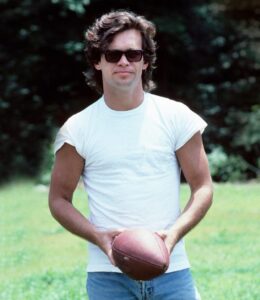
It took all of a few months for someone to see the AFL and try to copy it. The World Indoor Football League announced it would begin play in 1988 with a few minor gameplay tweaks, the most notable of these being the offense having one extra player at all times.
Teams started folding before the league even started and a game was never played. However, one of arena football’s oddest trends can be traced back here. John Cougar Mellencamp was among the owners of the Indiana franchise.
For whatever reason, rock stars have been drawn to indoor football ownership like moths to a flame. But we’ll get into this more as the story progresses.
Chapter 5: A punch, a patent and not much else
AFL Commissioner and Founder Jim Foster applied for a patent on arena football after the first season ended and that was actually granted in 1990. You will see it widely reported that it was the first sport to receive a patent and while true, this statement is also misleading.
Anyway, those early years were more about building awareness for the sport than anything else. Teams came and went. Games were being played across the country in hopes of finding a suitable expansion market. The AFL would get its first real taste of mainstream exposure in 1989 during its roadshow.
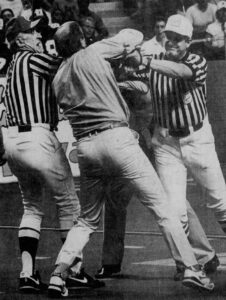
A regular season matchup between the Pittsburgh Gladiators and Chicago Bruisers being played in Sacramento’s Arco Arena was covered by the national media. This was not a good thing, however. Pittsburgh Head Coach Joe Haering punched the founder during an on-field altercation, and someone just happened to get a photograph of the incident.
These 15 minutes of fame didn’t do much for the league which existed on the fringes of the sporting scene for the next few years. Perhaps the most memorable thing to happen in the AFL during the early- and mid-1990s was the Miami Hooters franchise.
Apart from that, the league found three strong markets in Tampa Bay, Orlando and Arizona. Occasionally games were on ESPN2. And the sport just sort of existed.
Chapter 6: There might be something here
As the AFL moved into 1996 and 1997, it was on solid footing. A few more stable franchises had joined the fray which helped lend some credibility to it. Also, some guy named Kurt Warner was making a name for himself with the Iowa Barnstormers but the returns on that investment were still a few years away.
The big thing here was that arena football had gone from a novelty or sideshow to a form of football. Not everyone understood or liked it, but it was something. And the NFL started keeping tabs on what was happening. Having the 1998 ArenaBowl broadcast on ABC certainly helped.
Earlier, we mentioned the AFL was the first sports league to hold a patent. Well, they claimed it covered basically any form of indoor football. In reality, you can’t patent the idea of playing football in basketball and hockey stadiums. That is just not how patents work.
In 1997, the rival Professional Indoor Football League was founded and was promptly sued by the AFL for trademark infringement. The PIFL submitted a bunch of evidence denying the allegations and a day later, the AFL dropped the case. Essentially, the actual patent mostly covered the AFL’s nets, what happened when the ball hit the net on missed kicks and a few other AFL-specific rules.
However, that would be the lone high for the PIFL which played a single season before splitting into two rival leagues that would both fold.
Chapter 7: Welcome to the big leagues
On January 31st, 1999, John Elway guided the Denver Broncos to a victory in Super Bowl XXXIII. Less than two weeks later, the NFL announced it acquired an option to buy a 49.9 percent stake in the AFL. This effort was spearheaded by a young Roger Goodell, who framed it as a way for the league to make new fans.
That logic is classic Goodell nonsense, by the way. People who watched indoor football were likely to follow the NFL already. Goodell may be clueless but even he had to know that.
Instead, it appears a few owners were driving this push. For example, New Orleans Saints owner Tom Benson received permission to own an AFL franchise a year earlier. Prior to that, owners were barred from investing in other football leagues or teams.
Several other NFL owners either purchased teams or the right to new franchises following that deal. This included:
- Jerry Jones owning the Dallas Desperados
- Pat Bowlen being part owner of the Colorado Crush
- William Clay Ford, Jr., son of the Lions’ owner, taking a stake in the Detroit Fury
- Daniel Snyder purchasing the option for an expansion franchise
It must be noted that we are firmly on the dot-com bubble at this time. Money is sloshing around America and everyone is looking for the next big investment. And then Kurt Warner happened. He became the poster child for arena football after his remarkable 1999 season with the St. Louis Rams.
The free publicity and interest in the AFL generated by Warner was staggering. It also came at the perfect time since the league was in the market for more television partners. ESPN, ESPN2 and ABC had stepped up coverage, but there were still plenty of games to show. Enter TNN who was desperate for live events as it transitioned away from being The Nashville Network. There were happy to have the rights to what was an ascending league.
Not even a work stoppage and antitrust lawsuit at the start of 2000 could stop the AFL’s growth. That sounds more serious than it actually was. No games were missed, and the season proceeded as usual.
More Football: George Blanda and football’s single-season interception record
Chapter 8: Welcome to the minor leagues
With all this money flowing, the AFL decided to start another league. Some refer to this as a development league or minor league. In reality, this move was a cash grab. It must be said though, af2 ended up being more successful than its major league founder.
For starters, af2 was founded as a way to block the Xtreme Football League, a rival scheduled to begin play in 2000. In case you are wondering, this XFL had no relation to Vince McMahon’s XFL which was still in the planning stages at this juncture. Anyway, the AFL purchased nine of the XFL sides and added six more franchises before launching. A year later, the Orlando Predators purchased the remains of the Indoor Football League with those teams being added to the fold.
Between 2000 and 2009, the secondary league had a pretty good run, all things considered. Sure, teams came and went much like the AFL, but it was far more successful than anyone could have imagined. Attendance was more than 4,000 per game for most franchises.
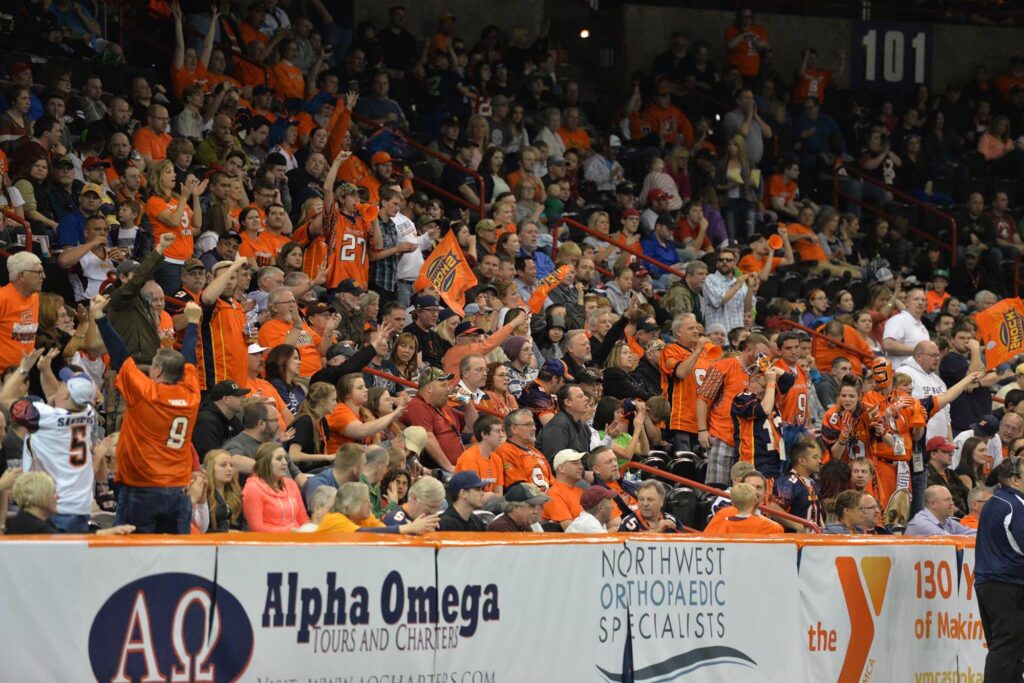
And then you had sides like the Spokane Shock that were outdrawing AFL teams. It must be said, there was literally nothing to do in Spokane during the 2000s. I should know having lived in the Inland Northwest around this time. That kind of made a perfect for af2. Locals loved the sport and the team sold out 25 of its 32 games between 2006 and 2009. There were other success stories, with Green Bay, Oklahoma City and many parts of the Midwest becoming fans of the indoor game.
That is the real legacy of af2. It developed loyal fans who loved the game regardless of the brand name. As we will see in a bit, that proved to be vital by the end of the decade.
Chapter 9: The next wave of rivals
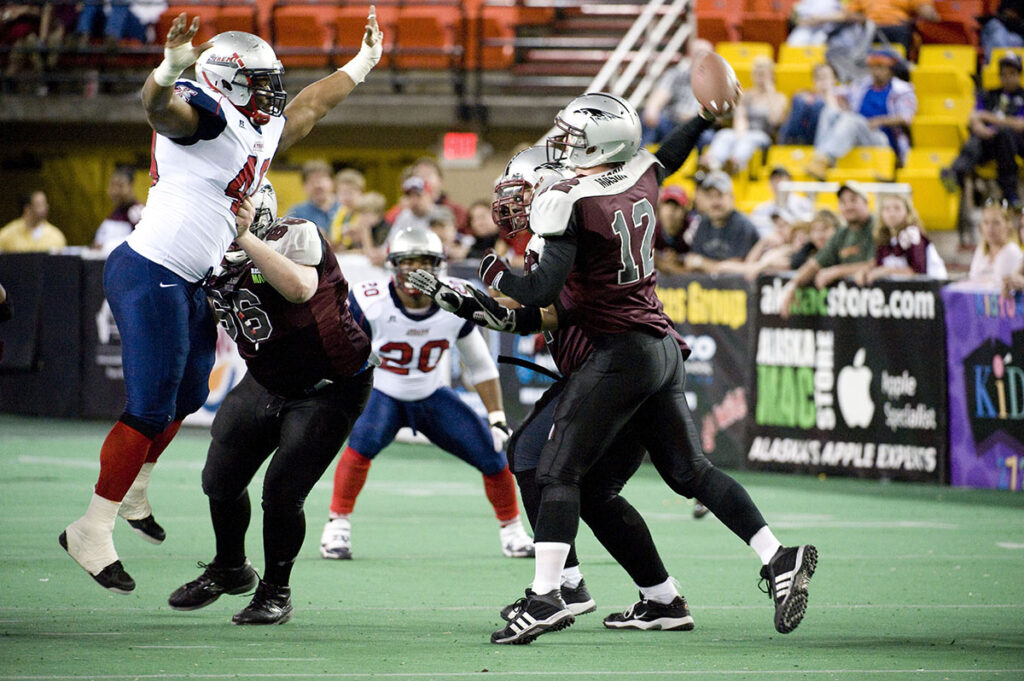
The af2 allowed the Arena League to stop some rival leagues from forming, but it couldn’t weed out everyone during this time. The most successful of these was the National Indoor Football League (NIFL) which ran from 2001-2008. It basically looked for markets not being served by af2 and set up shop.
It had a few famous alumni worth mentioning. Both future Green Bay Packers Head Coach Matt LaFleur and Buffalo Bills running back Fred Jackson spent time in the NIFL. That said, it had a habit of hemorrhaging teams during its run. Some left for the af2, but most exited for similarly sized startups.
These included United Indoor Football, the American Indoor Football Association and World Indoor Football League. We should also highlight some other leagues that started play around this time. Both the American Professional Football League and Continental Indoor Football League were regional leagues that had relatively long-ish runs of 11 and nine years, respectively.
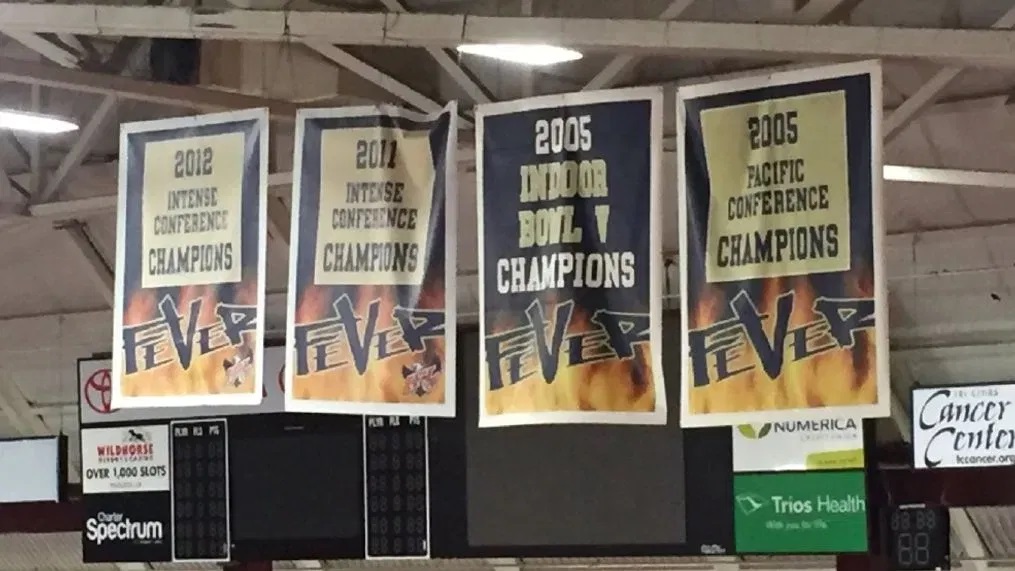
There was also the Intense Football League which granted Alaska its first-ever professional football team. That league would merge with United Indoor Football after the 2008 season to form a new entity. This is something to put a pin in.
Other leagues existed in the 2000s but weren’t around long enough to be worth mentioning. Most had unique rule quirks that made them different from one another, although you could watch any of them and know exactly what was happening. The AFL patent did, however, prevent them from using those nets Jim Foster created all those years ago.
Chapter 10: The arena football bubble
In hindsight, arena football and, in particular, the AFL was a bubble between 2000 and 2008. There was so much happening but none of it was sustainable or profitable. That is wild considering the league seemed successful.
For example, the average attendance from 2004 to 2009 was over 12,000 a game. Now that was announced attendance and not paid tickets, but it’s still an impressive number, nonetheless.
AFL also had a pretty good television presence during this span. NBC was the league’s broadcast partner between 2003 and 2005. ESPN and ABC took over once again starting in 2006. It was the type of coverage most non-big four sports leagues could only dream of.
And then there were the video games published by EA Sports. That was huge. And while neither of the two games put out was all that fun, it was a significant credibility boost for the AFL as a whole.
Behind the scenes, things were not going so well. Let’s start with the obvious. Teams continued to drift in and out of the league. A total of 12 expansion teams entered and 11 folded during this time. There were also eight relocations.
Meanwhile, the NFL never exercised its option to purchase a stake in the AFL. No reason was ever given but with owners allowed to buy their own AFL franchises, there wasn’t really a need for pro football to be involved.
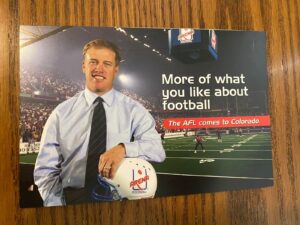
Things took a turn for the worse when the league started tinkering with rules that most people loved. John Elway, yes that John Elway, decided he didn’t like the Ironman rule that required players to play both ways and introduced free substitutions in 2007. The following season, defensive rules were tinkered with for no reason in particular.
Then a bombshell dropped two days before ArenaBowl XXII. AFL Commissioner David Baker suddenly retired. All the talk at the time was about how he left the league in a good place after years of growth. That turned out to be a bunch of smoke as ArenaBowl XXII was the AFL’s last game. Sort of.
Chapter 11: The arena football bubble bursts
Despite all the glowing talk of a healthy league, the financials were pretty dire. In late 2008, the AFL reached a tentative agreement to sell a US$100 million stake in the league to Platinum Equity. The firm planned to create a centralized, single-entity business model similar to the MLS. Tom Benson shut down his New Orleans Voodoo franchise almost immediately after this plan was unveiled to owners.
This did not go through and all hell broke loose. Rumors about the league possibly folding started popping up. Those were denied but the AFL announced in December 2008 that it was canceling the 2009 season.
That did little to help the situation. In August 2009, the AFL went into bankruptcy. It owed approximately US$14 million to creditors and had no means to pay this back. The arena football bubble of the 2000s had officially burst. Your local GameStop likely had about 20 copies of the AFL games for PS2 in a bargain bin. There probably still there if the store hasn’t been closed yet.
Unbeatable Performances: Dave Schultz and the most unbreakable single season record in sports
Chapter 12: Meet the new AFL, same as the old AFL
While its big brother was fighting financial issues, af2 still took to the field in 2009. This would be an important development moving forward. Firstly, that league needed to dissolve itself since it was majority owned by the now bankrupt Arena Football League. With that done, nine sides from the former minor league linked up with six AFL teams to form a new entity.
This new group would go on to acquire all of the AFL’s assets which had been put up for sale as part of bankruptcy proceedings. The purchase meant they could still use the AFL name, logo and other branding making it look like nothing had happened.
The new, old AFL resumed play in 2010. Unfortunately, fans’ interest in the sport had waned. Average attendance was down by nearly 5,000 people per game in 2010 when compared to 2008. ESPN had also dropped the league. Broadcasts were limited to a single Friday night game on NFL Network and cheaply produced local coverage. Games were also available online via Ustream which I had completely forgotten was a thing until now.
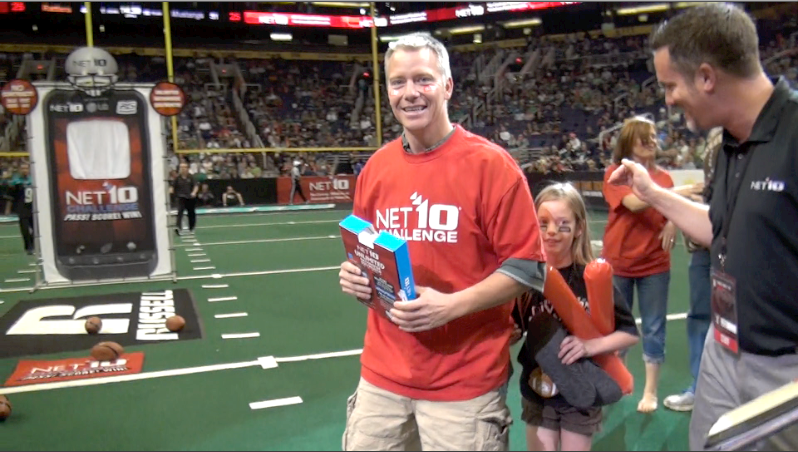
Teams were coming and going at a breakneck pace during this time. Franchises were changing their names for no reason in particular. Everything the AFL did seemed desperate. The most symbolic move of this desperation was the league selling a title sponsorship to NET10 Wireless, a prepaid mobile provider owned by TracFone.
The NET10 Wireless Arena Football League did not have a great ring to it. And the AFL hadn’t even hit rock bottom yet.
Chapter 13: The Kiss of death
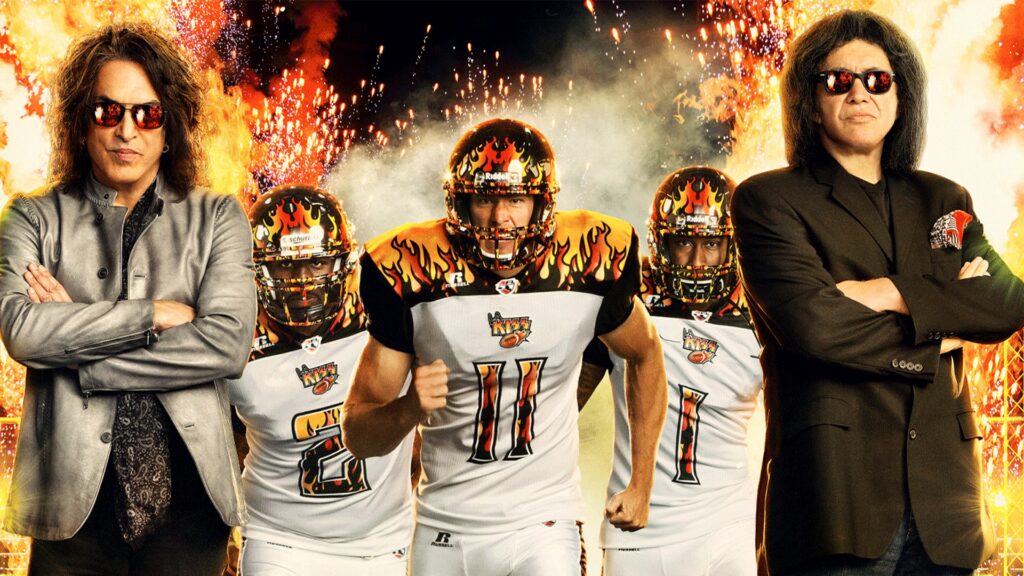
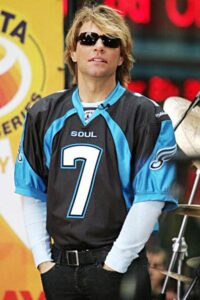
Musicians have been oddly synonymous with arena football over the years. We mentioned John Cougar Mellencamp being involved with a startup league back in the 1980s. At one point, Tim McGraw had a stake in the Nashville Kats. However, the most high-profile partnership was Jon Bon Jovi and the Philadelphia Soul with his ownership stake being part of the plot of an “It’s Always Sunny in Philadelphia” episode.
That was until KISS band members Gene Simmons and Paul Stanley were granted an AFL expansion franchise that would start play in 2014. This was a move destined to fail. It can’t even be classified as a “Hail Mary” because those still give you a chance. Getting the 1970s rock band involved in arena football was never going to work.
Proof of that could have been found some 15 years prior when World Championship Wrestling tried to reverse declining attendance and ratings by bringing in KISS for a televised performance as well as launching a KISS-inspired wrestler dubbed “The Demon” in 1999. It was even worse than it sounds.
The entire partnership was a disaster. KISS fans weren’t interested in WCW and didn’t tune in to watch. Regular fans didn’t like KISS and tuned out. The only ones to benefit from this was the band who pocketed US$500,000.
In fairness to Simmons, he invested heavily in LA KISS’ first season to ensure every home game had a concert-like vibe. Attendance at the Honda Center in Anaheim was good even if it featured ugly uniforms and a gross field. However, it cost a lot of money to keep people coming back.
“We spent more money than probably all the other teams combined on in-game entertainment. Like first-class bobbleheads that were a $200,000 expense . . . when the team was losing over and over and over again, we needed something else that would keep [fans] coming back,” LA KISS President Schuyler Hoversten said in an interview with Yahoo.
That money wasn’t coming in 2015. Instead, ownership hoped the KISS brand and on-field product would be enough to draw in fans. It was not and attendance plummeted. The team itself was not very good either.
By 2016, KISS had basically exited the venture, although its name was still on the door. KISS fans didn’t care about the team. Arena football fans didn’t care about the team. The last roll of the dice turned up snake eyes. The sport was moving further away from relevance.
Chapter 14: Smaller is better
Since starting in the late 1980s, the Arena Football League was seen as the sport’s preeminent organization. Owners wanted to own teams in the AFL and players wanted to play here. In fact, no other league had been able to provide a stable alternative.
In 2009, the Intense Football League merged with United Indoor Football to create the Indoor Football League (IFL). While the first few years were a struggle, it was considered a viable proposition by 2015. So much so that AFL teams started flocking to it.
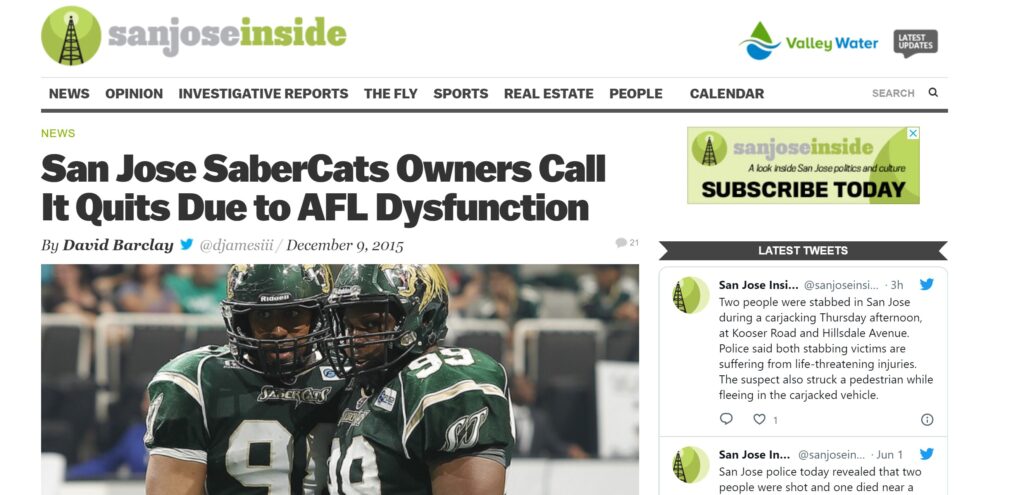
Six AFL teams left for the IFL citing lower overall costs. During this time, several high-profile franchises ceased operations as well. Perhaps most embarrassing was the defending champion San Jose SaberCats closing up shop after the 2016 campaign ended.
However, it wasn’t just the IFL in the fold. The Midwest-focused Champions Indoor Football (CIF) began play in 2015 after a merger and the National Arena League (NAL) kicked off in 2017. Not only was retaining teams a challenge for the AFL but finding new owners became a problem.
It must be noted that all these indoor football organizations suffered from the same issues. Teams came and went, owners were unreliable, television deals were hard to come by and the sport could not regain its mainstream appeal.
Chapter 15: The king is dead
The AFL folding was a matter of if not when by 2017. Everyone was leaving the sinking ship and only five teams were left to play in 2017. This dropped to four in 2018. More sides were added ahead of 2019, but it was a regional, northeast-focused entity by this time.
ArenaBowl XXXII took place on August 11, 2019 with the Albany Empire comfortably seeing off the Philadelphia Soul. The AFL was supposed to announce plans for two new expansion franchises during the ESPN2 broadcast but that never came to pass.
Instead, the AFL filed for Chapter 7 bankruptcy a few months later. There was nothing left for it. The league went bankrupt twice in a decade and did nothing but lose fans, teams and money in between. But just because the king was dead didn’t mean the sport was gone.
Chapter 16: Back to basics
I stumbled across the fact you could watch CIF, NAL and IFL games for free on YouTube sometime in 2019. What I found was a sport stripped down to its core. Players and coaches loved what they were doing. Fans happy to support the home team. A sport that had finally found a place where it could thrive once more.
While the AFL had delusions of grandeur by becoming this massive mainstream league in major TV markets, the most successful franchises were the ones able to forge a connection with their city. It is why former big names from the AFL and af2, including the Iowa Barnstormers, Arizona Rattlers and Green Bay Blizzard, have found a way to make it work over the years.
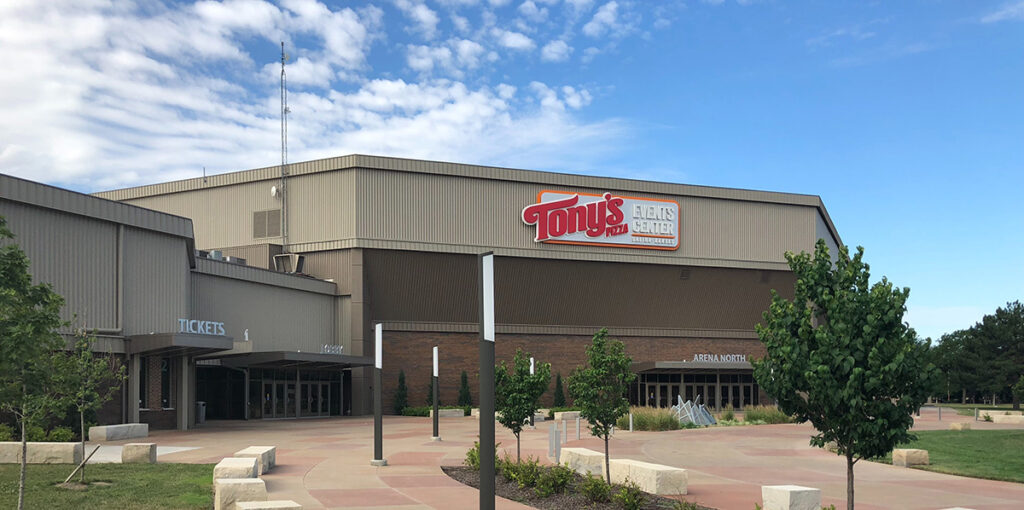
It’s also why teams you’ve probably never heard of, such as the Duke City Gladiators and Salina Liberty, found success. My favorite fact about the Liberty is that they play in the Tony’s Pizza Events Center. That’s right, the cheap frozen pizza company has naming rights to a random stadium in the middle of Kansas.
Ultimately, the best arena football test cases can be found in the two Sioux: Sioux City, Iowa and Sioux Falls, South Dakota. For more than 20 years, each place has boasted a franchise despite neither playing in the AFL.
The Sioux Falls Storm are without question the most successful team in the history of arena football despite the fact most people have likely never heard of them. They have won a league championship on 11 occasions and only missed the playoffs twice in franchise history.
Over in Iowa, the Sioux City Bandits don’t have as many titles as the Storm but boast the same level of consistency. In a sport where so many sides have come and gone, these two are proof that arena football can work in the right environment.
And that environment isn’t the bright lights of big cities where competition for attention is fierce. It’s in the nooks and crannies of America where entertainment options are scarce and local pride is strong. That being said, success isn’t as easy as showing up.
Owners need to invest in marketing and grassroots efforts. Getting games broadcast on local television is huge. It may take a while, but once a city gets hooked on arena football, they become addicted. The success of the Spokane Shock is proof of that.
Postamble
The many rises and falls of arena football over the years are proof the sport can exist. Unfortunately, those running it want to fly too close to the sun and everything comes crashing to the ground. The third incarnation of the AFL is a prime example of that. Does it really believe it can cobble together 16 teams and be successful? History has shown a bunch of money will be thrown down the drain on this endeavor before ultimately filing for bankruptcy.
And it’s not even the only league set to launch in 2024. The Arena League will also start play as a four-team outfit led by Hall of Fame wide receiver Tim Brown. For some reason, the league is promising faster-paced games despite no one ever complaining about a lack of action when it comes to indoor football. Have the league’s founders ever watched the sport?
Anyway, it is impossible to envision a sporting landscape where arena football is anything more than a minor summertime distraction. The highs of the 2000s with its ABC broadcasts and PS2 games are long gone. And they aren’t coming back.
That doesn’t mean arena football is bad or should go away. I enjoy watching games for free from Sioux City, Omaha, Billings, Arizona and other exotic parts of the world no one would voluntarily visit. Wait, is exotic the right word?
Arena football may not be mainstream, but the fact it has survived to this day is worth praise. For every ten incompetent, bumbling fools who have failed trying to make a quick buck off the sport, there has been one person with enough vision to make it work.
That is why 35 years from now, there will still be indoor football leagues in America.
Keep Reading: Ryan Fitzpatrick and the most fun and flawed players to watch in recent NFL history