



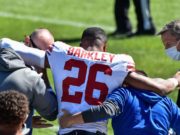










The NFL has a running back problem. This isn’t even a new issue if we’re being honest. For more than a decade, teams have devalued the position in favor of allocating salary cap space elsewhere. A big reason for that is the fact front offices now find serviceable players in the later rounds of the draft or even off the street.
In that regard, Matt Miller is 100 percent correct. Franchises should absolutely draft, use, abuse and then discard running backs at their discretion. It has proven to be a viable strategy in recent times and there is nothing to prevent them from doing so.
On the other hand, Derrick Henry and Austin Ekeler are also right. It is utterly ridiculous that a critical position has been devalued to such an extreme. Running backs have done nothing to deserve their current diminished stature within football.
Usually, when two opposite sides are correct over the same issue, it almost always indicates a larger systematic issue is at play. In this case, it’s an unintended consequence of the salary cap. Teams can’t pay everyone even if they want to.
While Roger Goodell and owners may not think much of the NFL running back problem, it hurts the league. Star power is being sacrificed and one of the most visible positions on the field has been rendered unimportant. And for what? Budgetary restrictions?
Star running backs make the sport better. They also keep fans engaged, whether it is through simply having games be more watchable or improving something like fantasy football – a key growth driver like it or not.
A healthy, thriving position only offers upside for the NFL and its coffers. It can be argued that a dying running back position hinders the league’s ability to keep existing fans and make new ones. That is less than ideal.
The good news is that the solution is fairly simple. Well, it is if you think rationally. Goodell and NFL owners have shown time and again that they may be incapable of doing what’s right or best for fans. So, while it may not happen, here is how the NFL can solve its running back problem.
More Football: Is Russell Wilson a Captain Save a Hoe?
How to solve the NFL running back problem?
Step 1: Reduce the length of running back rookie contracts
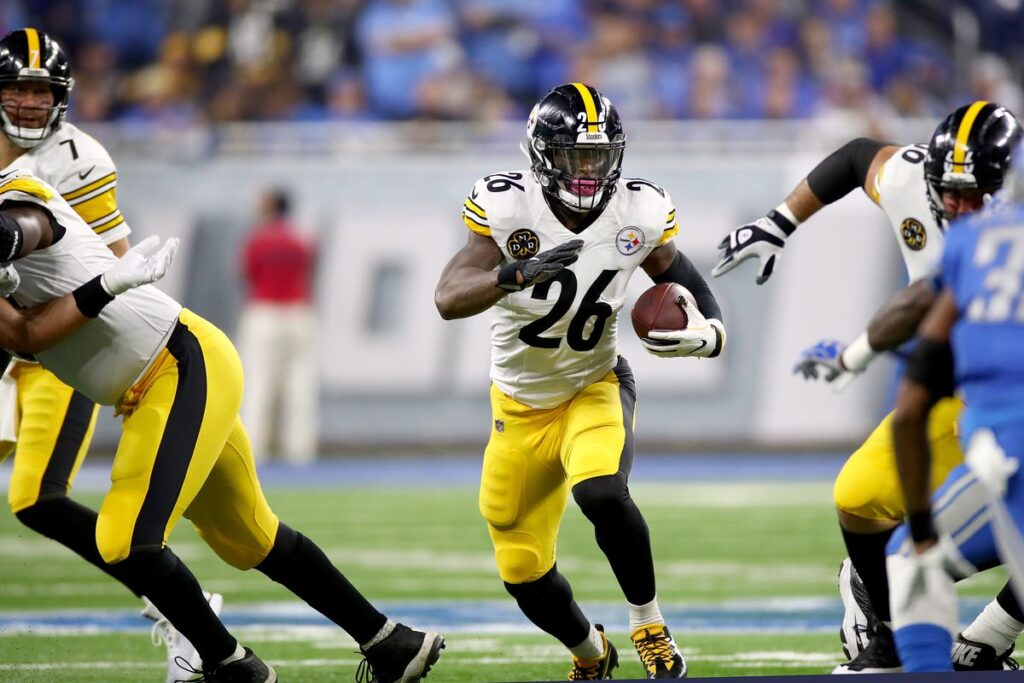
Everyone agrees the career of a running back is not like any other position in the NFL. No one even debates this anymore. The demands of the position shorten careers and usually mean their peak is much earlier. With that in mind, it makes no sense for rookie running back contracts to mirror other positions.
All it does is prevent them from the chance to reach free agency while still at their productive best. In order to undo that, running back rookie contracts should be shortened from four years to two years. Maybe first-round picks are saddled with the third-year team option to incentivize taking them on day one but that is something to be discussed.
What this accomplishes is twofold. First, running backs have a real opportunity to go out and get a second contract. As we see today, by the end of year four, or five with the franchise tag, front offices have no desire to give ball carriers a new fair market deal which blows for lack of a better term.
Second, this makes it more challenging for front offices that want to practice the draft, abuse and discard strategy. While still possible, turnover at the position every two seasons as opposed to four may cause them to at least think about the risk involved. Especially when following the next step.
More NFL: NFL expansion needs to happen and here’s how to make it work
Step 2: Lower running back cap hits
Every team should be able to designate one running back who has a smaller cap hit. Look, the issue with running backs in the NFL isn’t money. Owners have plenty of money to pay them. This is a salary cap issue. Front offices are hesitant to tie up cap space when they can just draft someone for less.
If high-end running backs could be secured for only a fraction of the cap space, teams would be more inclined to hand them second contracts. How would this work hypothetically?
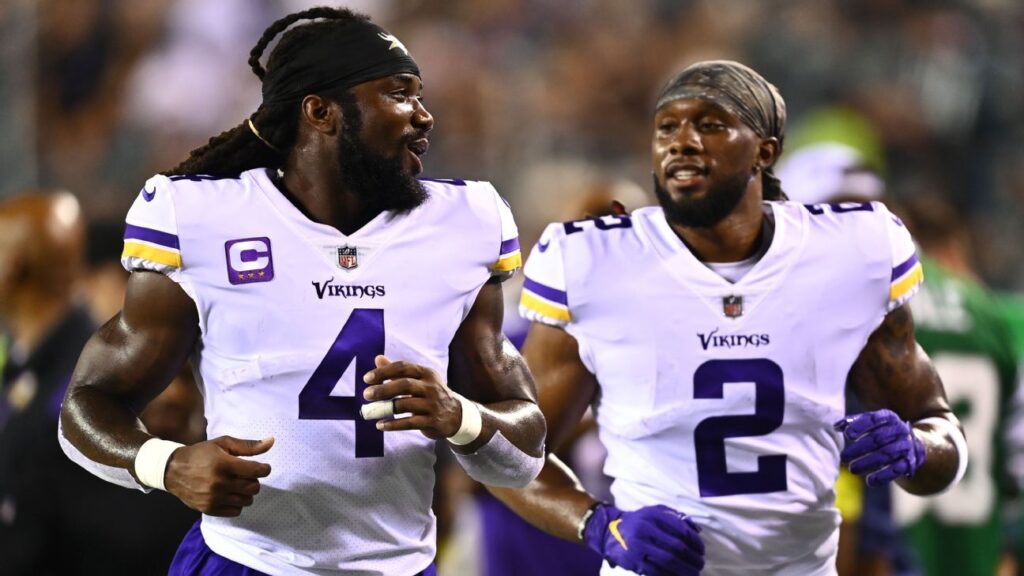
It’s quite simple. A team can sign or re-sign a running back but only have a percentage of that total count against the salary cap. Maybe something along the lines of 50 percent. For example, let’s say Dalvin Cook reaches a deal with the Miami Dolphins that pays him US$10 million per season. His cap hit would only be US$5 million.
You could also reward franchises that draft and develop running backs by increasing this to 60 or 70 percent. In this case, If the Minnesota Vikings brought Cook back at US$10 million per season, his cap hit would be US$3 million if there was a 70 percent decrease.
Guardrails would need to be put in place, so teams don’t try to sneak a quarterback in there or something. And again, only one spot per team should be allowed to prevent sides from hoarding. But this is a viable way to ensure running backs get paid without having it weigh too heavily on the salary cap. A win-win, if you will.
Could it work?
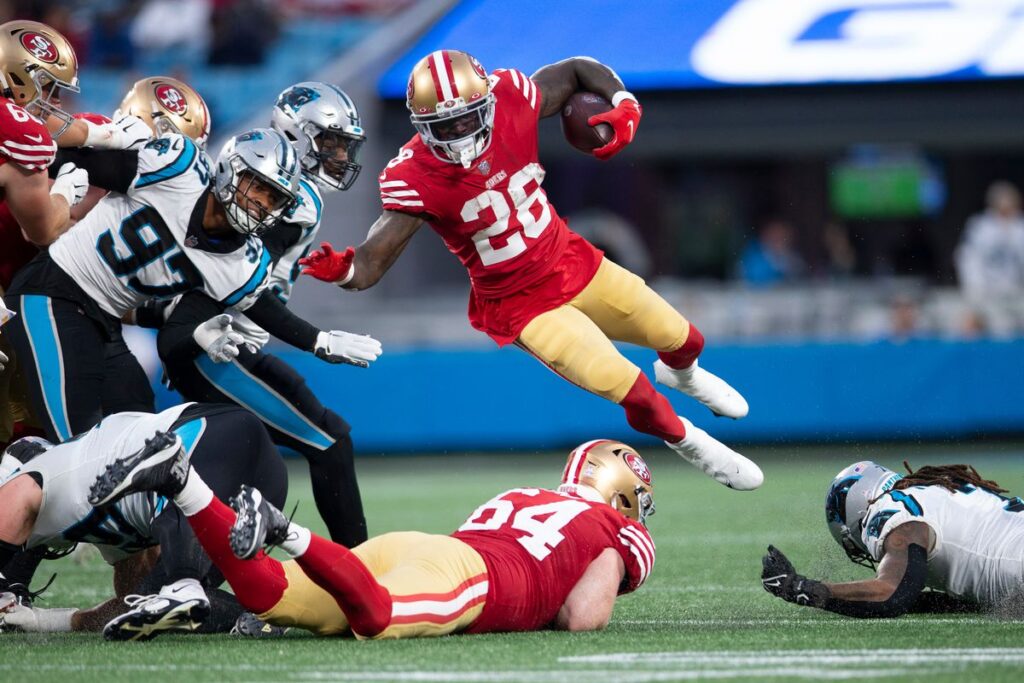
There would definitely be pushback from owners who, despite having billionaires of dollars seemingly hate spending a dime. Additionally, front offices may still prefer paying a rookie US$800,000 instead of having a veteran take up US$4 million on the cap.
That being said, this is worth a shot. Something needs to be done to re-instill value into what is one of the sport’s most visible and popular positions. While all the focus today is on quarterbacks, most generations grew up with running backs. I know I may not be as big of an NFL fan if it wasn’t for the likes of Barry Sanders, Marshall Faulk, Curtis Martin and Eddie George.
There is a legitimate reason why the league should want its high-end stars at the position getting paid. No disrespect but people aren’t buying tickets or tuning in to see Alfred Morris or Tevin Coleman. And no one is playing fantasy football because of those guys either.
It is time we make running backs great again. If Roger Goodell and owners are willing to give fans and players the finger by flexing Thursday night games and committing countless other offenses, then they should at least give us something in return.
Let us have our dominant running backs who play and get paid.
Keep Reading: A startup football league thwarted one of the NFL’s greatest teams