

















On an issue-by-issue basis, the platform of the US progressive movement is overwhelmingly popular. What is holding this movement back from making meaningful political headway?
Here is an overview of the progressive platform and its popularity:
Medicare-for-all (>50% popular)
2020 primary exit poll data shows that democratic voters from 20 consecutive primary states support a universal single-payer system. Some polls show that Americans are in support of the policy by more than 70 percent.
Get money out of politics (80% popular)
Only 20 percent of all voters are satisfied with the current campaign finance laws. A strong majority believes that the donor-class simply has too much influence on US politics. Statistics show that candidates who out-raise their opponents win their elections 83 percent of the time in the senate and 94 percent of the time in the house.
Legalized Marijuana (66% popular)
More than 66 percent of Americans believe that marijuana should be legal.
Get us out of the endless wars in Iraq, Afganistan and Syria (over 50%)
More than half of all Americans oppose these conflicts and would like to end them. Military veterans poll along the same lines.
The Green New Deal (63% popular)
A majority of Americans are unsure of the exact details of the Green New Deal, so reliable poll numbers are tricky on this issue. That said, 63 percent of Americans support investing in green jobs and energy efficient infrastructure.
The US progressive movement is popular! What’s the problem?
Individually, these issues are all popular. Why isn’t this reflected at the voting booth?
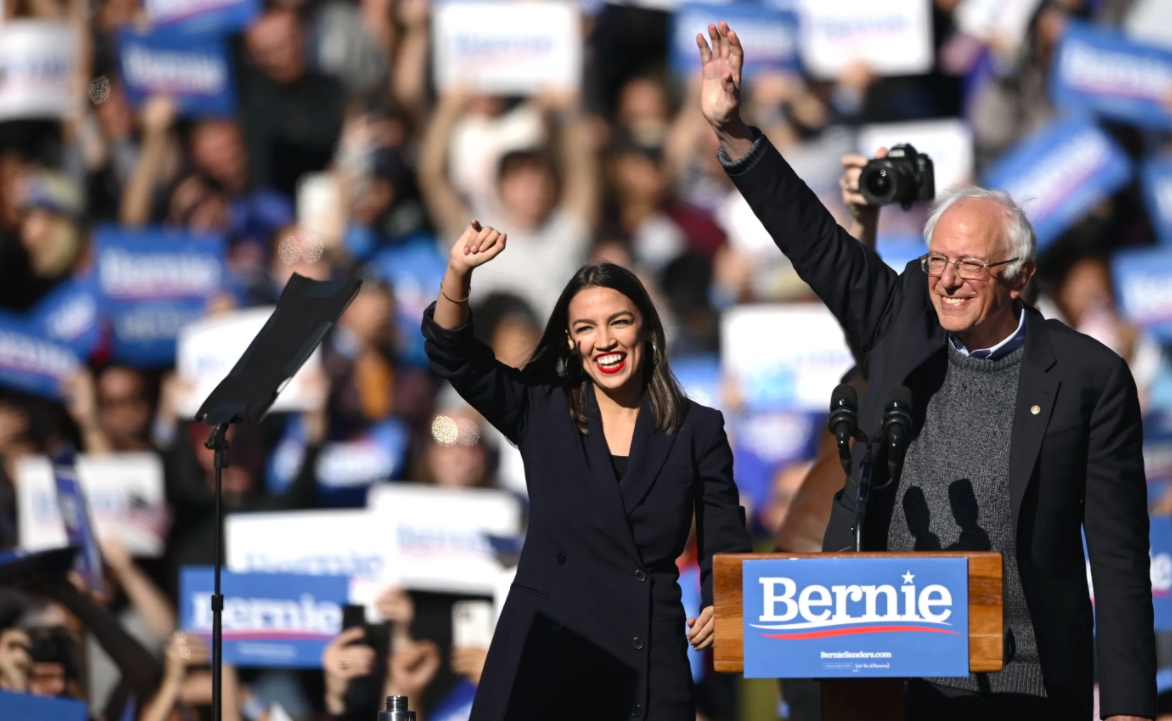
Was the movement’s leader Bernie Sanders too old? Some claim that the progressive movement doesn’t have enough media presence. Another contention is that by declining SuperPAC and corporate donor money, progressives cannot raise the enough money to succeed on local, state and federal levels.
Some even place the blame at well-funded misinformation campaigns from the left and right.
These are all valid issues that need to be addressed, but there is a further constraint more rudimentary than any of these.
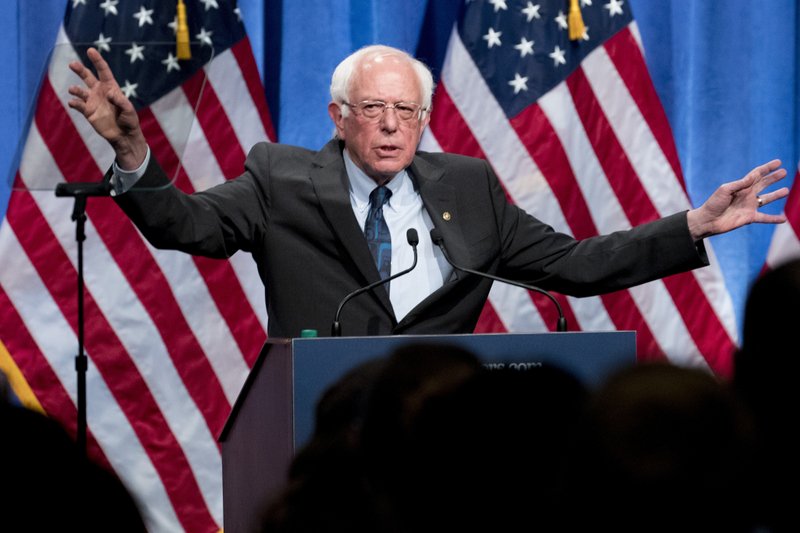
The US progressive movement has a fundamental flaw: Branding
Poor branding is the singular, basal handicap encumbering the US progressive movement. Branding mistakes have been made over and over again. This is the foundational shortcoming crippling the US progressive movement’s ability to raise money, grow grassroots media and combat oppositional misinformation campaigns.
Here are four examples of branding mistakes that undermine the message of the US progressive movement:
TYT and Secular Talk: The US Progressive movement’s frontline media
The Young Turks are great! They have an incredible online following (approaching 5 billion views). However, despite endless fair denials, they have been dismissed by the mainstream for years as the name has loose ties to the Armenian genocide.
Secular Talk is another excellent progressive media source with nearly 700 million views. It originally started as a channel critical of religion, but then shifted into politics. Unfortunately, the term ‘secular’ automatically turns away 65 percent of American population that identifies as Christian.
These channels are both extremely influential, but unfortunate branding impedes their ability to smoothly influence a more mainstream, centrist audience.
What is the Green New Deal? No one knows
The Green New Deal has an unclear objective. The details are fuzzy. While Americans support renewables and clean energy, many are unsure what they are getting themselves into with the Green New Deal.
Even worse, the branding relies on a broad understanding of FDR’s 1933 New Deal. In a country where 38 percent of the citizens deny evolution and 35 percent are unable to name a single branch of government, referencing a policy from the 1930’s is a critical misstep.
The goal of the Green New Deal needs to be achieving carbon neutrality, but the branding needs to be based on environmental health, energy diversification and building a defensively robust energy grid.
Free College
In the US, citizens are provided free education for thirteen years, from K-12. This amounts to less than 3 percent of the total US federal yearly budget. This proposal only seeks to extend this program in cost by roughly 15 percent for two-year trade schools and 30 percent for four-year degrees.
The term ‘free college’ is poor branding as it allows oppositional parties to lump it together with ‘handouts’ and welfare programs. High school isn’t called ‘free high school’. Why is this policy’s branding so boldly differentiated?
We need to be expanding American education, not giving away a cheap-sounding free college.
The ‘Revolution’ of Democratic Socialism: A real albatross
This one is entirely and pointlessly self-inflicted. Even worse, it might be impossible to ever shake off.
There is zero political advantage in branding the movement as a socialist revolution. From a global perspective, the movement isn’t even socialist, it’s objectively centrist! This set of policies is intended to benefit the middle and lower classes; it’s not socialism and it’s not a revolution.
The solution
The platform of the US progressive movement is a winning one; this is purely a packaging issue.
Progressive leaders need to learn to manage their platform as a product. They need to utilize focus groups and consumer-testing, not for the policies themselves, but for presentation and brand-building.
Andrew Yang showed how effective this can be by reframing UBI as a Freedom Dividend. This needs to be replicated across the platform and party.
To obtain mass appeal, progressives need to reframe the ideal as the conventional.
This movement is a few bells and whistles away from a real revolution… just don’t say it like that!